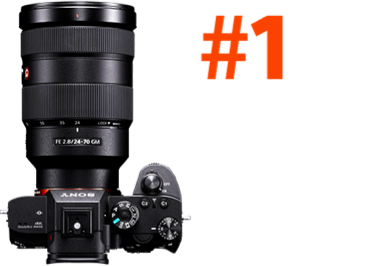
G Master lenses are built for top-tier image quality, reliable autofocus, rugged weather sealing, and a signature mix of high resolution with smooth bokeh. They’re excellent matches for all of Sony's Alpha camera bodies, whether it be the high‑resolution Alpha 7R series, speed-focused Alpha 1 and Alpha 9 series, or the premier hybrid Alpha 7 series. With a wide range of G Master lenses in the lineup, there are plenty to choose from. This guide will help you distinguish between each so you can choose which G Master lenses belong in your photo or video kit. Many of these lenses are currently on sale – see our complete list of promotions at alphauniverse.com/promos.
A Complete Buyer’s Guide To G Master Lenses
What “G Master” Generally Means
- Optics tuned for high resolution and smooth bokeh (often with XA/extreme aspherical elements, special coatings).
- Fast, quiet, precise AF (XD Linear motors on newer designs; older G Master lenses may use DDSSM).
- Strong weather sealing, customizable focus-hold buttons, AF/MF switch, and (on many) an aperture ring with click/de-click and iris lock.
- OSS optical stabilization on telephotos and the 100mm STF, otherwise rely on in-body stabilization (IBIS).
- Video-friendly touches on recent G Master II lenses: reduced focus breathing, smoother focus, linear response MF.
How to use this guide
- Lenses are grouped by zooms, primes, and super-tele primes.
- For each lens: standout traits, best uses, and who typically loves it.
- At the end: teleconverter notes, pick-by-genre suggestions, and quick tips.
G Master Zooms
FE 28-70mm f/2 G Master
- Why it’s special: First FE standard zoom with a constant f/2 aperture for one full stop more light and shallower depth than f/2.8. Prime‑level sharpness, fast XD Linear AF, minimized focus breathing, and full video controls (aperture ring with click/de‑click and lock).
- Excels at: Weddings/events, low‑light documentary, portraits with extra subject separation, product/food with shallow DOF, narrative/video work needing low breathing.
- Who it’s for: Shooters who want the exposure advantage and look of f/2 in a single standard zoom and can live with starting at 28mm and larger 86mm filters.
Purchase the 28-70mm f/2 G Master.
FE 50-150mm f/2 G Master
- Why it’s special: Constant f/2 tele zoom—unique reach at 150mm with f/2 speed for brighter view, faster shutter and creamier backgrounds. Four XD Linear motors and low focus breathing.
- Excels at: Portraits, ceremonies, indoor sports, stage, low‑light action, interviews/narrative video with strong separation and stable framing on IBIS bodies.
- Who it’s for: Event/portrait/hybrid shooters who want f/2 speed and look across a highly useful portrait‑to‑tele range and don’t need 200–300mm or TC compatibility.
Purchase the 50-150mm f/2 G Master.
FE 12-24mm f/2.8 G Master
- Why it’s special: Ultra-wide f/2.8 zoom with prime-like sharpness and excellent coma control for astro. Bulbous front element; uses rear gel filters/third‑party holders.
- Excels at: Landscapes, architecture, interiors, Milky Way and nightscapes, dramatic perspectives for video.
- Who it’s for: Landscape/astro shooters, real estate photographers who need the widest views without sacrificing speed or sharpness.
Purchase the 12-24mm f/2.8 G Master.
FE 16-35mm f/2.8 G Master II
- Why it’s special: Update to the 16-35mm f/2.8 G Master. Lighter, sharper, and faster focusing than the original; improved flare resistance and lower focus breathing. Great close‑focus for detail shots.
- Excels at: Travel, landscape, cityscapes, environmental portraits, gimbal/video work.
- Who it’s for: Hybrid creators, wedding and event shooters, anyone who wants a do‑it‑all wide zoom with pro optics.
Purchase the 16-35mm f/2.8 G Master II.
FE 24-70mm f/2.8 G Master II
- Why it’s special: Update to the 24-70mm f/2.8 G Master. One of the best 24-70s on the market. Noticeably lighter and sharper than the original, fast AF, low breathing, and excellent close‑focus.
- Excels at: Weddings, events, documentary, travel, product, food. The single most versatile pro zoom.
- Who it’s for: If you buy one G Master zoom first, it’s usually this. Perfect generalist lens for photo and video.
Purchase the 24-70mm f/2.8 G Master II.
FE 70-200mm f/2.8 G Master OSS II
- Why it’s special: Update to the 70-200mm f/2.8 G Master. Much lighter than the original, faster AF, better optics, and very useful close‑focusing for semi‑macro detail. Built‑in OSS and compatible with 1.4×/2× teleconverters.
- Excels at: Portraits (compression + creamy backgrounds), ceremonies, indoor sports, stage, wildlife with TCs, video interviews.
- Who it’s for: Wedding/event shooters, portraitists, sports and stage shooters who need reach, speed, and stabilization.
Purchase the 70-200mm f/2.8 G Master II.
FE 100-400mm f/4.5-5.6 G Master OSS
- Why it’s special: Pro‑level sharpness through the range, strong AF, OSS, and surprisingly good close‑focus for near‑macro shots. Works with 1.4×/2× TCs.
- Excels at: Wildlife, birds in good light, outdoor sports, airshows, travel safaris where portability matters.
- Who it’s for: Photographers who want real reach with top optics but prefer a smaller, lighter package than the big primes.
Purchase the 100-400mm f/4.5-5.6 G Master.
G Master Primes
Ultra‑wide and wide
FE 14mm f/1.8 G Master
- Why it’s special: Tiny for its speed, exceptionally sharp wide open with excellent coma control.
- Excels at: Astrophotography, aurora, vast landscapes, interiors, dramatic foregrounds.
- Who it’s for: Astro and landscape shooters who want the cleanest stars and a compact kit. Note: no front filters.
Purchase the 14mm f/1.8 G Master.
FE 24mm f/1.4 G Master
- Why it’s special: Featherweight feel, beautiful bokeh, sharp wide open, minimal coma.
- Excels at: Astro, environmental portraits, travel, documentary, weddings (dance floor, prep).
- Who it’s for: A top pick for hybrid wedding shooters and nightscape photographers who like a fast, small prime.
Purchase the 24mm f/1.4 G Master.
Normals & Near‑Normals
FE 35mm f.1.4 G Master
- Why it’s special: Compact, fast, and clinically sharp with pleasing bokeh and low distortion. Strong close‑focus for detail shots.
- Excels at: Street, weddings, documentary, low‑light interiors, video with minimal breathing.
- Who it’s for: If you love the 35mm look, this is a “lifer” lens for both photo and video.
Purchase the 35mm f.1.4 G Master.
FE 50mm f/1.4 G Master
- Why it’s special: Modern, compact 50 with fast AF, excellent sharpness from wide open, low breathing, and great close‑focus.
- Excels at: Portraits, weddings, product, low‑light generalism, gimbal/video.
- Who it’s for: Shooters who want a top‑tier 50 with great handling at a friendlier size and price than the 1.2 G Master.
Purchase the 50mm f/1.4 G Master.
FE 50mm f/1.2 G Master
- Why it’s special: Flagship 50 with stunning subject isolation, fast AF for an f1.2, and premium rendering.
- Excels at: Portraits, fashion, editorial, weddings where creamy bokeh and speed matter.
- Who it’s for: Bokeh lovers and pros who want the look and can handle the size/price. Choose 1.2 for maximum blur, 1.4 for versatility.
Purchase the 50mm f/1.2 G Master.
Portrait & Telephoto Primes
FE 85mm f/1.4 G Master II
- Why it’s special: Update to the 85mm f/1.4 G Master. Classic portrait rendering with creamy bokeh. AF is solid.
- Excels at: Portraits, weddings, studio work, fashion, filmmaking.
- Who it’s for: Photographers who love a classic 85 look and the smoothest bokeh.
Purchase the 85mm f/1.4 G Master II.
FE 100mm f/2.8 STF G Master OSS
- Why it’s special: Apodization element creates uniquely smooth, cat’s‑eye‑free bokeh. Has OSS. Note: transmission is about T5.6 (less light to the sensor than f2.8 suggests).
- Excels at: Artistic portraits, detail shots, product/still life with a bokeh‑centric look.
- Who it’s for: Creators chasing the smoothest background rendition and willing to trade light and some AF speed for that signature look.
Purchase the 100mm f/2.8 STF G Master.
FE 100mm f/2.8 Macro G Master OSS
- Why it’s special: The first true macro in the G Master line. Delivers 1.4× native magnification (beyond life‑size) and works with Sony’s 1.4×/2.0× teleconverters for up to 2.8×. Tack‑sharp GM optics with smooth bokeh, four XD Linear motors for fast/quiet AF, macro‑tuned OSS, an aperture ring, and dedicated macro controls (full‑time DMF, focus‑mode switch, sliding focus ring with distance/magnification scale).
- Excels at: True macro and beyond life‑size detail (jewelry, insects, textures), product/food, wedding details (rings, invites), meticulous studio/archival work, and crisp portraits with tight close‑focus. Handheld macro is more practical thanks to OSS.
- Who it’s for: Macro and product shooters who want GM‑grade sharpness, stabilization, and more than 1:1 without tubes; hybrid creators who need reliable AF and video‑friendly handling in a macro; portrait shooters who like the 100mm look with close‑up versatility.
Purchase the 100mm f/2.8 Macro G Master.
FE 135mm f/1.8 G Master
- Why it’s special: Incredibly sharp with lightning‑fast AF and beautiful, clean bokeh. A modern benchmark 135.
- Excels at: Portraits with compression, indoor sports, events, stage, subject isolation outside.
- Who it’s for: Portrait and event shooters who also dabble in action. If you love the 135 look, this lens is special.
Purchase the 135mm f/1.8 G Master.
Super‑telephoto G Master primes
FE 300mm f/2.8 G Master OSS
- Why it’s special: Fast 300 in a surprisingly light package for its class, with pro OSS and top‑tier AF. Pairs excellently with 1.4×/2× TCs.
- Excels at: Field sports, wildlife in lower light, indoor arenas (with high‑ISO bodies), and sideline work.
- Who it’s for: Action/wildlife shooters who want speed and mobility, a compelling alternative to jumping straight to the 400mm f/2.8 G Master.
Purchase the 300mm f/2.8 G Master.
FE 400mm f/2.8 G Master OSS
- Why it’s special: The pro sideline staple—fast, tack‑sharp, beautiful background separation, excellent with TCs.
- Excels at: Field sports, large wildlife, airshows, night games.
- Who it’s for: Working pros and serious amateurs who need the 400mm f/2.8 G Master look and performance.
Purchase the 400mm f/2.8 G Master.
FE 600mm f/4 G Master OSS
- Why it’s special: Ultimate reach with prime‑grade sharpness and AF + takes TCs well for extreme distances.
- Excels at: Birds, distant wildlife, surf, motorsports from far stands.
- Who it’s for: Dedicated wildlife/birders and pros who prioritize reach and background separation.
Purchase the 600mm f/4 G Master.
Teleconverters (G Master Compatibility)
1.4× and 2.0× TCs work with: 70-200mm f/2.8 G Master II, 100-400mm f/4.5-5.6 G Master, 300mm f/2.8 G Master, 400mm f/2.8 G Master, 600mm f/4 G Master, 100mm f/2.8 Macro G Master.
Notes: A 1.4× TC costs one stop of light, a 2.0× costs two stops. AF remains strong on recent bodies but slows under dim light. Optical performance is best with the big primes, the 70-200mm and 100-400mm pair very well with the 1.4×.
Pick A Lens By Photography Type
Weddings/events (hybrid): 24-70mm f/2.8 G Master II + 70-200mm f/2.8 G Master II, add 35mm f/1.4 G Master or 50mm f/1.4 G Master for low light and creative bokeh.
Portraits: 85mm f/1.4 G Master II or 135mm f/1.8 G Master, add 50mm (1.2 for maximum blur, 1.4 for balance).
Travel/storytelling: 24-70mm f/2.8 G Master II as a one‑lens solution, ultralight two‑prime kit: 24mm f/1.4 G Master + 50mm f/1.4 G Master. Add 100-400mm f/4.5-5.6 G Master for safaris.
Landscape/astro: 14mm f/1.8 G Master or 24mm f/1.4 G Master for night, 16-35mm f/2.8 G Master II or 12-24mm f/2.8 G Master for daytime range and flexibility.
Sports/action: 70-200mm f/2.8 G Master II; upgrade reach with 300mm f/2.8 G Master or 400mm f/2.8 G Master. 100-400mm f/4.5-5.6 G Master for daylight field versatility.
Wildlife/birding: 100-400mm f/4.5-5.6 G Master as a mobile option, 300mm f/2.8 G Master + 1.4× for flexibility; 600mm f/4 G Master for dedicated birders. Teleconverters are your friend.
Video/hybrid creators: 24-70mm f/2.8 G Master II and 16-35mm f/2.8 G Master II (low breathing, excellent AF, aperture rings). Add 35mm f/1.4 G Master or 50mm f/1.4 G Master for shallow‑depth narrative.
Helpful Buying Notes
OSS vs IBIS: Most mid‑range G Masters rely on your camera’s IBIS. Telephotos (70-200 II, 100-400, 300/400/600, 100 STF) add OSS for steadier framing. The 100mm f/2.8 Macro G Master also includes OSS tuned for close‑up work.
Focus breathing: Newer G Master II zooms and newer primes significantly reduce breathing, and recent Sony bodies can compensate further in video.
Filters: 12-24mm f/2.8 G Master and 14mm f/1.8 G Master have bulbous/no‑thread fronts. The 12-24mm accepts rear gel filters; both support third‑party holders. If you rely on screw‑in filters, 16-35mm f/2.8 G Master II is easier.
Close‑focus: G Masters often focus pretty close (great for details without a macro). The 70-200mm f/2.8 G Master II is particularly handy for semi‑macro.
AF behavior: The latest lenses with XD Linear motors track fast subjects better and are quieter for video.
APS‑C bodies: All FE G Masters work on APS‑C (1.5× crop FOV). A 70-200mm becomes ~105-300mm equivalent – great for sports.
Budget alternates: Sony’s “G” line (e.g., 20mm f/1.8 G, 24-105mm f/4 G, 200-600mm f/5.6-6.3 G) offers superb value if you aren’t looking for a G Master.
Simple Starting Points:
The one‑lens solution: 24-70mm f/2.8 G Master II.
The two‑lens event kit: 24-70mm f/2.8 G Master II + 70-200mm f/2.8 G Master II.
The light two‑prime kit: 35mm f/1.4 G Master + 85mm f/1.4 G Master II (or 50mm f/1.4 G Master if you prefer normal FoV).
Landscape/astro duo: 14mm f/1.8 G Master + 16-35mm f/2.8 G Master II (or 24mm f/1.4 G Master if you prefer primes).
Wildlife starter: 100-400mm f/4.5-5.6 G Master; add a 1.4× TC as needed.
To explore all of the lenses that are compatible with your Alpha camera, visit alphauniverse.com/lenses.