We’re closing out our three-part safari series with photographer Brandon Kirk’s most valuable takeaway – hard-earned lessons from the field. In Part 3, Brandon turns experience into guidance, distilling what transformed his images over 10 days in Kenya and Tanzania. If Part 1 helped you pack and dial in your setup, and Part 2 helped you master taking photos from the jeep, this finale is your on‑the‑ground playbook to help you make stronger wildlife photographs.
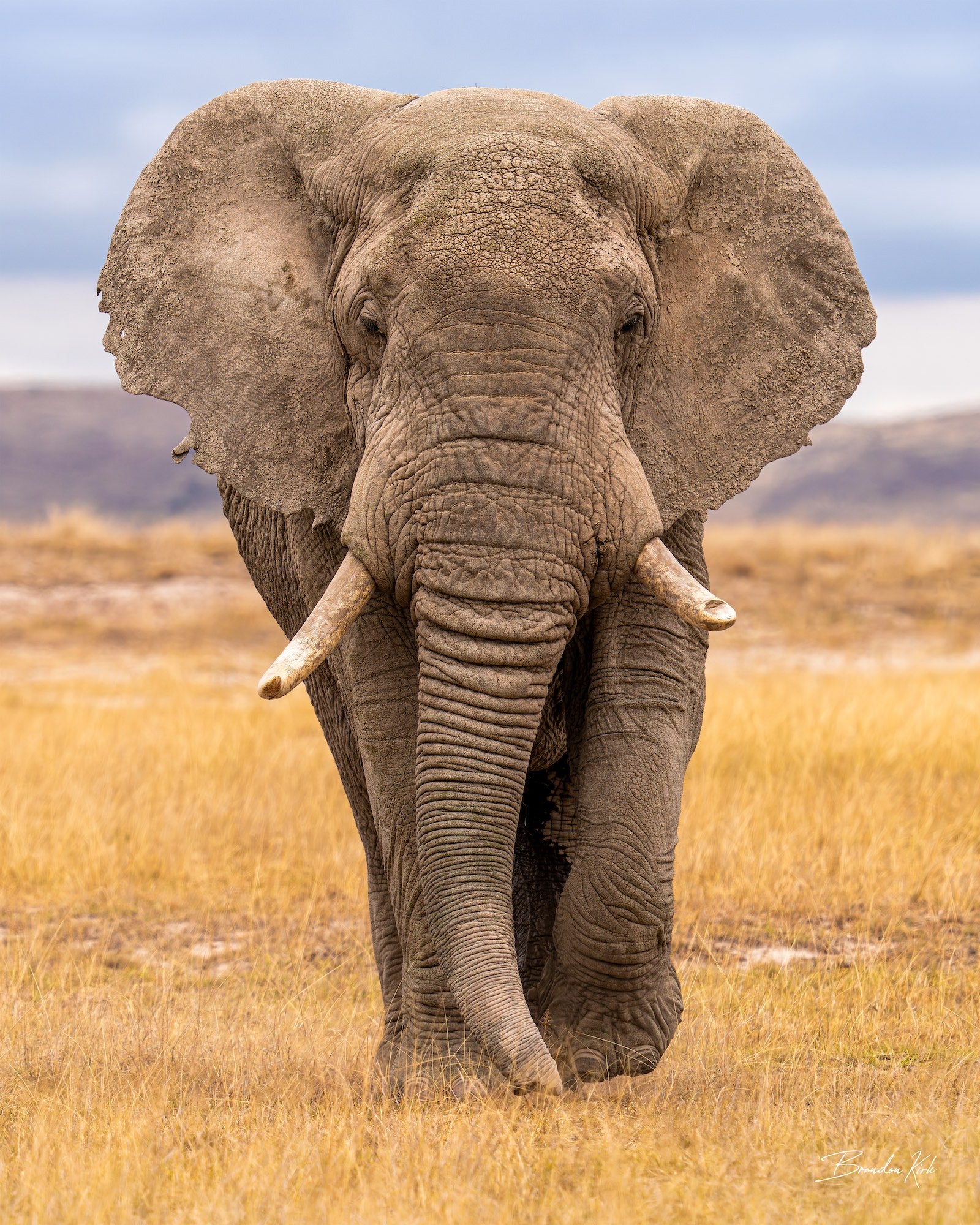
Photo by Brandon Kirk. Alpha 7R V. 200-600mm f/5.6-6.3 G. 1/640-sec., f/6.3, ISO 160
Lessons I Learned on my First African Safari
Early in my safari, I excitedly captured images of every animal I saw. It didn’t matter how far away the animal was or what it was doing. My finger was constantly on the shutter. Needless to say, nearly all of my images from the first day are – if I’m being kind to myself – not interesting.
But in the sheer volume of images from that first game drive there were a few decent ones. What made one image better than another? I had to learn what seasoned wildlife photographers know from years of experience.
At first, I made a lot of mistakes and used a lot of trial and error, but I reviewed and critiqued my images daily, adapted and my images got better. Here’s some lessons I learned and practical tips to give you the best chance of making your first African safari a success.
Reset Your Camera’s Date & Time
Before you leave or after you arrive in Africa, reset your cameras to the local day and time. This will help you organize your files and remember exactly where and when they were taken.
This is how it gets complicated. With an 11-hour time difference between Los Angeles to Nairobi, Kenya, the images I captured early on July 1 had a June 30 capture date. The images I captured later that same day had the correct capture date of July 1, but images from early on July 2 also had a July 1 capture date. Confused? I was too.
Leave Camp Ready
Each morning, be sure to head out with lenses mounted, batteries charged, memory cards empty, and settings adjusted approximately for the available light. Take a quick test shot or two before leaving camp. I realize this sounds simple and it is, but you will be both very excited and extremely jet lagged, particularly in the first several days. Remember that you may have the best encounter of your safari in the first few minutes after leaving camp. You’d better be ready.
Keep Adjusting For Available Light
Light changes quickly on the edges of the day. Early morning means constantly lowering ISO and increasing shutter speed as the sun rises; late afternoon requires the opposite. Check your exposure frequently. With a fleeting and incredible moment unfolding just as you turn a corner, you may not have time to make all of the necessary adjustments to your settings. Sorry, no do overs.
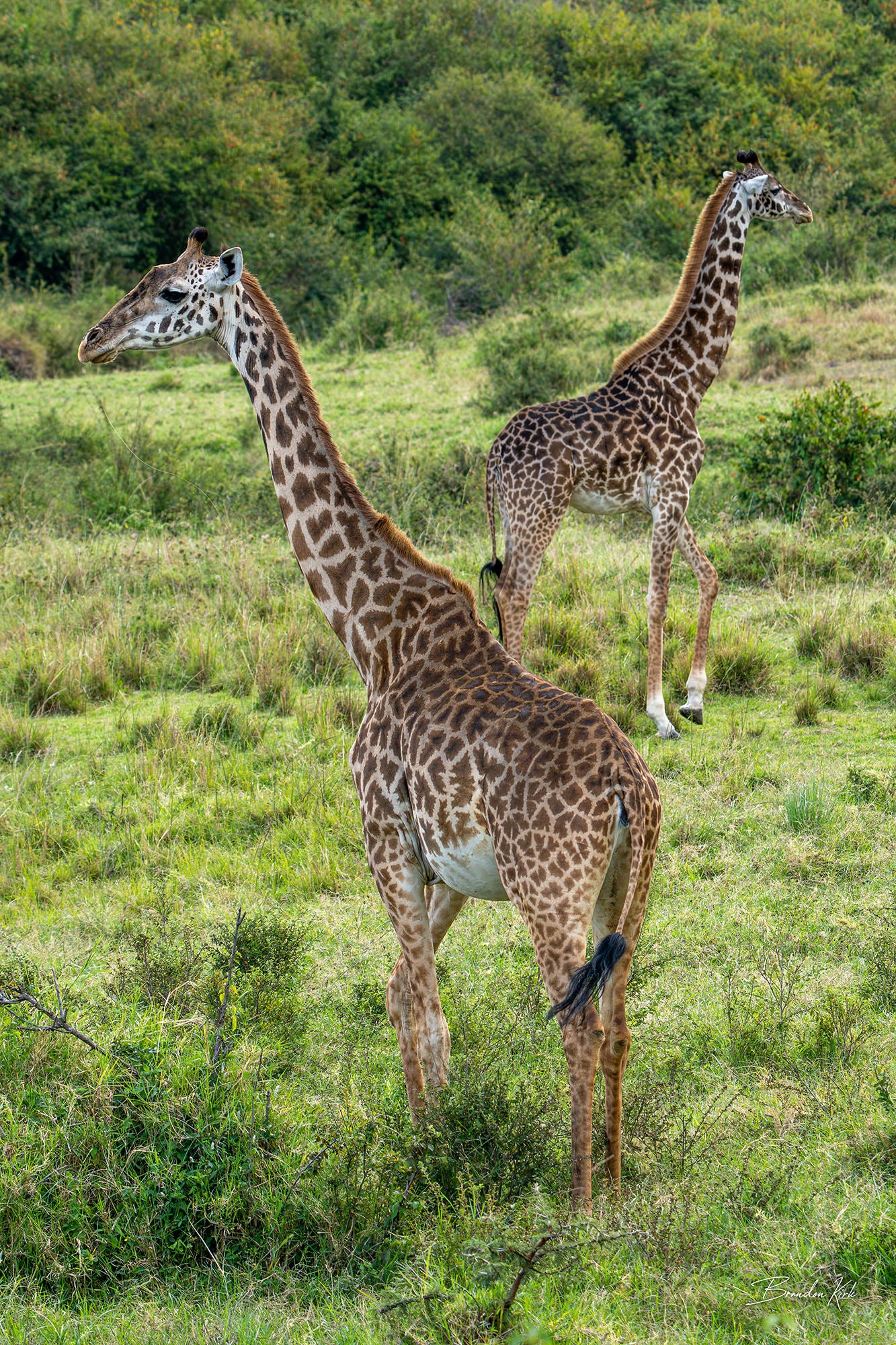
Photo by Brandon Kirk. Alpha 7R V. 200-600mm f/5.6-6.3 G. 1/250-sec., f/8, ISO 320
Look For Interesting Gesture
As a beginner wildlife photographer on safari, I started by capturing far too many images of lions just lying down because: 1) I was really excited; and 2) lying down is a lot of what lions do. If my frame even had a lion’s face at all, it was likely obscured by tall grass.
When a lion did sit up or walk, I didn’t wait for any particular moment. I was just shooting because I didn’t really know what I was looking for in my compositions. My images were missing interesting moments of gesture.
Gesture is the posture, body position or movement of an animal that provides character and insight to the moment. There are certain animal gestures that make for interesting images. At trade shows and workshops I had attended in the past, prominent wildlife photographers talked about gesture. I thought I understood what they were saying, but I didn’t fully appreciate it.
After a critical review of hundreds of images from Day 1, I began to connect the dots of what I had heard about gesture and what I was seeing (or rather not seeing) in my own images.
Let me be specific. It quickly became apparent to me that a sleeping lion isn’t nearly as compelling as one that’s awake and alert – eyes wide open and ears forward.
Like with people, faces (and eyes in particular) matter the most. Whenever possible, I tried to have the driver position the jeep in the direction the animals were walking or at least might glance toward me. While a perfectly executed profile image is also intriguing, a straight on image into the eyes of an animal reaches your soul.
My other newbie revelation was that a lion walking was more compelling than one just standing there. Like with human athletes, I tried to capture animals mid-stride to help convey movement and add interest to the image.
I also learned that some of the greatest moments of gesture were the interactions between the animals. Lions in a pride frequently nuzzle one another to strengthen their social ties and to reinforce their bonds. These moments were pure magic.
I was extremely fortunate to witness and capture the moment a mother leopard and her adult offspring nuzzled when reuniting, as you can see in my accompanying image. Once I started to look for these moments of interesting gesture, my images got much better.
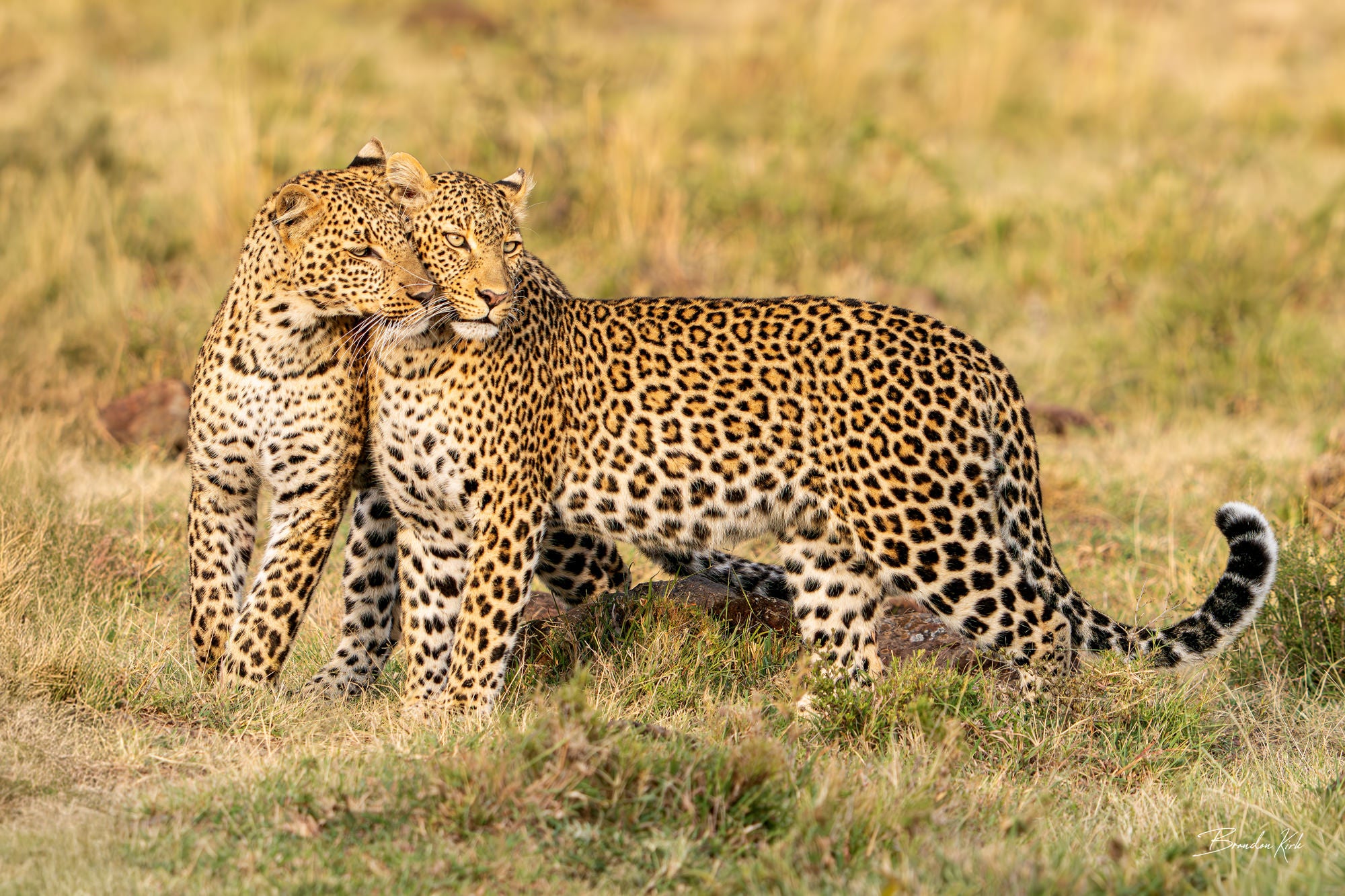
Photo by Brandon Kirk. Alpha 7R V. 200-600mm f/5.6-6.3 G.
Learning And Adapting As You Go
You should review at least some of your images, particularly the ones you’re most excited about, when you’re back at camp after a game drive. This is important to do early in your trip. Did your image of that great moment turn out as perfectly as you hoped? If not, why not?
I guarantee you’ll learn from your Day 1 mistakes. And that’s why you need to review your images on Day 1, so you don’t make the same mistakes on Day 2. Your days on safari are literally numbered; you have to make the most of each of them and learn quickly.
I realize that being critical of your own images may be difficult, but it’s a skill you must learn. If you do, you’ll create better images as the safari progresses. For me, as a newbie wildlife photographer, there was a steep learning curve, but I learned and improved.
By reviewing your images, I don’t mean chimping, especially during precious photo opportunities on game drives. I know it can be hard to restrain yourself when you see an incredible moment happen and think you’ve captured it. You’re dying to see if you nailed it. I get it, but I’m urging you to wait.
On several occasions, I captured what I thought was a great moment, only to have an even better moment happen a few seconds later that I missed because I was chimping. If you must chimp to confirm exposure or depth of field, do it quickly. But if you want to review dozens of images to relive a great encounter, at least wait until the moment has passed and you’ve left the scene.
Vary Your Focal Lengths
From reviewing my photos early in the safari, I noticed that I was capturing too many tight portraits. When armed with 600mm of zoom, I suppose this mistake is fairly common for beginning wildlife photographers.
I was so excited to see the animal and to be relatively close that I put only the animal in the frame. The result was a bunch of images with no sense of place. Fortunately, I noticed this tendency early and made sure that I also took some wider shots, capturing the animals in their environment.
However, if you do find yourself really close to an animal, that’s the time to try some really tight shots of the face and eyes. With a variety of focal lengths, your images will form more of a collection and will be more interesting. You might even surprise yourself with the ones you like the most. For my advice about lenses and focal lengths for safari photography, please see my previous article: A Photographer’s Guide To Your First African Wildlife Safari, Part 1.
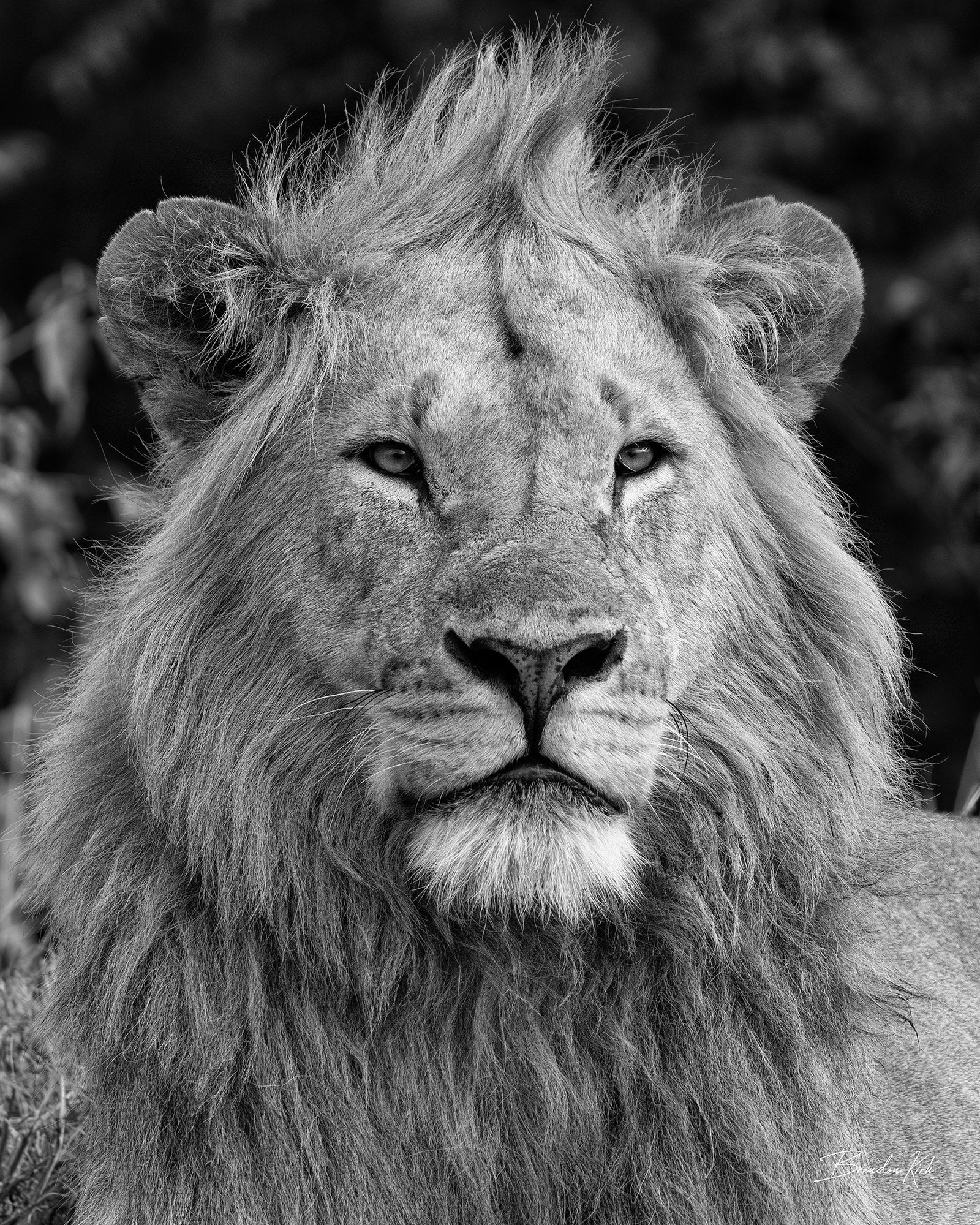
Photo by Brandon Kirk. Alpha 7R V. 200-600mm f/5.6-6.3 G. 1/250-sec., f/6.3, ISO 1000
Don’t Affect The Animal
Some wildlife photographers adhere to an ethical code of not disturbing an animal and affecting its behavior. Put another way, your presence should not be the reason an animal is behaving the way that it is. If you get too close to an animal, it will behave in a manner that is not normal or natural. Your transgressions will be evident in your photographs.
The safari guides and drivers are generally good about giving the animals the distance they need. But with only their phone’s camera, many safari clients are not so good. Don’t be the person who says, “Get closer, get closer” until you’re on top of an animal causing it to react to your presence, or worse, forcing it to flee. Besides, closer isn’t necessarily better. Please read my previous article, A Photographer’s Guide To Your First African Wildlife Safari, Part 2, to learn about shooting from a jeep.
Practice Manual Focus
In my day job as a surf photographer, my subjects are always moving and when I’m in or on the water, I’m moving too. As a result, I use autofocus probably 99.5% of the time, maybe more. I wish I had practiced my technique with manual focus before I left for Africa. I can do it, I’m just not very efficient with it.
On game drives, animals are sometimes hidden. Bushes and grasses in the foreground can confuse autofocus. This is when to switch to manual focus. Focus on the eyes as you would for a person. Just remember, if the animal moves slightly or if you move even the very shortest of distances within the jeep (even a few inches), you’ll need to re-focus. How in the world did generations of photographers achieve what they did with only manual focus lenses? We photographers take autofocus for granted today.
Lighting Is Still Everything
Fortunately, game drives happen at dawn and late afternoon, when the light is golden and soft. But be advised that in East Africa during June to August, you’ll likely encounter plenty of cloud cover. Don’t be disappointed – overcast skies can provide beautifully diffused light, and partly cloudy days can create dramatic patterns or spotlight effects on your subjects.
Having said that, if you get the conditions for a colorful sunrise or sunset, don’t think every day will be like that, they won’t. I had only a precious few colorful sunrises and sunsets even with 10 days on safari. If the conditions for a sunset are perfect, take advantage of them. Dinner can wait.
During your safari, you may encounter a small herd of elephants at a watering hole in the warm glow of the early morning sun. The scene is beautiful, but they’re completely backlit. The jeep is confined to the road and you can’t get to the other side of the watering hole because there is no road on the other side.
Rather than pulling your hair out, my advice is to first accept that you’ll be photographing silhouettes. Then after you’ve calmed down, talk to your guides about revisiting that spot at the end of the day for the best light. Your safari guide can be an invaluable resource about animal routines. Have a discussion with them to explain how important it is to have a good front light (if it’s color you’re after). Perhaps there’s another watering hole with the road on the other side.
Watch Your Backgrounds
With so many exciting moments happening on safari and with so many elements completely out of your control, it’s easy to focus only on your subject once you find a good one to photograph. But a messy background can ruin an otherwise great image.
Sometimes waiting just a few minutes – for an animal to move into a clearing, or away from an overlapping animal, or for another safari vehicle to pass – can make all the difference. Other times, if the animal is strolling parallel to the road, you might be able to follow along until the perfect background presents itself.
In tight spaces when there are many potentially distracting elements in the background, this is the time to use your most shallow depth of field (f/2.8 if you have it) to help separate your subject from the background. Alternatively, if you were hoping to photograph a semi-wide scene at 70mm, you can zoom in to 200mm to create a shallower depth of field. Remember the depth of field of your 70-200 f/2.8 lens is much shallower at 200mm than it is at 70mm.
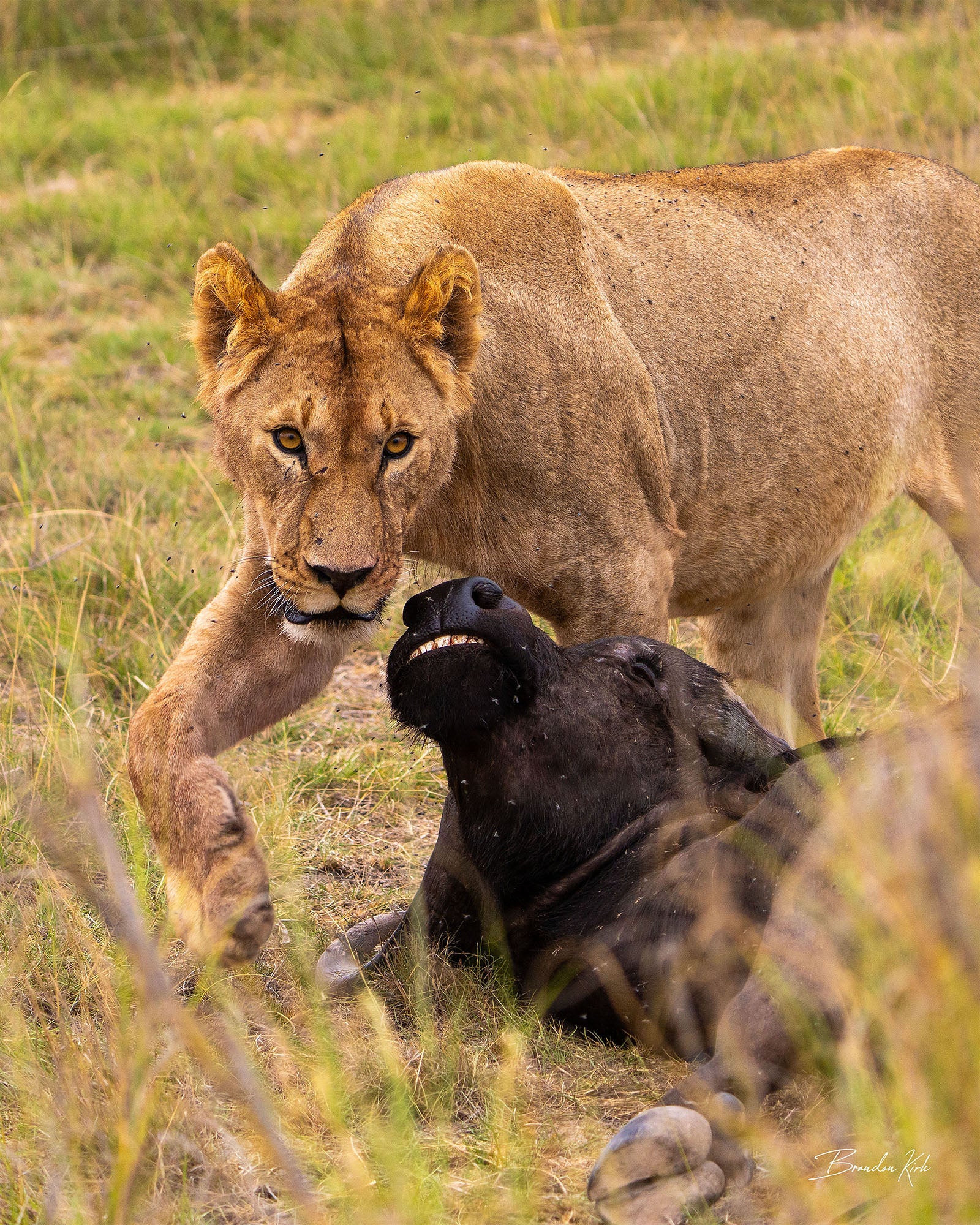
Photo by Brandon Kirk. Alpha 7R V. 200-600mm f/5.6-6.3 G. 1/250-sec., f/6.3, ISO 1000
Put The Camera Down (Occasionally)
You’re in Africa. You need to be present. I was traveling with my family so this was particularly important for me to do. “This isn’t a photo trip” was my wife’s only half-joking refrain during the safari. And yes, this was easier said than done.
Here’s when I could pry the camera out of my own hands:
1) When driving. This is the best time to just be a passenger and take in the scenery.
2) In the very early mornings and evenings. With light so low, shutter speeds too slow, and ISOs above 10,000, this was the time for me to enjoy my coffee or the sundowner beverage at the end of a day.
3) Giving my kids a camera. This actually turned out to be one of the highlights of the safari. It started on Day 1. I gave whatever camera that I wasn’t using to one of my sons. They’re in their early 20s, so they understood they were handling the crown jewels. They each got a crash course in the exposure triangle as they were shooting. They loved it.
If your safari companion isn’t a photographer but might enjoy capturing some images, you should discuss with them whether they might want to have their own camera for the trip. Their phone’s camera isn’t going to cut it.
After I ‘got the shot,’ I passed my second camera to my other son so they could both shoot. It was incredibly gratifying to see their excitement and success. They enjoyed the safari so much more when they had a camera. In fact, our holiday card this year was a photo of them with my cameras on our safari.
See more of Brandon Kirk's work on Instagram @brandonkirk and at BrandonKirk.com.
ICYMI: