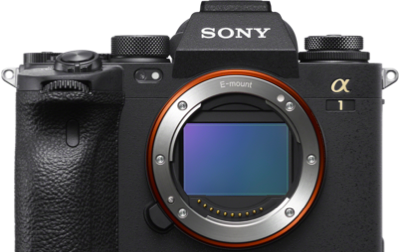
As an acclaimed photographer and timelapse specialist, Sony Artisan Drew Geraci knew that the June 2025 strawberry moon would be a special one. With meticulous planning, a trusty app and tripod, plus the Sony Alpha 1 II paired with his Sony 200-600mm f/5.6-6.3 G lens, Geraci was able to capture the strawberry moon as it aligned perfectly with the Air Traffic Control tower at Reagan National Airport. Learn more about how he transformed a fleeting lunar event into a viral phenomenon, amassing over 5 million views on Instagram, in his story behind the shot below.
Right Place, Right Time, Right Mindset
There’s a special kind of thrill in chasing the moon. Not metaphorically – literally chasing it down, predicting where it’ll be, lining it up with something manmade, and hitting the shutter button at just the right moment. That’s what this story is about. One rare moon, one iconic tower, and one very early wake-up call.
This wasn’t some lucky shot. It was a calculated play with a tip from my friend, Chris Fukuda, another DC based photographer, who inspired me to seek out a composition I’ve never shot before. It would require being in the right place, at the right time, with the right mindset.
In the end, it paid off in the most unexpected way – a viral timelapse with over 5 million views on Instagram. Here’s how it all went down.
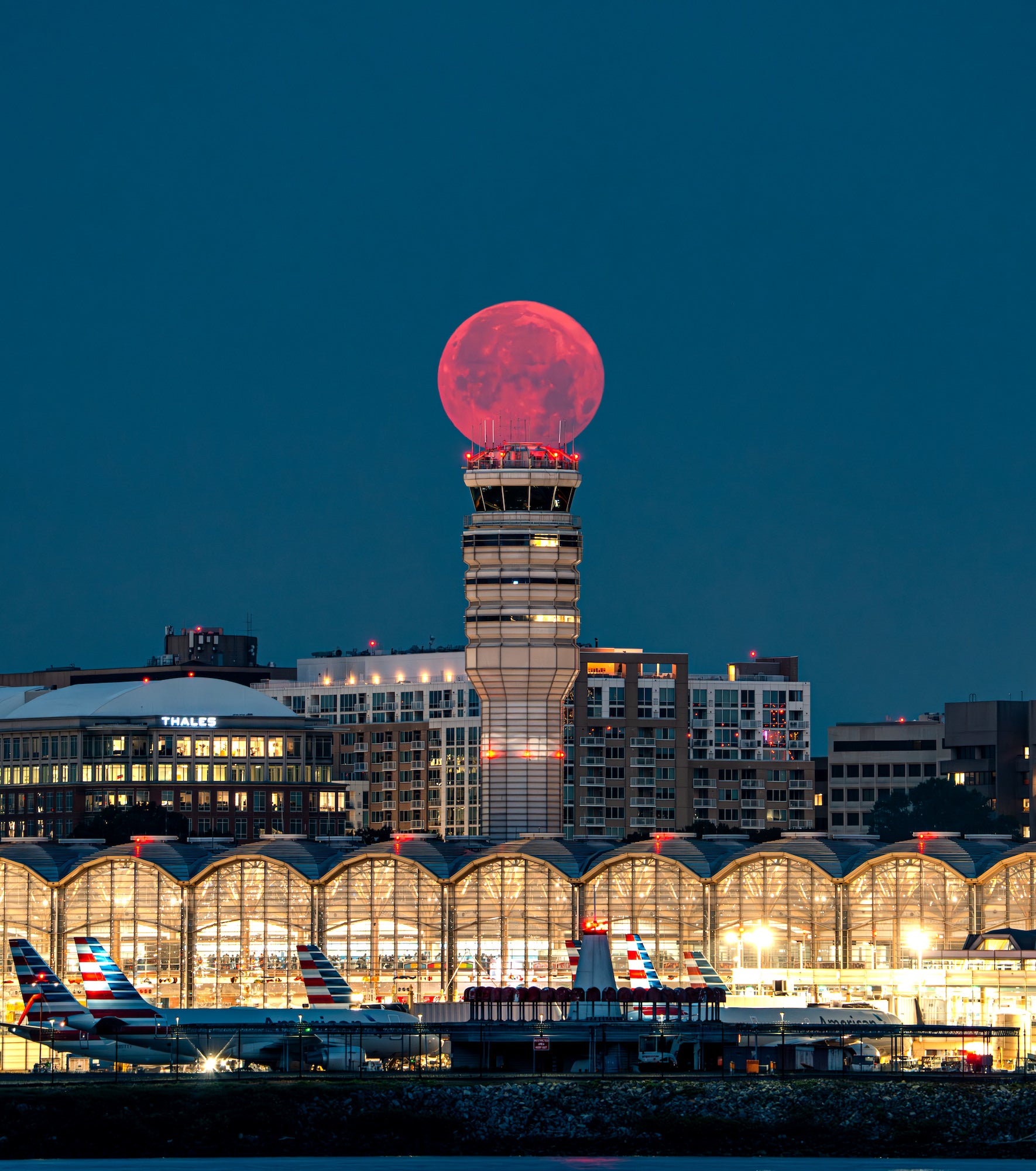
Photo by Drew Geraci. Sony Alpha 1 II. Sony 200-600mm f/5.6-6.3 G.
Planning The Perfect Shot
This year’s Strawberry Moon wasn’t just a pretty full moon – it was a cosmic headline. Thanks to something called a major lunar standstill, this particular moon followed a rare low path across the horizon. That path only happens once every 18.6 years. And because it sat so low and so large in the sky, it opened up a visual opportunity that just doesn’t exist most years.
As soon as I realized that this moon could align perfectly with the Air Traffic Control tower at Reagan National Airport, I knew I had to go for it. The idea of the giant Strawberry Moon lining up with a symbol of structure and control – it felt poetic. But this wasn’t going to happen by accident. The lineup would last only a couple minutes at most. Miss it? See you again in 2042.
I owe a big part of this shot to the PhotoPills app. If you’ve never used it, think of it like your moon-chasing assistant. I used it to find the exact time and place where the moon would align with the tower. It was like solving a math problem in the sky – azimuths, elevations, and a lot of Google Earth scouting to figure out my location.
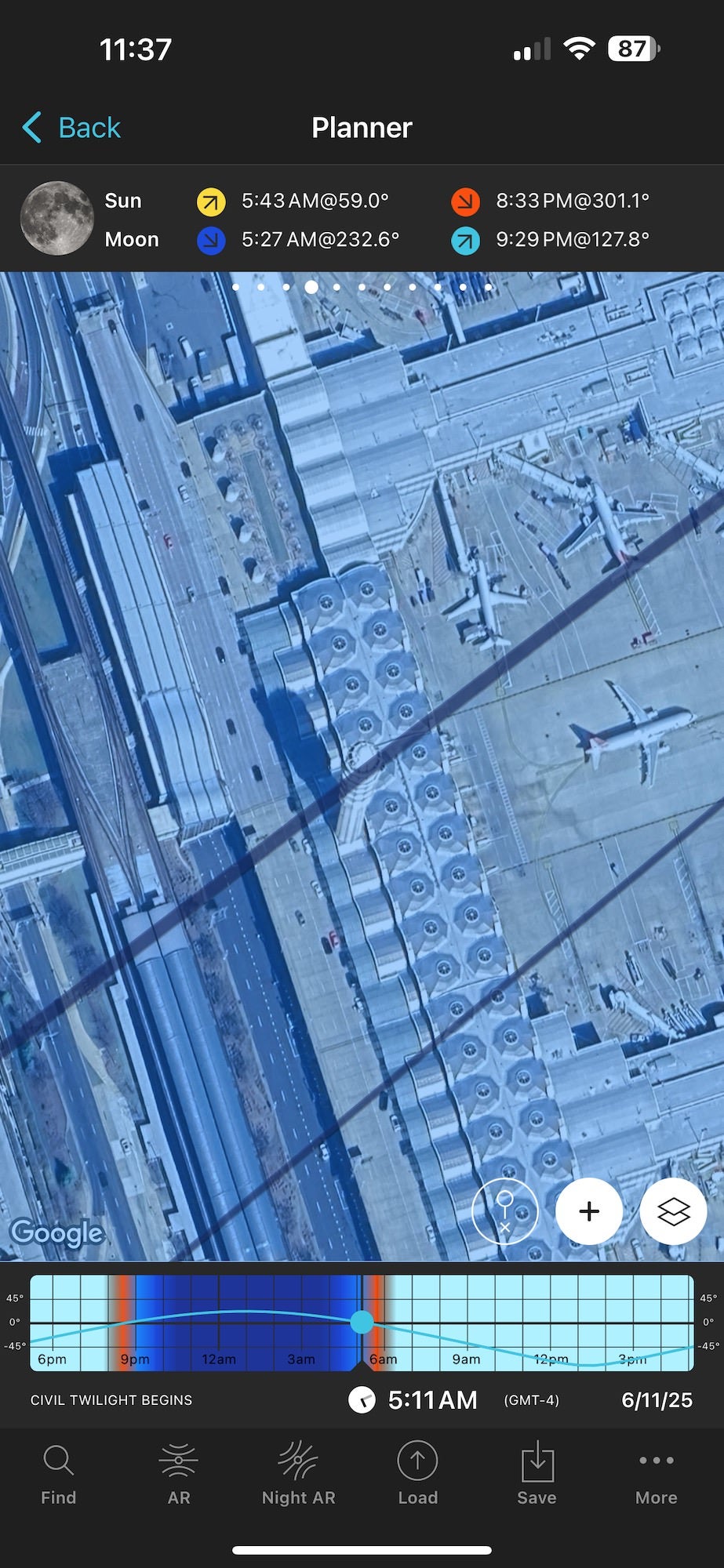
Sony Artisan Drew Geraci uses the PhotoPills app to plan his shot of the strawberry moon
Turns out, the best spot was East Potomac Park, about 1.8 miles across the Potomac River from the tower. Close enough for a dramatic composition, but far enough for a full frame shot. Once I locked in the coordinates and timing, the nerves started. I knew I had one shot – no retries, no reschedules. I had to be in place before sunrise, perfectly aligned, perfectly ready.
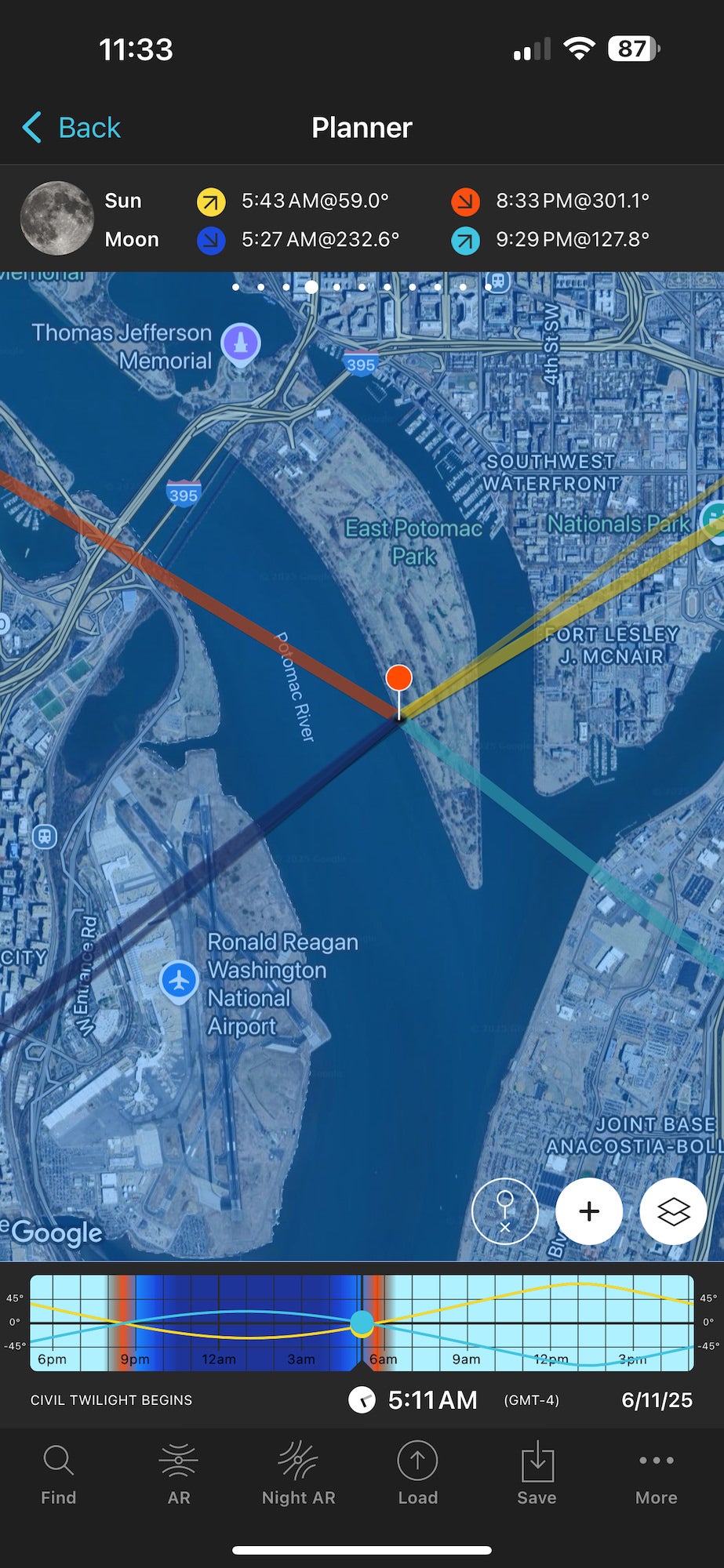
Sony Artisan Drew Geraci uses the PhotoPills app to plan his shot of the strawberry moon
Capturing The Strawberry Moon With The Sony Alpha 1 II
The alarm at 3:30 a.m. hit like a freight train. I loaded up my Jeep and headed out in the dark, fully committed. The entrance to the park was closed due to an event downtown in Washington, DC, so I had to park nearly 2 miles away. I always pack my electric scooter with me so reaching the actual filming location wasn’t too difficult since I could squeeze past the gates on it.
For my camera gear, I brought my Sony Alpha 1 II – an absolute beast of a camera for resolution and dynamic range. I paired it with the Sony 200-600mm f/5.6-6.3 G lens, mounted on a super-sturdy tripod, weighed down to keep any wobble from ruining the shot. Why all the overkill? Because at 600mm, every single vibration shows up. You’re basically filming through a long tunnel of atmosphere—heat shimmer, haze, and all. I locked down my focus manually, set my exposure to protect the moon’s details, and crossed my fingers.
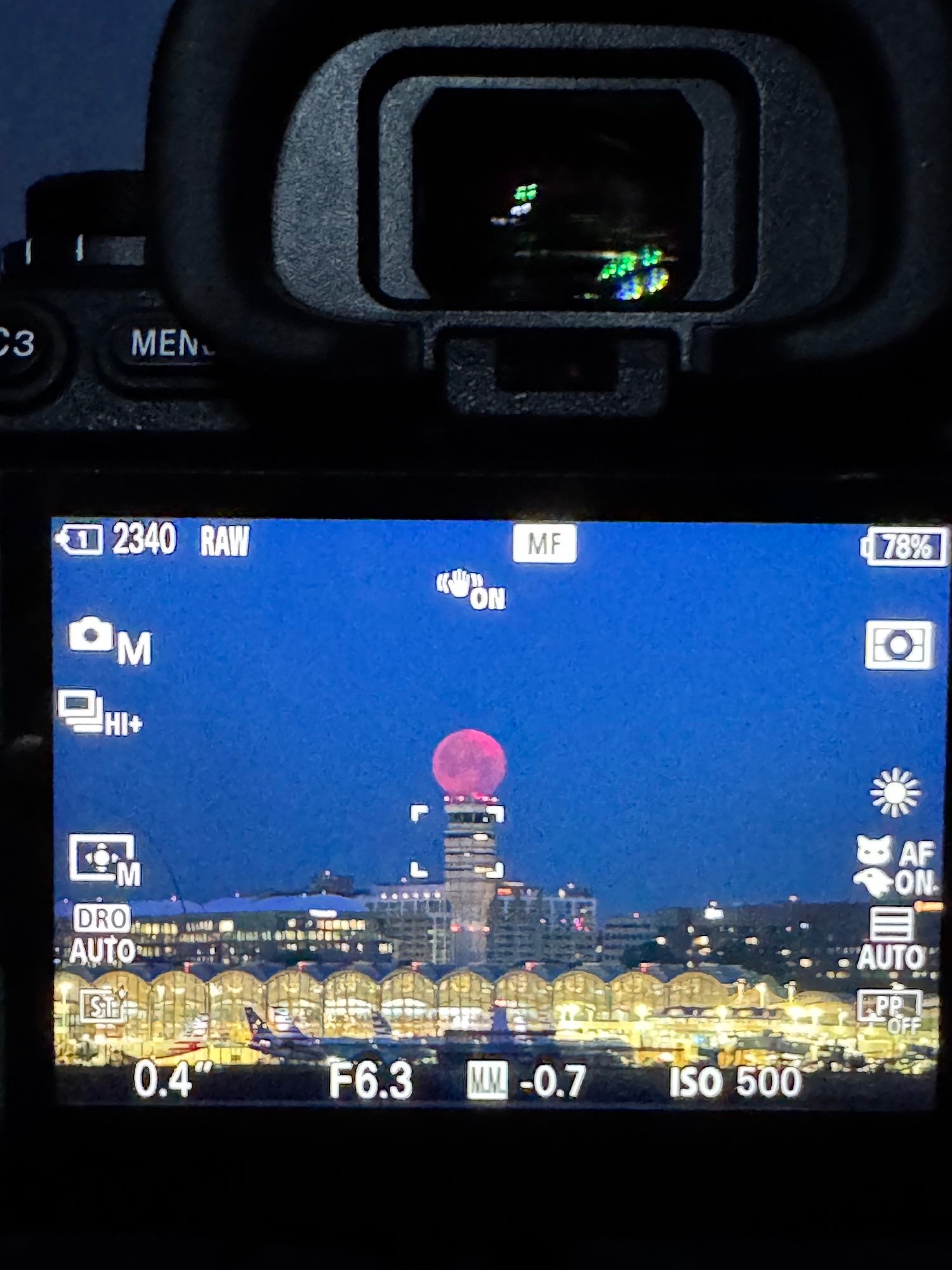
Drew Geraci captures the strawberry moon with his Sony Alpha 1 II
I set up a timelapse sequence in-camera, using an interval of one second, letting the Alpha 1 II fire off frame after frame while I stood there, barely breathing, watching the moon slowly set against the horizon. It was quiet. Peaceful. The kind of moment you forget to blink during.
From Concept To Viral Sensation
And then… it happened.
The moon descended above the ATC tower, almost in slow motion. It looked unreal – like a visual effect dropped into reality. It slid right into alignment, glowing deep orange and impossibly big, sitting atop the tower like it had been placed there on purpose.
The camera caught every second. And when I posted it on Instagram? It blew up. Millions of people watched. Comments poured in. Some people thought it was fake. Others thanked me for sharing something they’d never seen before.
That was the real win – not the numbers, but the wonder it sparked. That sense of awe that comes when you realize how wild and beautiful our universe actually is.
Precision, Patience & A Little Bit Of Insanity
People often think shots like this are lucky. But luck doesn’t get you out of bed at 3:30 a.m., or standing in a park with mosquitoes and gear at the ready. This was precision, patience, and a little bit of insanity.
And I’d do it again in a heartbeat.
Because sometimes, when you chase the moon, it actually shows up – and rewards you with a moment that reminds you why you started filming in the first place.
To learn more about the Sony Alpha 1 II, click here.
To learn more about the Sony 200-600mm f/5.6-6.3 G, click here.
See more of Drew Geraci’s work on his Alpha Universe Profile and on Instagram @drewgiggity.
For more stories behind the shot, visit alphauniverse.com/explore/bts.