Blake Pickup is an action sports photographer and educator based in Queenstown, New Zealand. “I photograph mountain biking, snowboarding and skating, and I teach photographers how to plan, light and edit for professional results in real world conditions,” he explains. We came across this action-packed image he created using his Alpha 7 III (Buy Now) and 16-35mm f/4 (Buy Now) and had to learn more. Keep reading as he shares his story behind the shot in his own words.
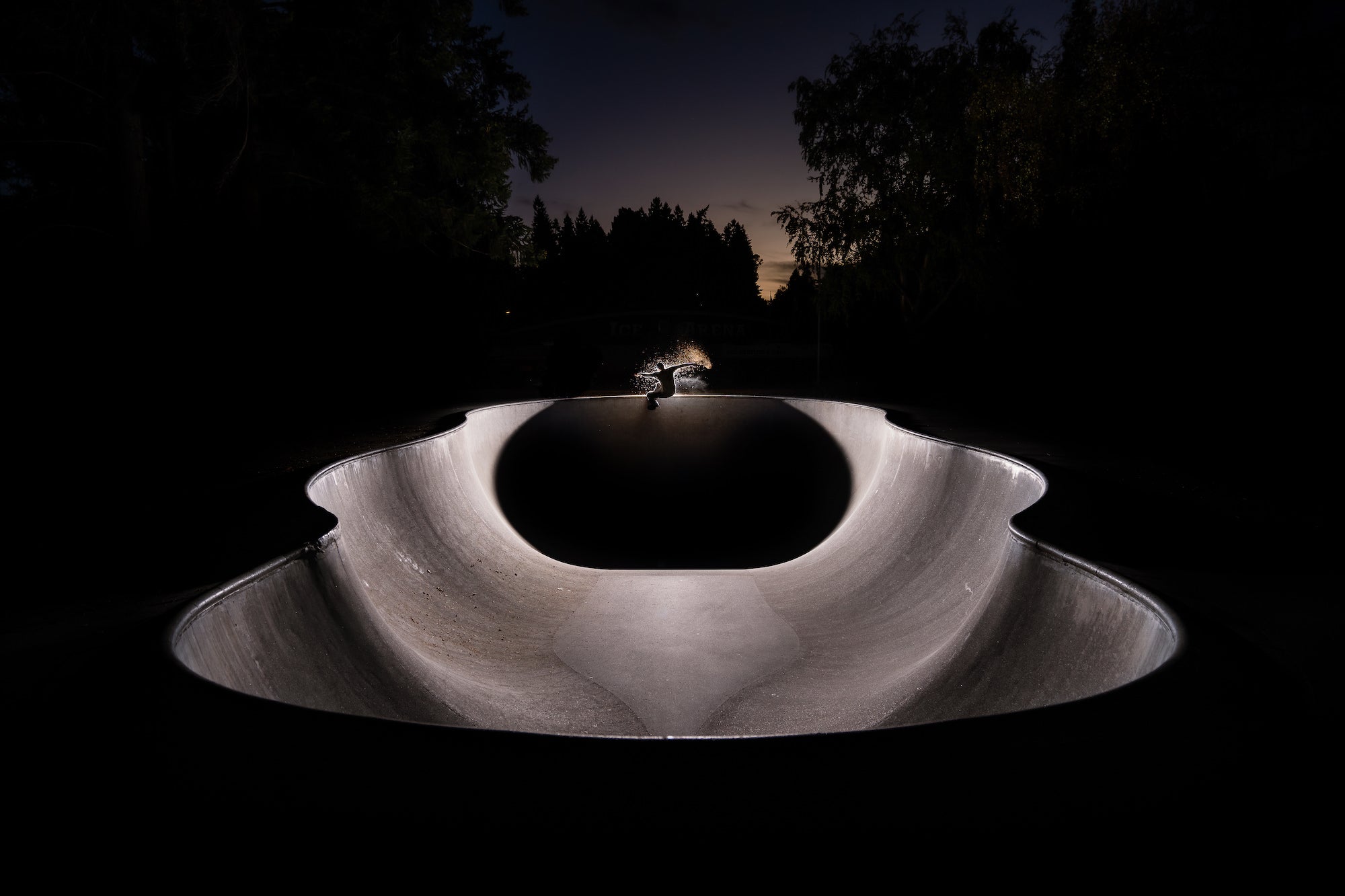
Photo by Blake Pickup. Alpha 7 III. 16-35mm f/4. 1/640-sec., f/4, ISO 400
Adding Action To A Symmetrical Skate Bowl
This bowl had been in my head for weeks. I loved the symmetry and the clean concrete, and I wanted a dramatic image that felt different from the usual angles people had captured there. The goal was to showcase the bowl itself first, then add a skate moment that belonged inside that geometry. I called the one skater I knew who could actually ride this steep bowl and make the idea work.
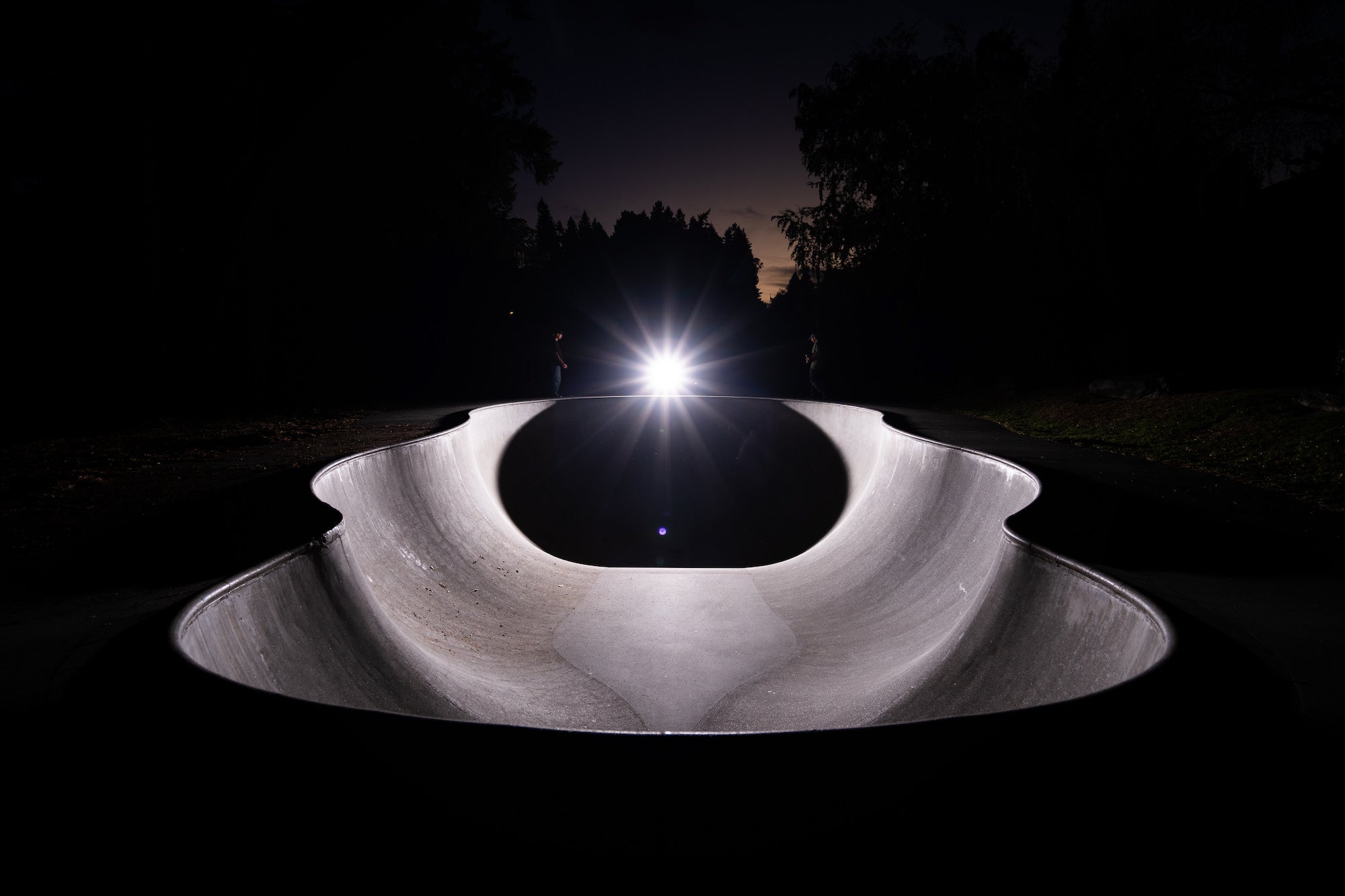
Photo of bowl without skater by Blake Pickup. Alpha 7 III. 16-35mm f/4.
Why A 16–35mm Wide‑Angle Lens Works For Action Sports
I used my Alpha 7 III camera paired with the 16-35mm f/4 lens at 16mm. I used the 16-35mm f/4 lens because it was the wide angle I had and it let me hold the symmetry without distortion going wild at the edges. The strobe was essential for shaping the scene and separating the skater from the concrete. Along with this combination I had one 600 watt strobe with wireless trigger and a tripod to get my composition locked.
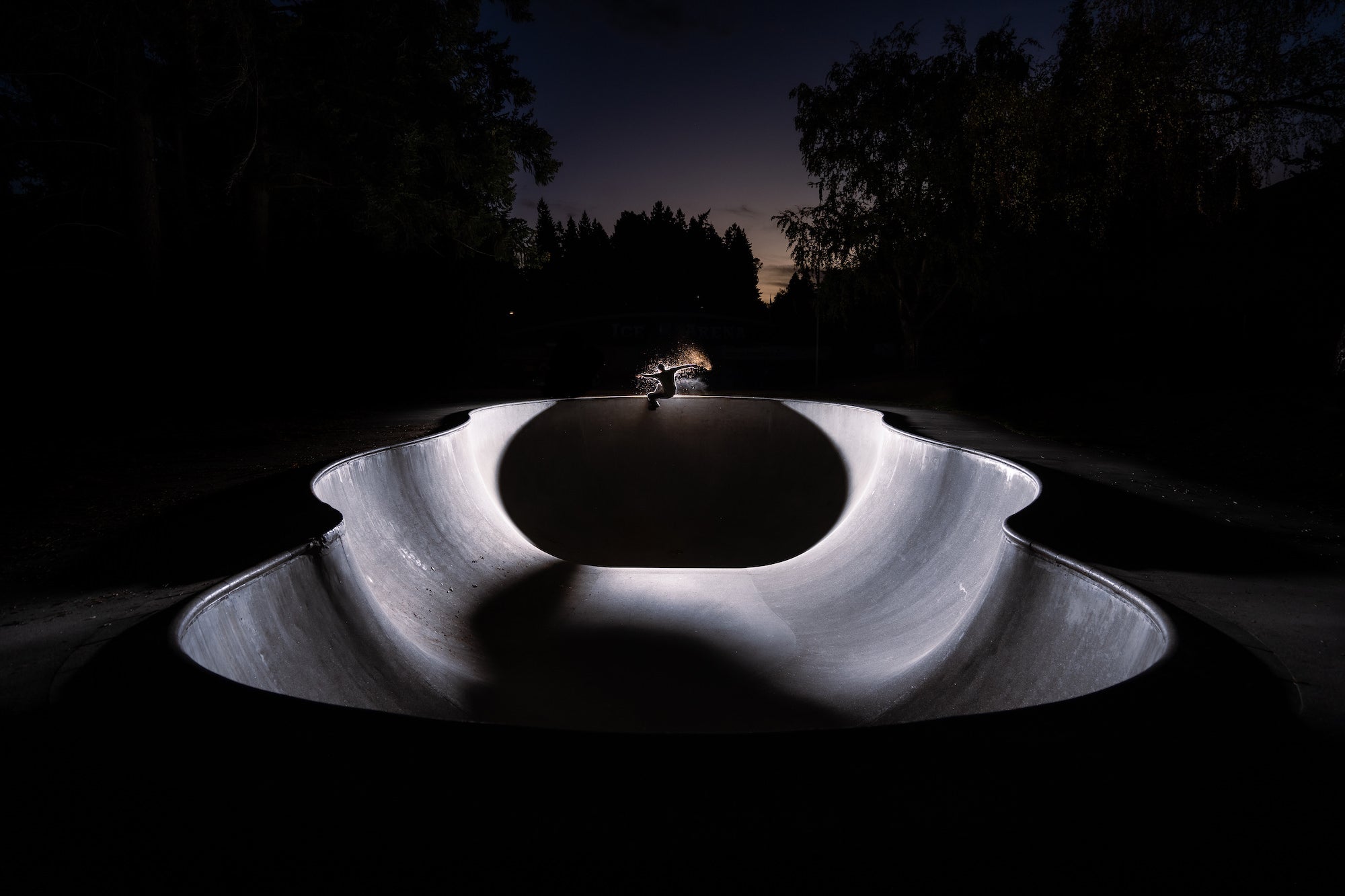
Photo of bowl with skater by Blake Pickup. Alpha 7 III. 16-35mm f/4.
Strobe Lighting, Dust & A Multi‑Exposure Approach: The Setup
My settings for this image were 16mm, 1/640-sec., f/4, ISO 400. I shot on a tripod so that my composition would stay identical for every frame. I timed the session for sunset into blue hour, so high speed sync could push the ambient down and let the flash define the look.
We tried a straight backlit frame where the skater landed in front of the light, but I wanted more depth than a silhouette. To add texture, I had a friend throw dust two meters behind the athlete, just in front of the strobe. It looks close to him in the final frame, but it is actually behind him so it catches the light and builds contrast around the trick.
I only had one strobe, so I approached the capture as a multi-exposure. That let me remove the skater’s shadow from the bowl while keeping the lighting consistent. It took multiple attempts. The rider took some heavy falls, but he is the kind of skater who will push to bring a photo idea to life.
Quick Composite: Lightroom And Photoshop Workflow
I did the initial tone and color work in Lightroom on both base frames. I brushed the exposure down on my friend who was throwing dust so he would fade into the background. I then composited the two frames in Photoshop for one reason only. I removed the skater’s shadow from the bowl. No other Photoshop work was needed. The strobe already created the atmosphere and separation I wanted, so the edit was about refinement rather than reinvention.
Photo by Blake Pickup. Alpha 7 III. 16-35mm f/4. 1/640-sec., f/4, ISO 400
See more of Blake Pickup's work on Instagram @blakepickup.
Explore the stories behind more of your favorite images at alphauniverse.com/explore/bts.