Creator Juan Meza Cid (@itoismo) lives in Los Ángeles of the Biobío region in southern Chile. While his fulltime profession is as a graphic designer, he’s also a photographer for the area’s public health institution and shoots a lot of freelance and personal projects. This work takes him to many national parks and wilderness areas to capture the flora, fauna and landscapes of southern Chile. “My relationship with nature began at a very young age, as I have spent much of my life visiting the Chilean mountain range,” he explains. “I have family who live near one of the national parks in the region where I live, so I have always had an exploratory spirit.”
We recently came across this image he captured of the large Magellanic woodpecker, which placed in the 2025 Audubon Photography Awards Top 100. We connected with Juan to learn more – keep reading as he shares his story behind the shot.
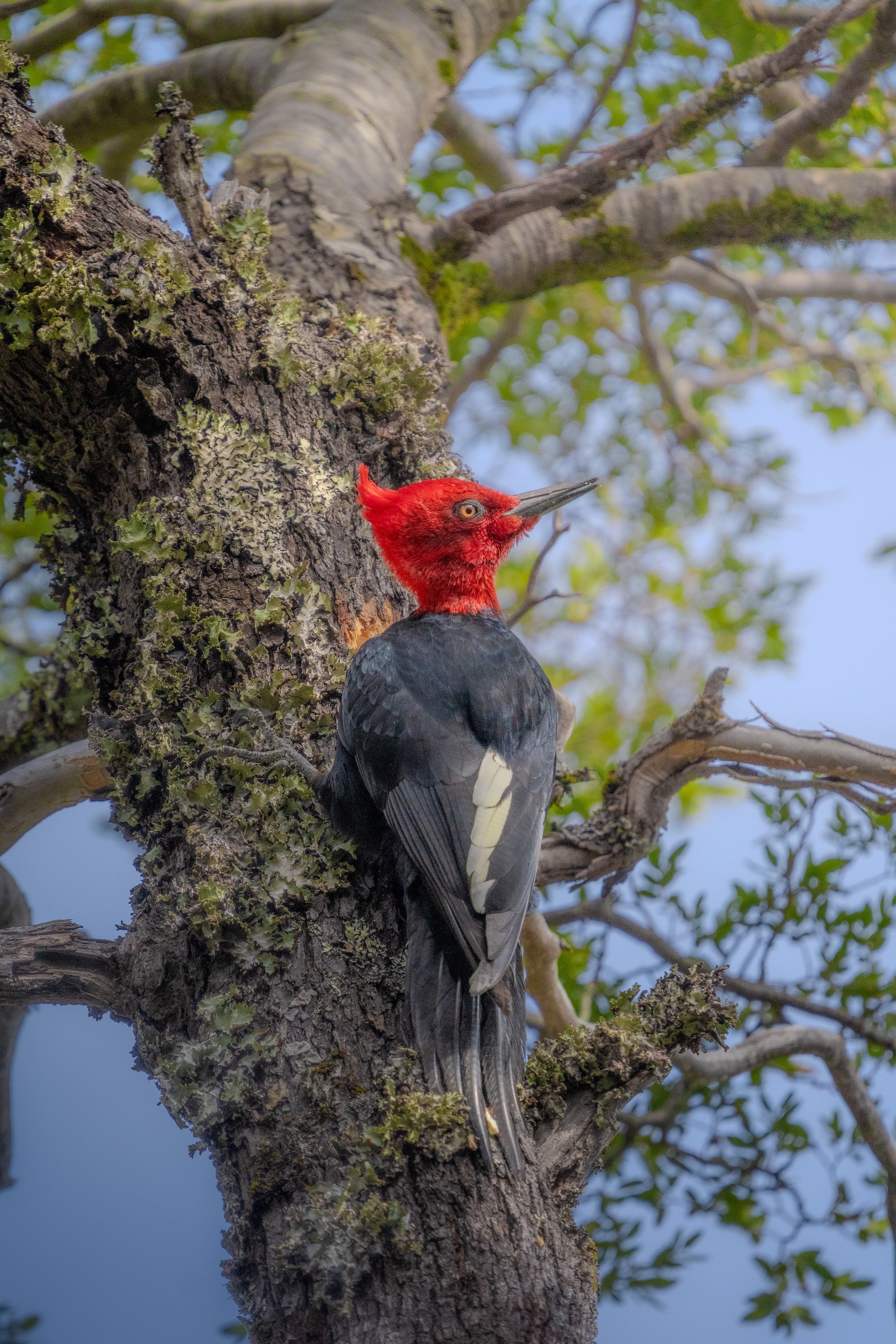
Photo by Juan Meza Cid. Alpha 6600. 200-600mm f/5.6-6.3 G. 1/2000-sec., f/6.3, ISO 1250
Looking For The Magellanic Woodpecker
In August of last year, I traveled to the city of Pucón, in the Araucanía region of southern Chile. There, I found Villarrica National Park, located on the Villarrica Volcano (one of the most active volcanoes on the continent). My goal was very clear: to go photograph birds in Villarrica National Park. Once there, I set out to explore the forests at the foot of the volcano, since from previous experiences, I knew of the presence of Magellanic woodpeckers (Campephilus magellanicus) there. After a few hours of exploring, I heard the characteristic sound this bird makes when it taps on trees in search of larvae. Following the sound, I was able to spot this splendid bird and take some photographs of a pair peacefully feeding in the forest (I also have photographs of the female).
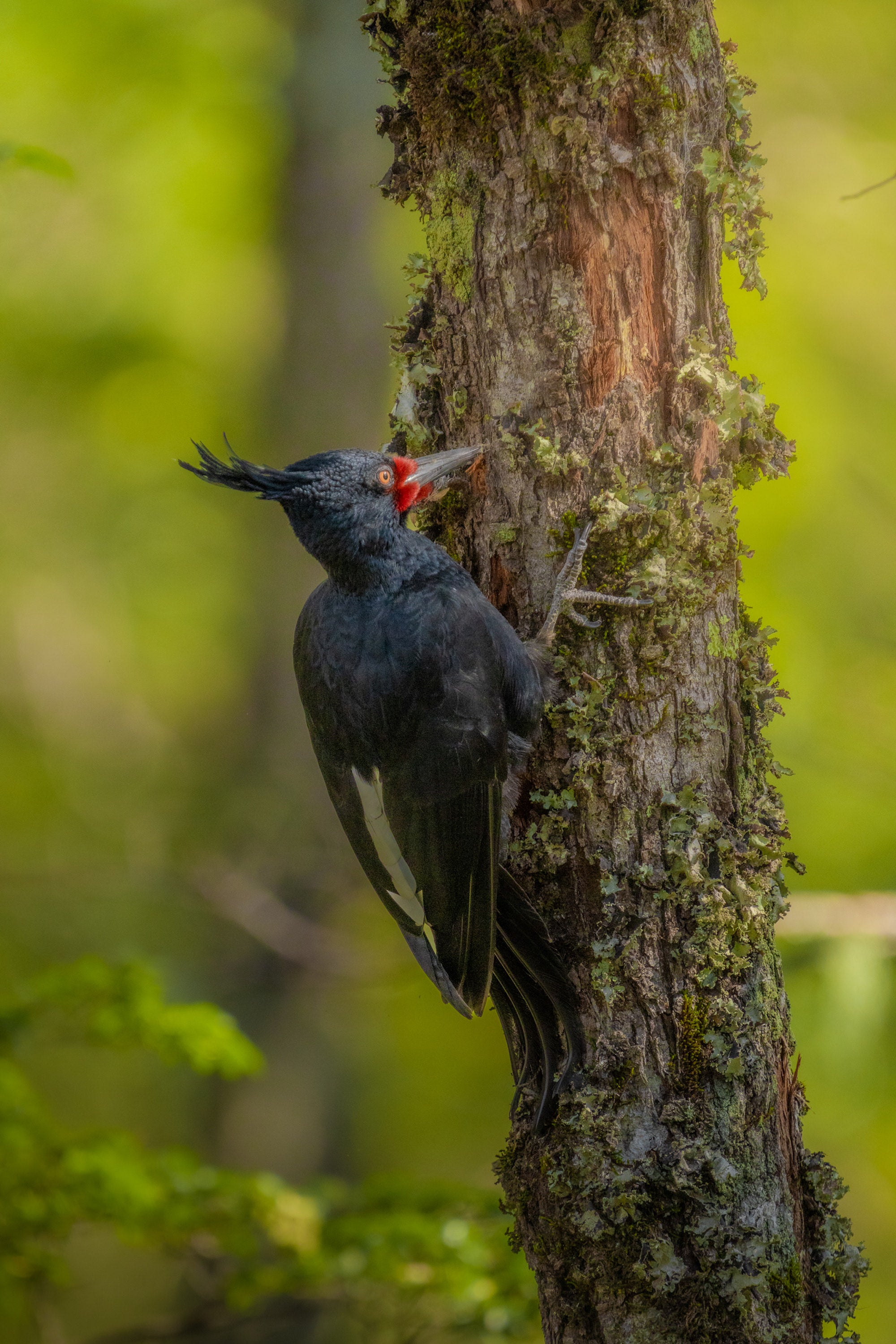
Photo by Juan Meza Cid. Alpha 6600. 200-600mm f/5.6-6.3 G. 1/800-sec., f/6.3, ISO 1250
The Perfect Lens For Birds, Wildlife & More
The equipment I used was my Alpha 6600 paired with my 200-600mm f/5.6-6.3 G (Buy Now). I chose this equipment due to the crop factor of APS-C cameras and the great telephoto lens capabilities for long-distance photography. Aside from those reasons, I'd like to mention the quality of Sony's equipment, especially for photographers working in the mountains and forests.
Handheld Bird Photography
Regarding the shot, I used my Alpha 6600 in manual mode, at a shutter speed of 1/2000-sec. with an ISO 1250 to avoid movement in the bird. I used the lens at 576mm with an aperture of f/6.3. I didn't use a tripod since it was difficult to move in the dense forest and I needed to carry little weight. I also didn't use a flash or artificial lighting to avoid interrupting the bird's behavior. In addition, the light from the forest creates a very interesting and sufficient atmosphere.
The Edit
Finally, I edited/post-produced the photo in Adobe Lightroom Classic. My main goal when editing is to correct the exposure, raise shadows so as not to lose details, and lower highlights that might detract from the focus. I improved the focus details and, with some masks, was able to achieve the dynamic range I considered optimal for the scene. I didn't reframe because I was very happy with the framing obtained from the camera itself.
See more of Juan Meza Cid’s work on Instagram @itoismo.
Add the super-telephoto zoom to your kit, purchase the 200-600mm f/5.6-6.3 G.
Read more stories behind the images from your favorite photographers at alphauniverse.com/explore/bts.