Chris Laracy is a wildlife photographer based in the NY/NJ area. “I spend a lot of time in the field chasing clean light, clean backgrounds, and real wildlife behavior, especially the moments that happen fast and never repeat,” he explains. “Outside of shooting, I make my living teaching what I’ve learned through online lessons and mentorships, plus field workshops for photographers who want to build real skills in real conditions. I genuinely love what I do, and I feel lucky to be able to create and share this kind of work.” We came across some of Chris’ recent winter bird photography and reached out to learn more. Keep reading as he shares the story behind these shots, taken with his Alpha 1 II and 600mm f/4 G Master.
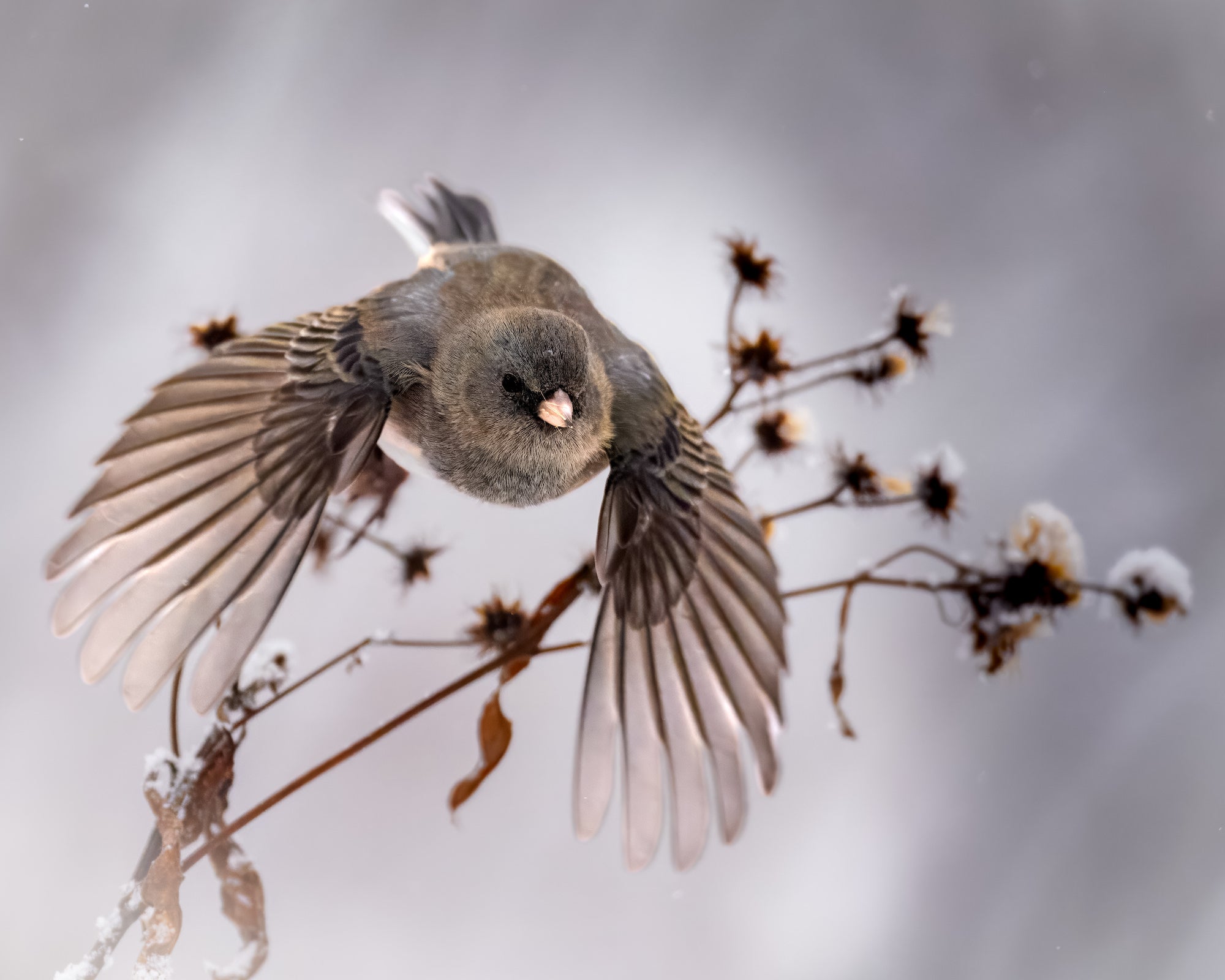
Photo by Chris Laracy. Alpha 1 II. 600mm f/4 G Master. 1/3200-sec., f/4, ISO 8000
Spending Time In The Field
These were shot in Morris County, New Jersey at a local swamp. I was out there shooting for my Instagram page and portfolio, just building the body of work the way I always do, by putting in time in the field and finding the right moments. Because it’s only about 15 minutes from me, prep was my normal routine: batteries charged the night before, lenses cleaned, memory cards formatted, and fully dressed for the cold and everything that comes with shooting outdoors in winter.
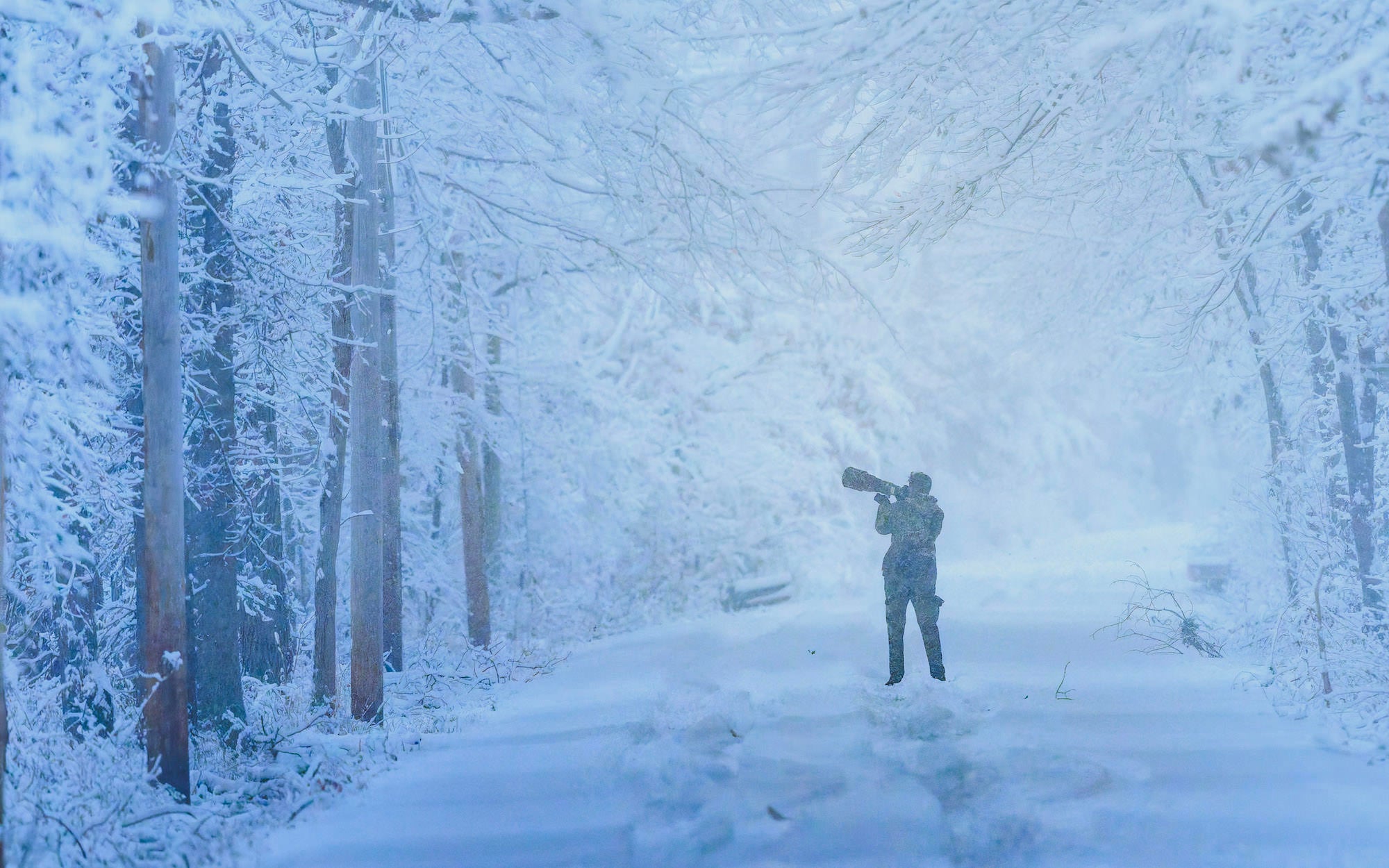
Behind-the-scenes photo of Chris by Lyndon Llanes (@8_bit_explorer)
The Ultimate Bird Photography Setup
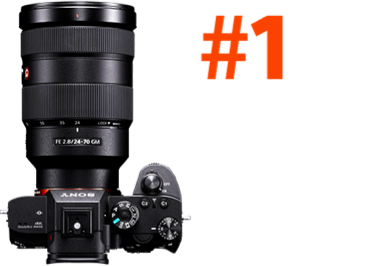
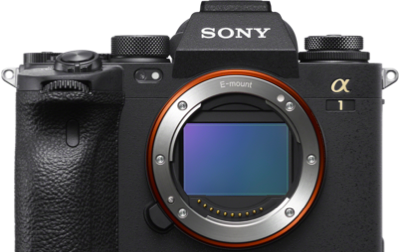
I created these photographs with my Alpha 1 II paired with the 600mm f/4 G Master as my main setup. It’s my workhorse because it gives me the reach and sharpness I need, plus Pre-Capture, 30 fps, and 50 MP files that let me freeze fast moments and still have plenty of detail to work with. I also had an Alpha 7R V at my side with the 70-200mm f/2.8 G Master II and a 1.4x teleconverter as a secondary for anything that got too close for the 600mm. Between the Alpha 7RV’s 61 MP crop flexibility and how sharp that 70-200mm is, it’s a really useful, flexible backup to the 600mm prime. For these shots specifically, the Alpha 1 II’s Pre-Capture and 30 fps were the difference. They’re two features I can’t live without anymore.
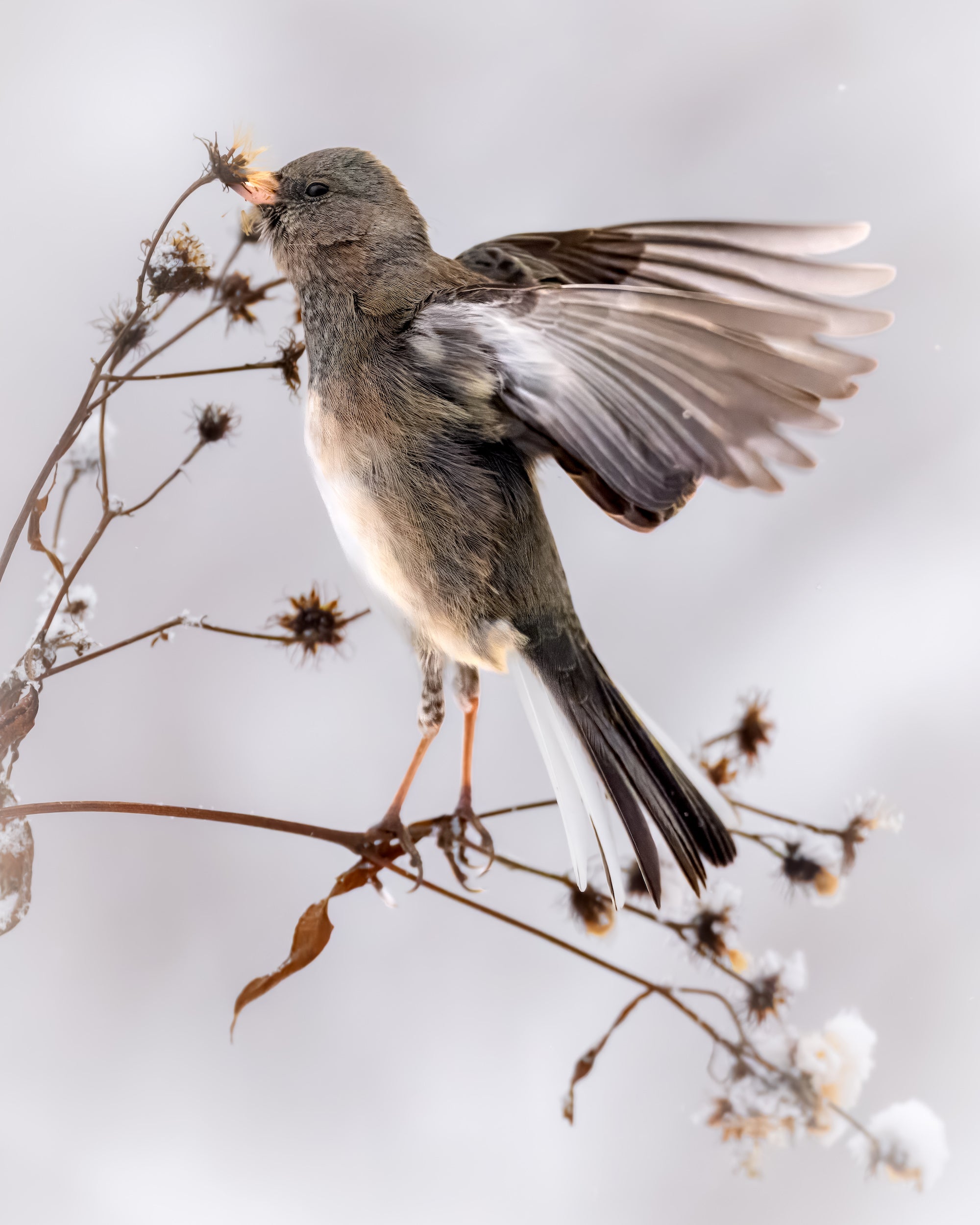
Photo by Chris Laracy. Alpha 1 II. 600mm f/4 G Master. 1/3200-sec., f/4, ISO 10000
Freezing Motion In A Photograph
These were shot at 600mm, 1/3200-sec., and ISO 8000. It was a dark, overcast snowstorm, so the ISO had to climb to get a proper exposure while still keeping the shutter speed high enough to freeze motion. I used Pre-Capture set to the full 1 second so I could reliably get the entire launch, not just the moment after I reacted. My setup was mostly handheld, which is how I shoot most of the time because I cover a lot of ground and stay mobile, and the 600mm f/4 G Master is light enough that true handheld shooting is realistic. If I know I’m going to be waiting for a bird to take off for a long time, I’ll switch to a monopod, but in this situation handheld made the most sense.
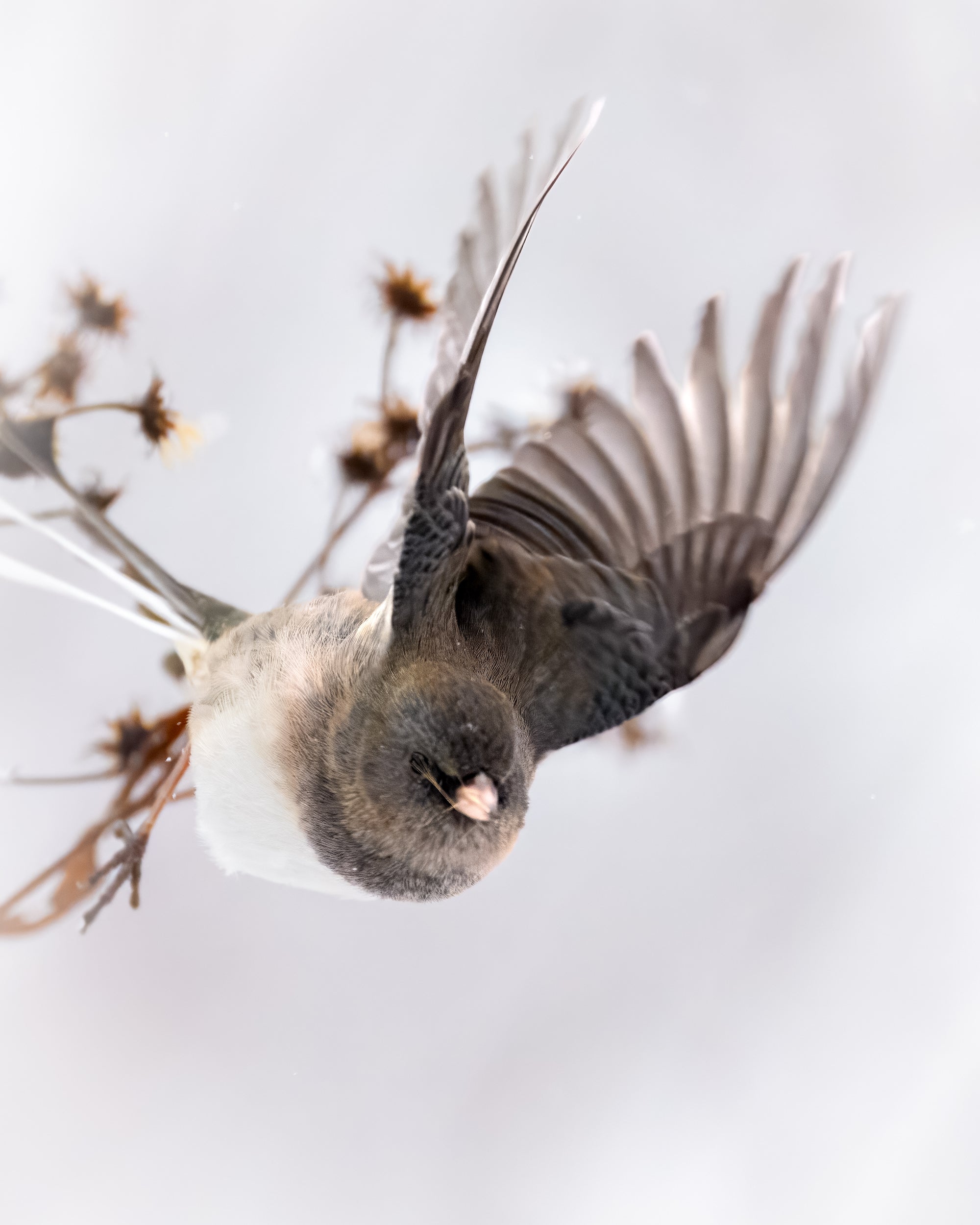
Photo by Chris Laracy. Alpha 1 II. 600mm f/4 G Master. 1/3200-sec., f/4, ISO 8000
A Clean and Simple Edit
My post-processing for these was pretty standard and all done in Lightroom Classic. I keep my edits clean and natural, focusing on isolating and highlighting the subject so the image feels intimate and intentional. That usually means dialing in exposure and contrast, balancing the whites from the snow, and using targeted adjustments to subtly bring attention to the bird while keeping the scene looking real.
See more of Chris Laracy’s work on Instagram @chris.laracy.
Shop Chris Laracy's Bird Photography Kit:
–Alpha 1 II
–600mm f/4 G Master
–Alpha 7RV
–70-200mm f/2.8 G Master II