Adventurer Tori Harp (@toriharpimages) works as a glacier guide in New Zealand. “As a glacier guide, I spend a lot of my time outdoors in the elements taking whatever nature decides to throw at me,” she explains. “Photography came secondary to my love for adventure and I have simply integrated it into my excursions. I don’t use any fancy camera bags, I just use whichever pack suits for the adventure I am on, whether that be ice climbing, a multi-week backcountry hunt, or a day out skiing.”
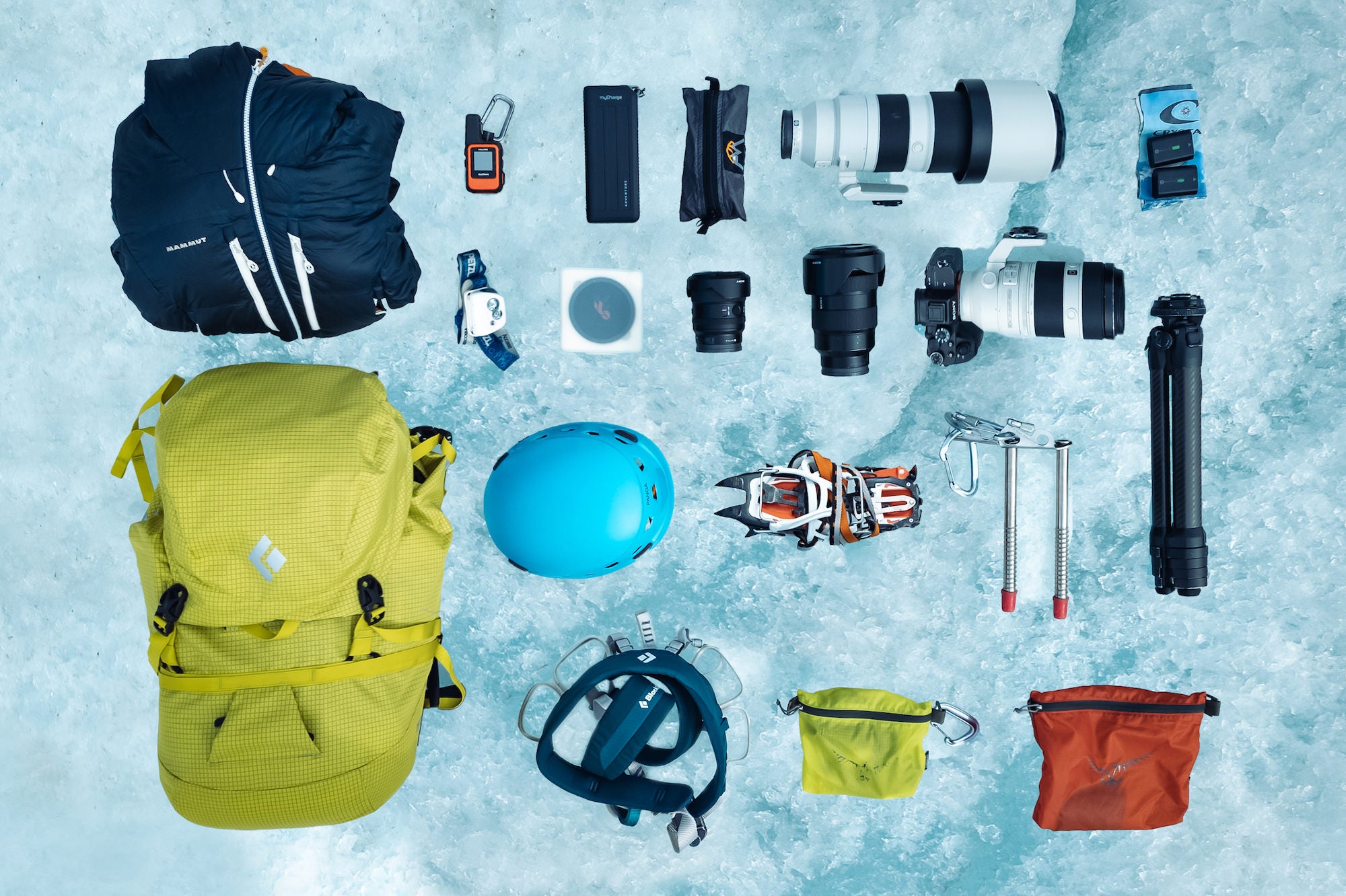
She continues, “To effectively capture the fleeting moments I encounter on a glacier, it is imperative that I have the proper equipment packed away carefully in my bag. For my gear pictured here, I am on an ice climbing adventure on New Zealand’s Tasman Glacier with my Black Diamond 30L Climbing Pack. Let’s take a look at what’s inside to aid in my photography success.” Keep reading as Tori shares what’s in her bag for an ice climbing adventure.
Shop This Kit
Camera: Alpha 7R IV
Lenses: 24-70mm f/2.8 G Master, 100-400mm f/4.5-5.6 G Master, 200-600mm f/5.6-6.3 G, 14mm f/1.8 G Master, 20mm f/1.8 G
Camera
Alpha 7R IV (Buy Now): I initially chose this body for the high 61-megapixels so that I could crop in on wildlife shots. It has been a great camera body for all other applications I have used it in as well. I bring this trusty camera body along on all of my adventures. I always have my camera clipped into my Peak Design clip on my backpack waist strap or directly onto my climbing harness. In addition to the clip, I also have an emergency safety tether running to my harness or pack with a locking carabiner. This is important for adventure photography because let me tell you, the adrenaline rush of unclipping your camera from your harness without a tether while hanging on an ice wall, is greater than the rush of abseiling down a crevasse that goes into an abyss of which you cannot see the bottom of. I strongly urge you to have an emergency catch system in these situations for your own hearts sake.
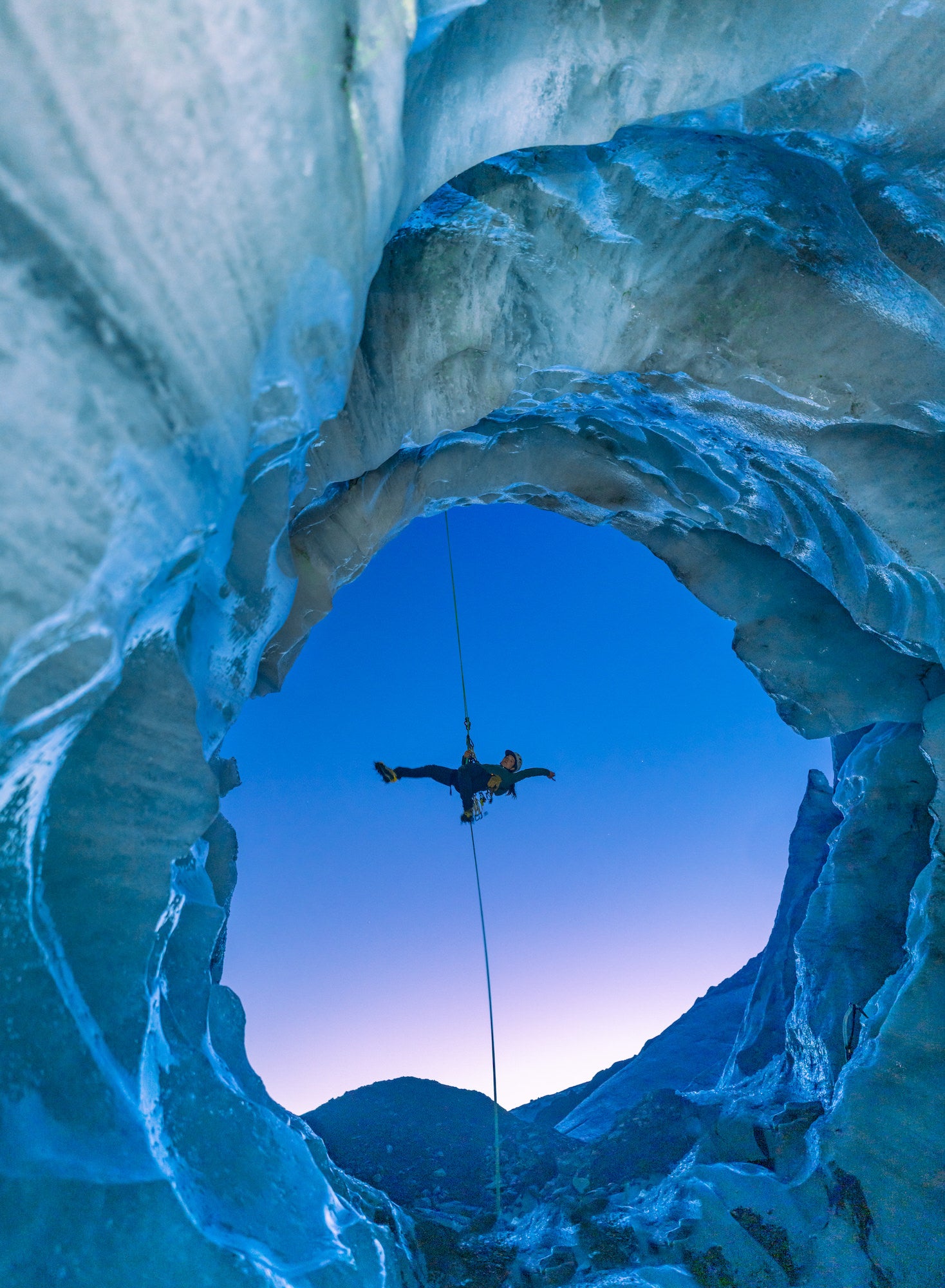
Photo by Tori Harp. Alpha 7R IV. 20mm f/1.8 G. 1/13-sec., f/1.8, ISO 1250
Lenses
24-70mm f/2.8 G Master (Buy Now): This lens is almost always on my camera body. The versatility of this lens makes it a great option to capture nearly any given moment on the fly. My PolarPro Circular Polarizer lives on this lens for a few reasons, to liven up my shots with an added pop of color and contrast, to cut down the reflections on water and helicopter windows, and of course for safety reasons to protect the glass on my lens from scratches. I remove it for the few shots I do not need it for such as when I’m using a different filter, when I’m after a starburst sun effect, or when shooting at night. All around this lens can accomplish a lot of things and it was the only lens I had when I first started taking photos.
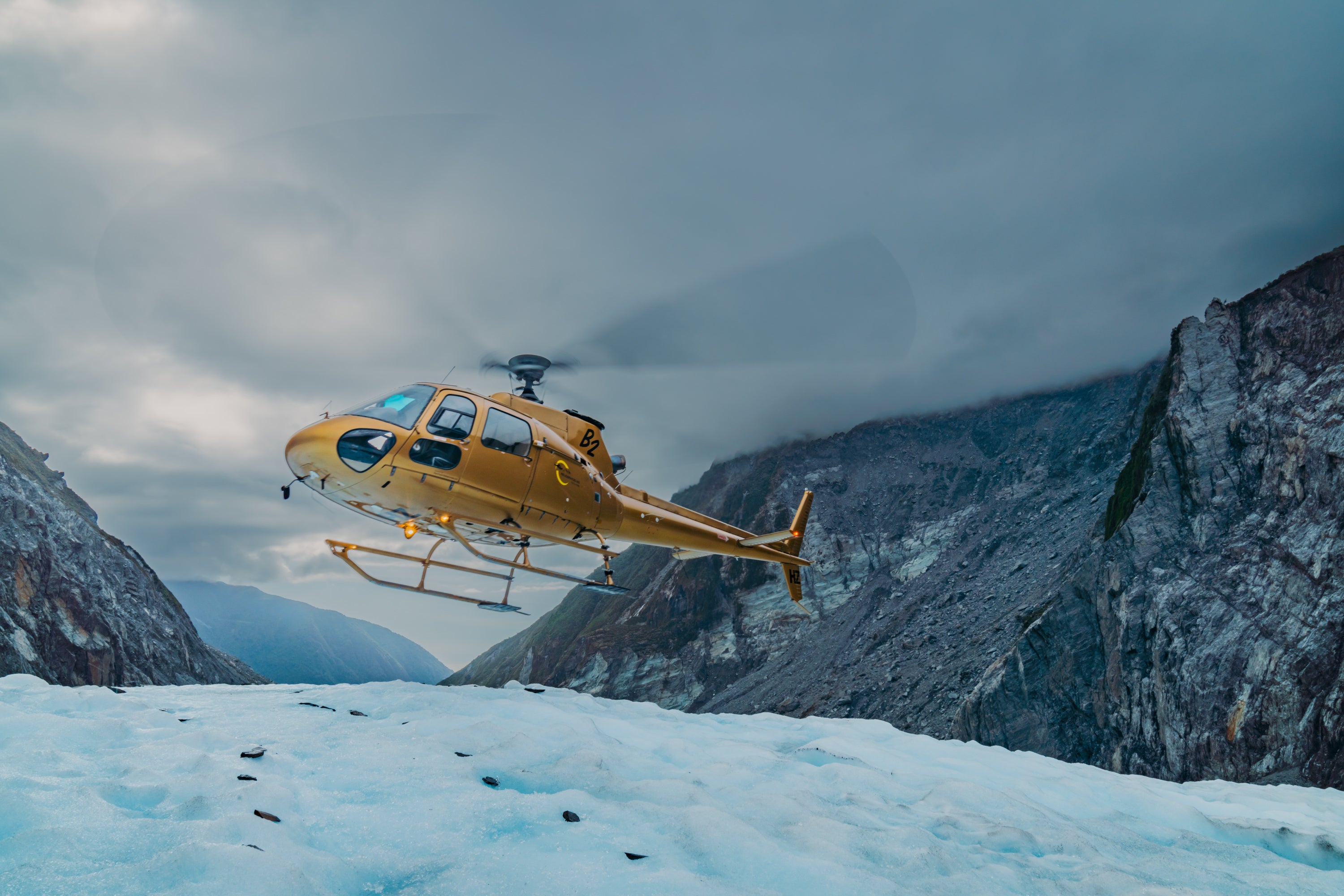
Photo by Tori Harp. Alpha 7R IV. 24-70mm f/2.8 G Master. 1/40-sec., f/22, ISO 100
100-400mm f/4.5-5.6 G Master (Buy Now): I usually have this lens clipped into an additional Peak Design clip on my waist strap. Also important to note that the clip also locks so that it does not accidentally release. I also have this lens attached to my harness with an emergency tether since safety of my gear is of utmost importance. I love swapping over to this lens to snap stills of my mates while pulling in the majestic backdrop, or focusing in on a zoomed in landscape. This is also my go to lens for when wildlife crosses my path. This lens is always on my camera body if I am in an area where there is a high chance of encountering wildlife. This is to ensure I can quickly fire away when there is a short window of opportunity with a wild animal. In these instances I simply swap from my telephoto lens over to my desired lens if I want to take any other photos during my outing. I have also used this lens to capture comets passing by earth using a star tracker and of course to shoot the moon!
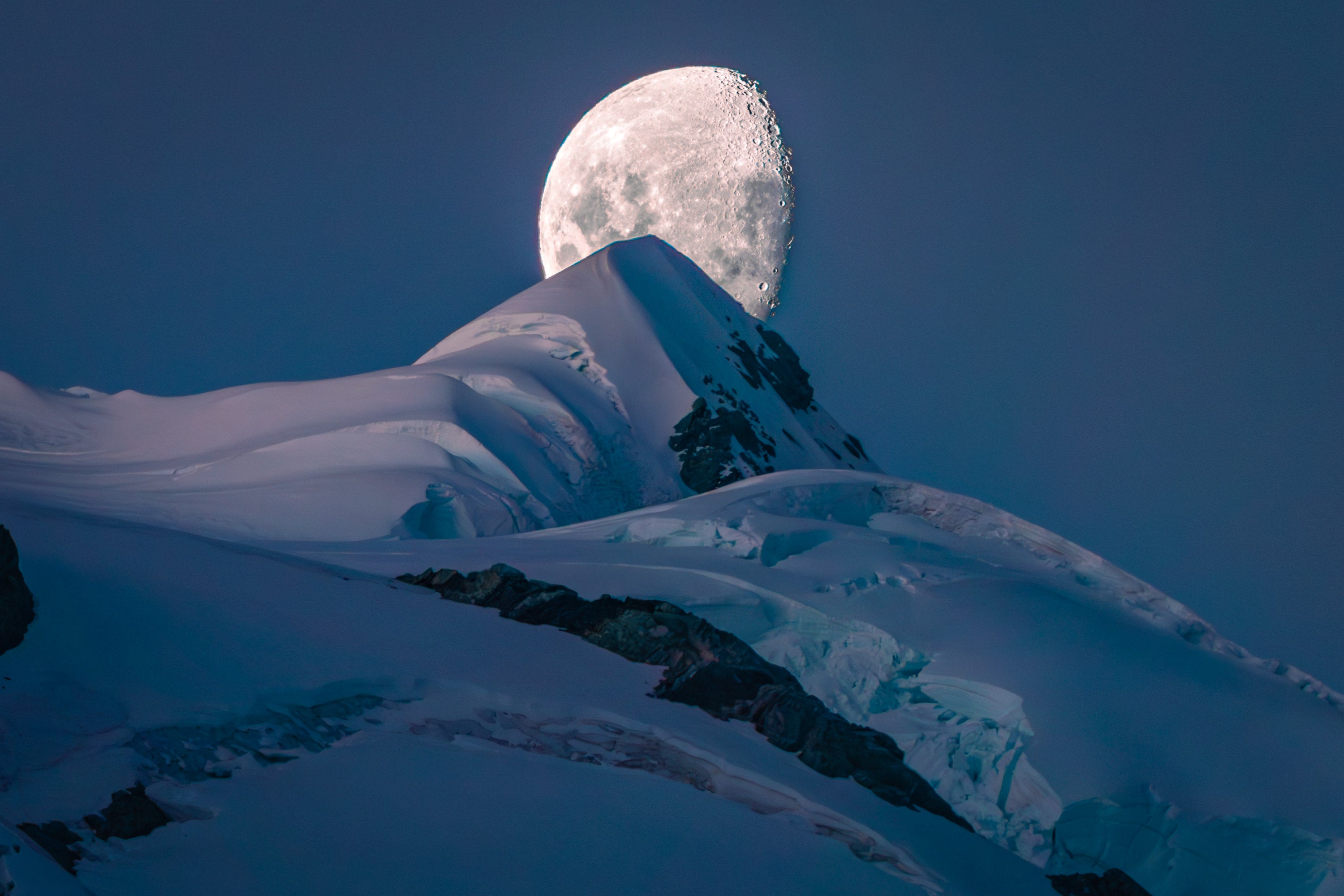
Photo by Tori Harp. Alpha 7R IV. 100-400mm f/4.5-5.6 G Master. 1/200-sec., f/7.1, ISO 500
200-600mm f/5.6-6.3 G (Buy Now): When my subject is a bit further out I go for this lens. This is great for taking on shorter walks when wildlife might be present. This lens is quite impressive even when I use it handheld and captures sharp detail on the subject while providing striking bokeh in the background. Adding a teleconverter is a great option to increase the zoom without adding the weight of a bigger zoom lens. I also love this lens for capturing moonrises and moonsets and other celestial events with a star tracker. I always leave a UV filter on this lens to protect it from scratches.
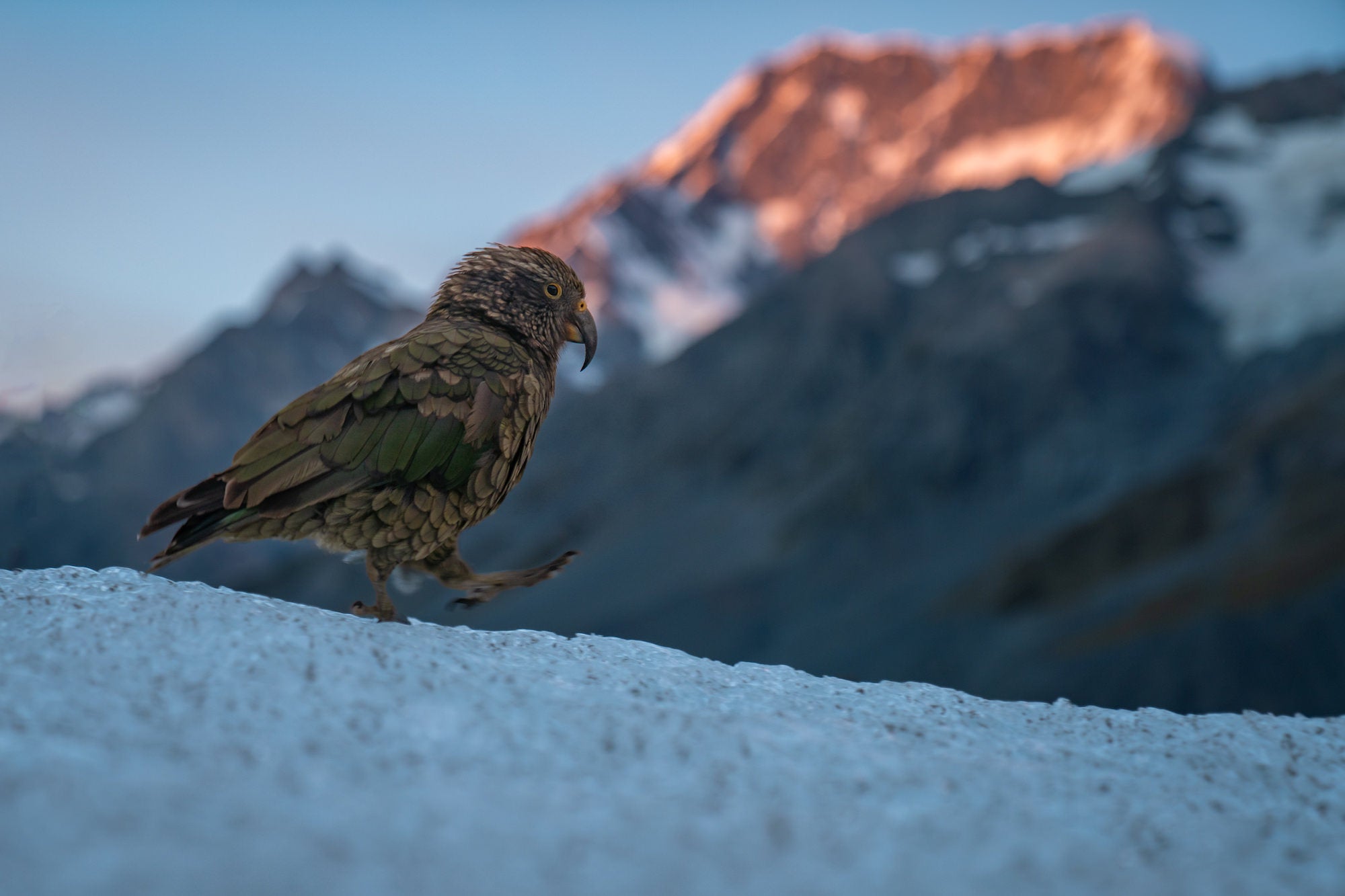
Photo by Tori Harp. Alpha 7R IV. 1/100-sec., f/2.8, ISO 250
14mm f/1.8 G Master (Buy Now): This is the latest addition to my camera bag. I have been wanting a wider lens for quite some time now and I could not be happier with finally adding this to my bag! It is everything I imagined and more! I have yet to take it out on a proper astrophotography mission, but I have already used it plenty of times where I guide on the Tasman Glacier and I have been blown away with it! I’m looking forward to putting this lens to use more inside ice caves and under New Zealand’s incredible night sky!
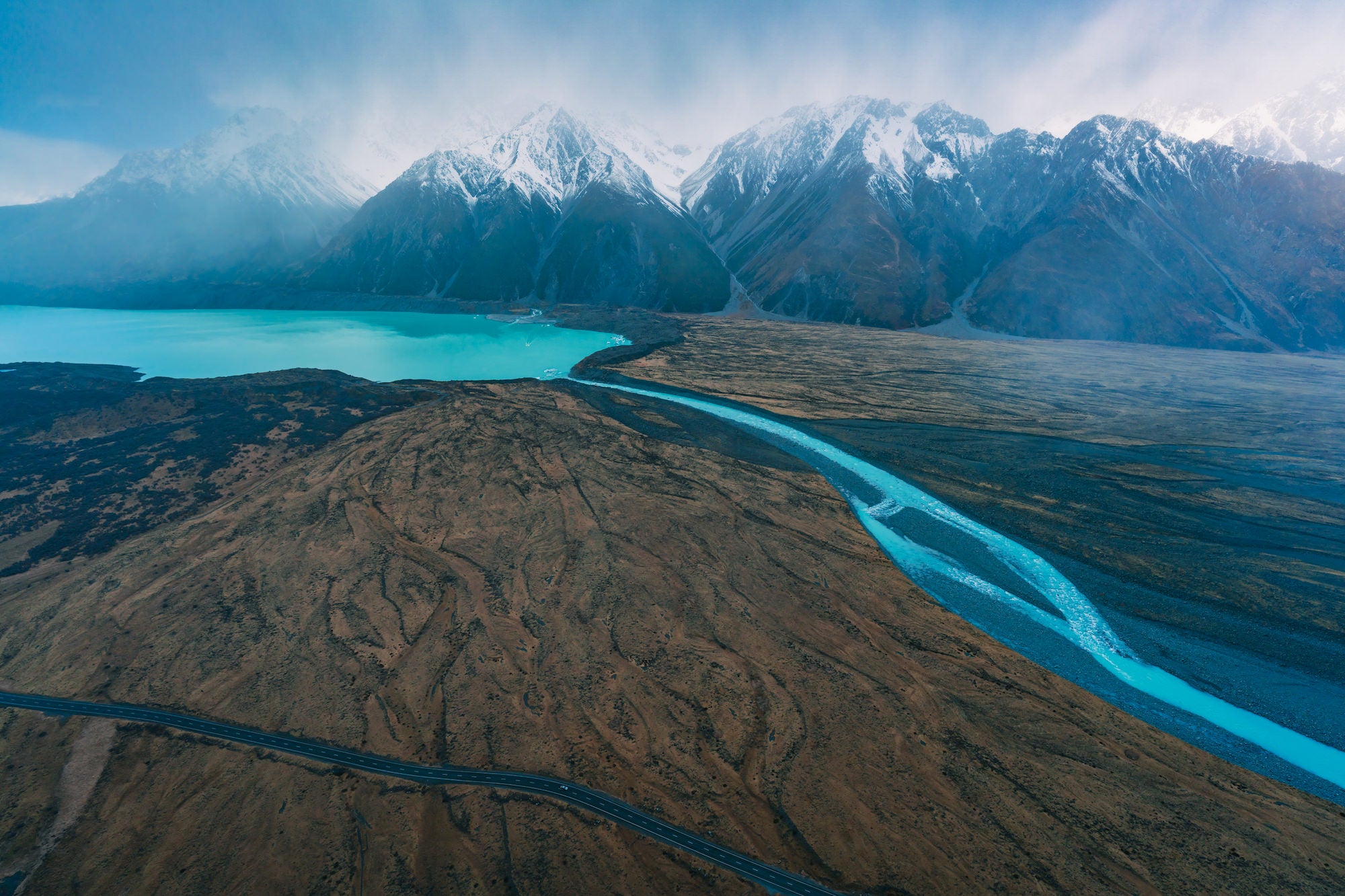
Photo by Tori Harp. Alpha 7R IV. 14mm f/1.8 G Master. 1/640-sec., f/5, ISO 160
20mm f/1.8 G (Buy Now): More along the lines of gear safety, my last lens is very lucky to still be with me. I call her my baby lens and she has been through a lot. I originally added this lens to my bag for aurora and it quickly turned into my default astrophotography lens. I have left this lens out shooting overnight in extreme conditions from high winds, to -35℃ (-30℉), to cold damp nights where fog rolls in and covers everything in a light mist. I have also dropped this lens in a rushing river where I was lucky enough to blindly reach into the milky water to find it stuck on a rock within arms reach. I pulled it from the cold river and watched as water poured from inside it as if I were tipping a thermos out. After two weeks of drying it out I eventually worked up the courage to give it a go, to my utter surprise it worked! I still leave it out all night in extreme conditions to capture night-lapses. I absolutely love this lens for astrophotography and even for exploring ice caves.
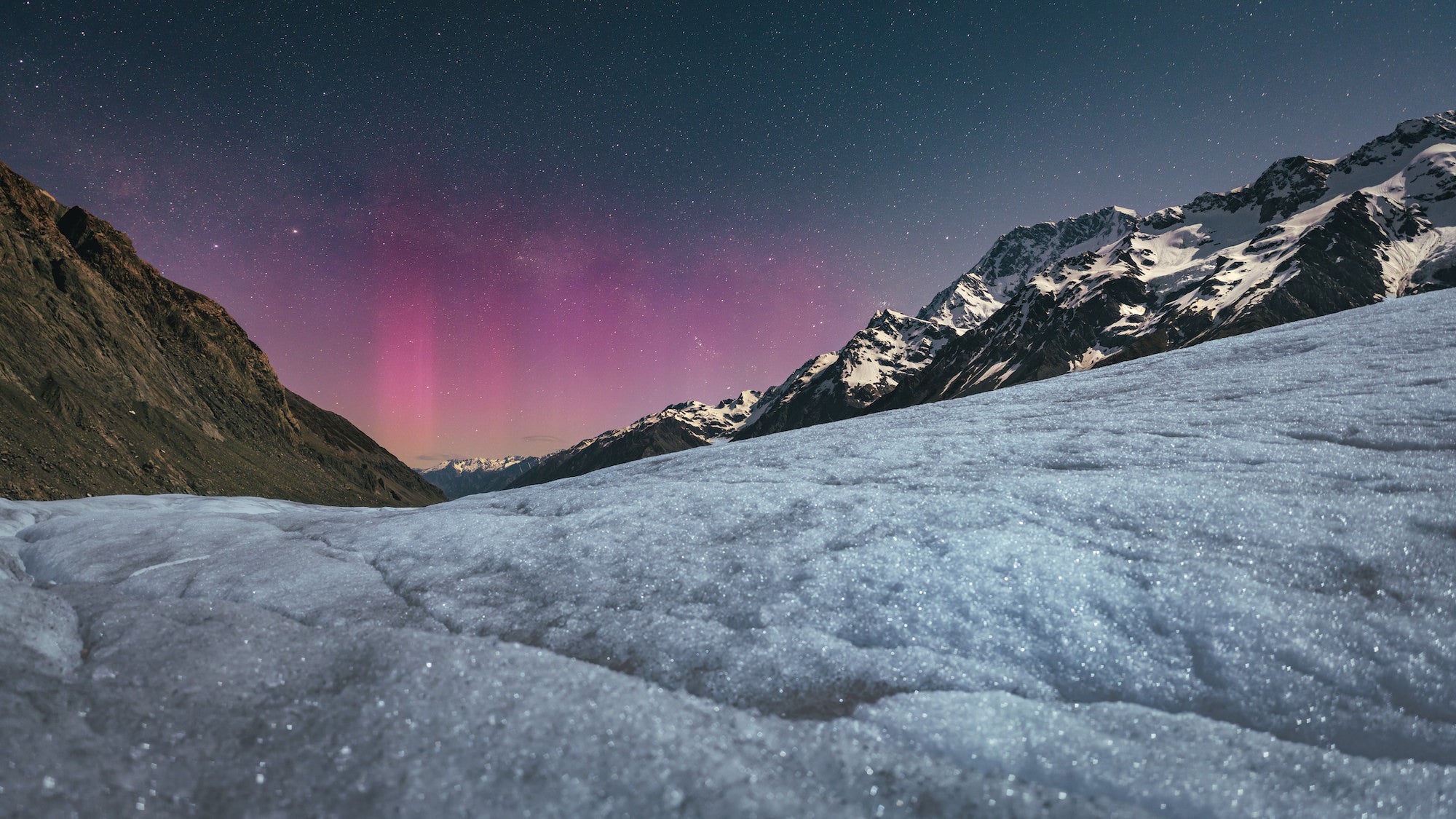
Photo by Tori Harp. Alpha 7R IV. 20mm f/1.8 G. 20-sec., f/1.8, ISO 1000
Accessories
Carbon Fiber Peak Design Tripod: For nights out shooting astrophotography I use this tripod which always gets the job done. I originally added this tripod to my kit for longer backcountry trips but it is also my go to tripod for everything else. It does have its quirks, notably when attempting to shoot large panoramas, but it also has its redeeming qualities, one being the quick release plate. This is especially useful in wildlife situations when you need to react quickly to get the shot which sometimes involves ditching the tripod. The quick release has a lock as well which is very important to engage. All these safety tips are from experience where I’ve been lucky enough to come away without any major consequences.
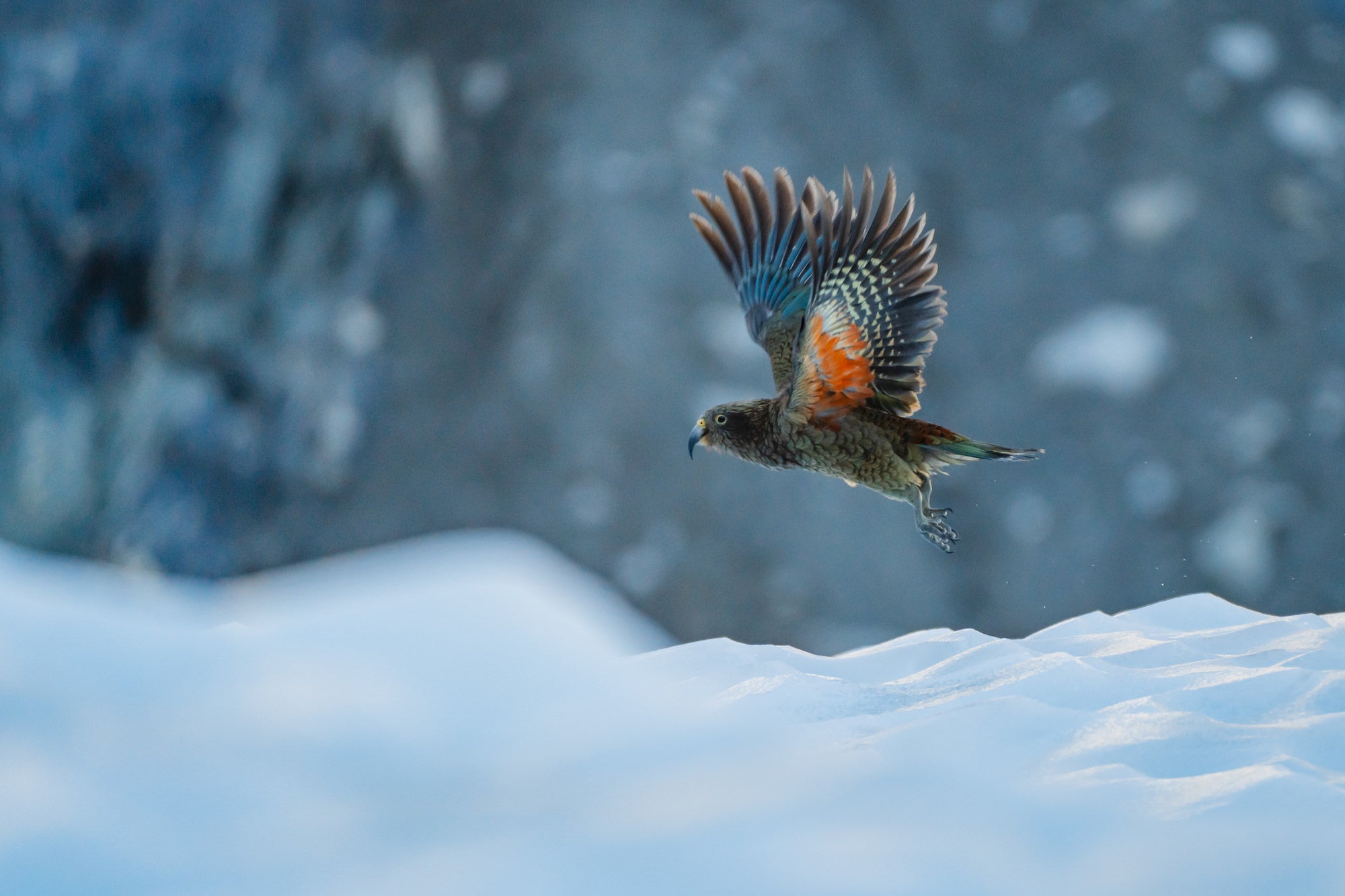
Photo by Tori Harp. Alpha 7R IV. 100-400mm f/4.5-5.6 G Master. 1/1250-sec., f/5.6, ISO 800
Extra Memory Cards: I almost always use just the SD cards in my camera but I bring a backup or two just in case something goes wrong with one.
Extra Batteries: I have a total of four Sony camera batteries which have always been enough even on multi-week trips with nothing but a Goal Zero Solar Charger.
myCharge Battery Packs: I bring along 1-3 of these which I use to charge my inReach Mini, Petzl Headlamp, camera, and phone.
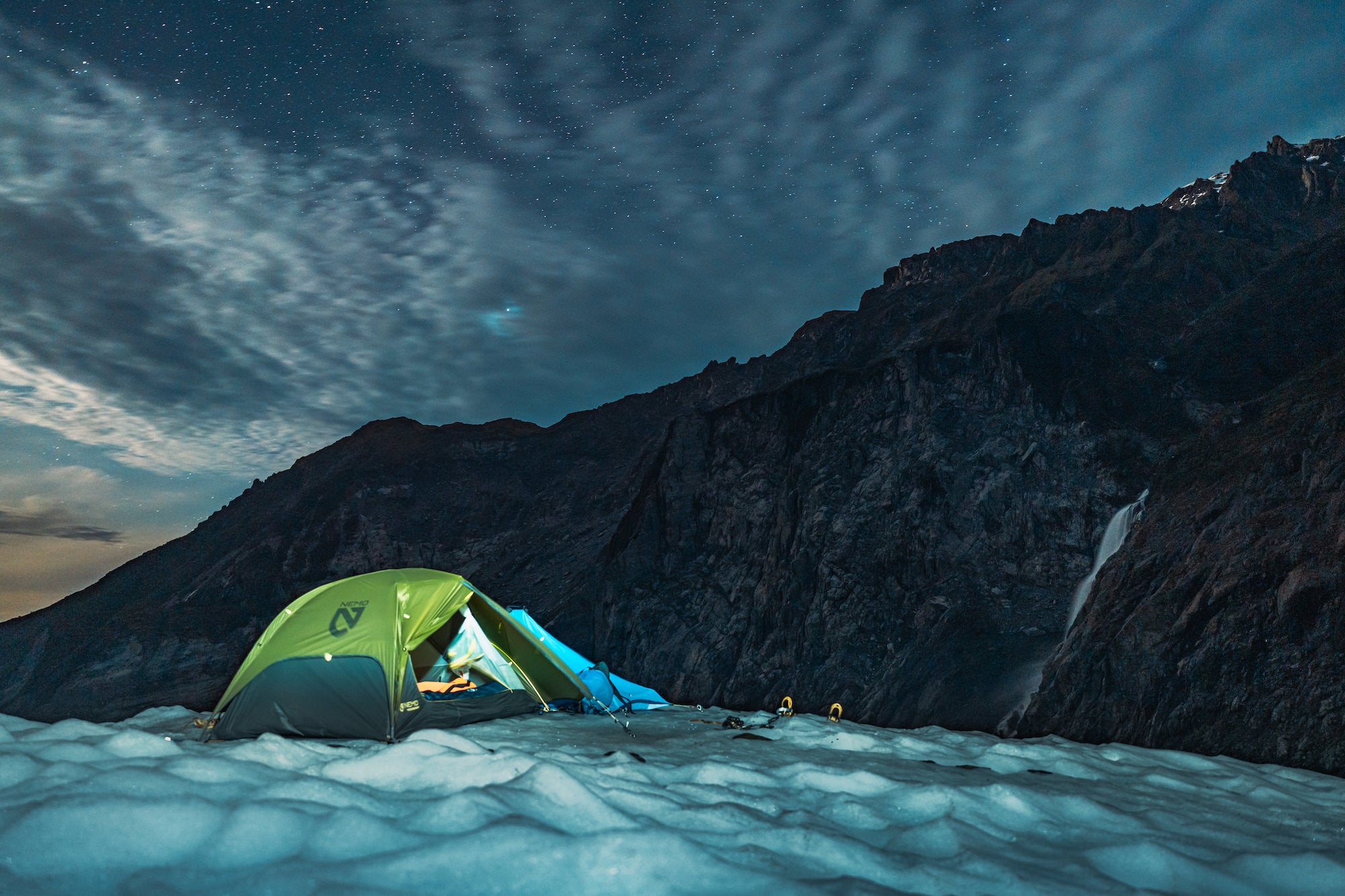
Photo by Tori Harp. Alpha 7R IV. 20mm f/1.8 G. 20-sec., f/1.8, ISO 1600
Moving onto my bits and bobs and necessary gadgets. Weight is typically the main deciding factor for what comes along on any given mission.
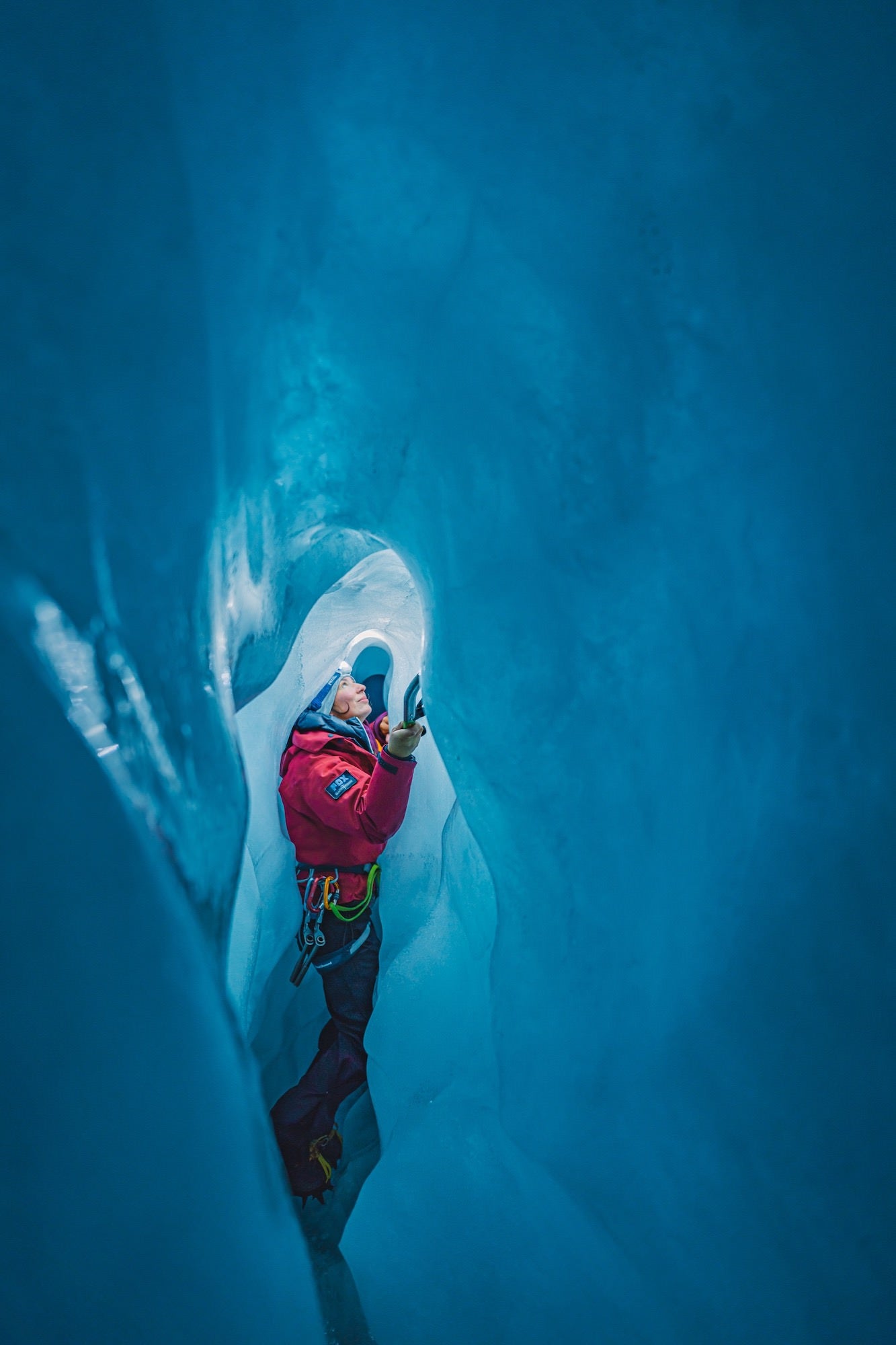
Photo by Tori Harp. Alpha 7R IV. 20mm f/1.8 G. 1/50-sec., f/1.8, ISO 320
Power Cords: I always bring a variety of power cords which I use to plug my camera into my battery pack for night time-lapses. This has always worked out perfectly and I’ve yet to wake up to a dead camera.
A few other items that help me get the shots I am after when on a glacier include some trusty crampons, a helmet, a warm jacket, and ice screws. The ice screws can also be used to secure my tripod. This is useful when I leave it out overnight in questionable positions on the glacier where if it were to get knocked over by the wind or a mischievous kea, New Zealand’s cheeky alpine parrot, all would not be lost, just the shot.
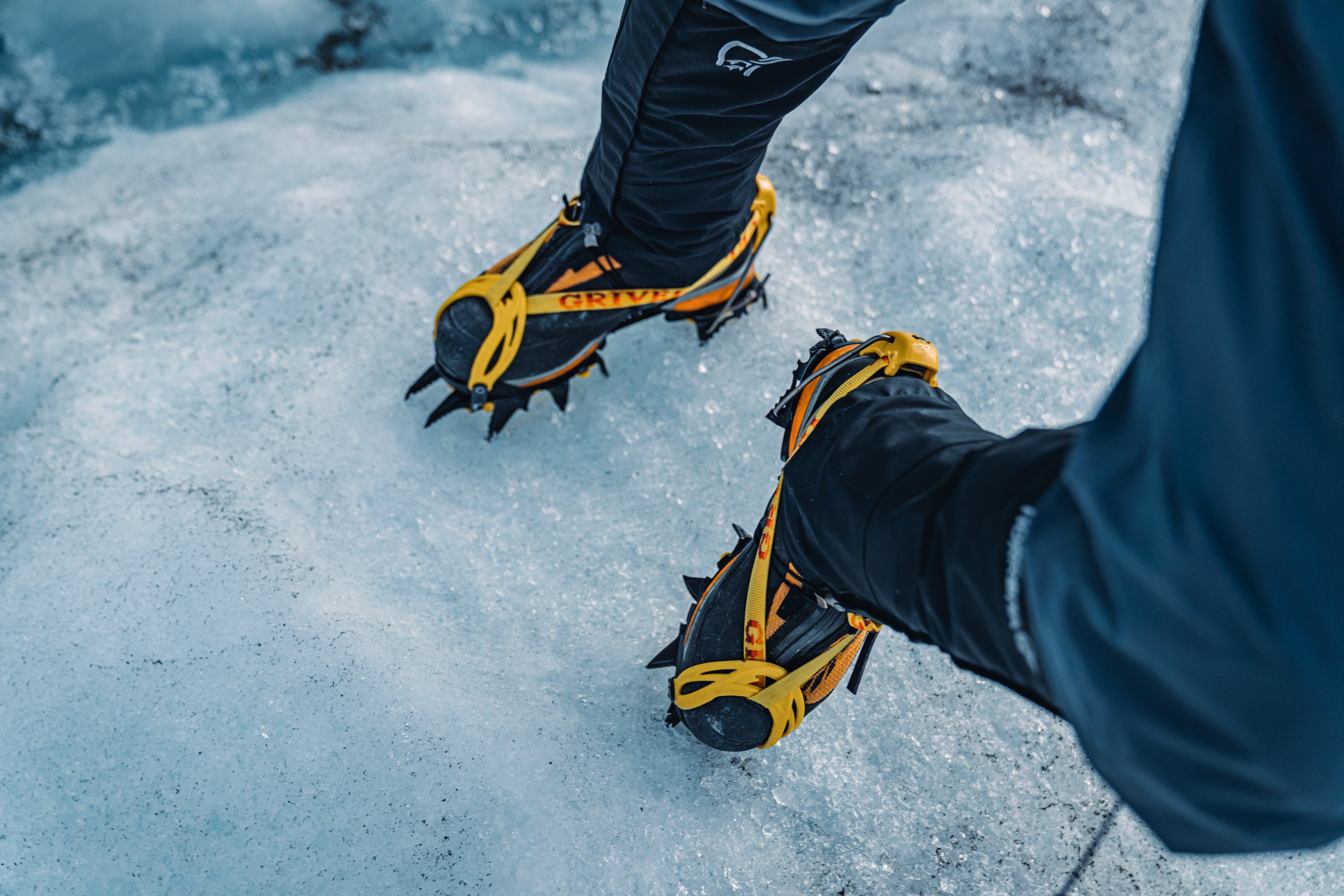
Photo by Tori Harp. Alpha 7R IV. 24-70mm f/2.8 G Master. 1/250-sec., f/2.8, ISO 100
If you are an adventure photographer reading this, I hope your main takeaway is safety and redundancy. I have had numerous close calls where I should have lost thousands of dollars worth of gear in a split second. I have somehow been lucky enough to avoid these catastrophic mistakes and have since implemented extra safety precautions for my gear.
A few other things I would add is to never clip your camera to your chest and always clip it to your waist for your own safety. Taking a fall with your camera on your chest can lead to much more serious injuries than if it had just been clipped to your waist. Particularly when doing things like skiing, riding horses, or activities that could end in a big fall such as rock or ice climbing.
Protect yourself and protect your gear! Cheers and happy shooting!
See more of Tori Harp’s work on Instagram @toriharpimages.
See the gear used by more of your favorite photographers at alphauniverse.com/wimb.