Isaac Polanski (@stormbird_photography) is a wildlife and landscape photographer based out of Michigan. “When I'm not working my day job at a municipal water department, I travel the world in search of nature’s most powerful moments,” he explains. “From extreme tornadoes up close, to awe-inspiring auroras miles high, to the mythical wonders of bird migration.” We came across this photo of his, named in the Top 100 2025 Audubon Photography Awards, and wanted to learn more. Keep reading as he shares how he captured it using his Alpha 1 (Buy Now) and 50mm f/1.4 G Master (Buy Now) – plus see more photos from his puffin adventure.
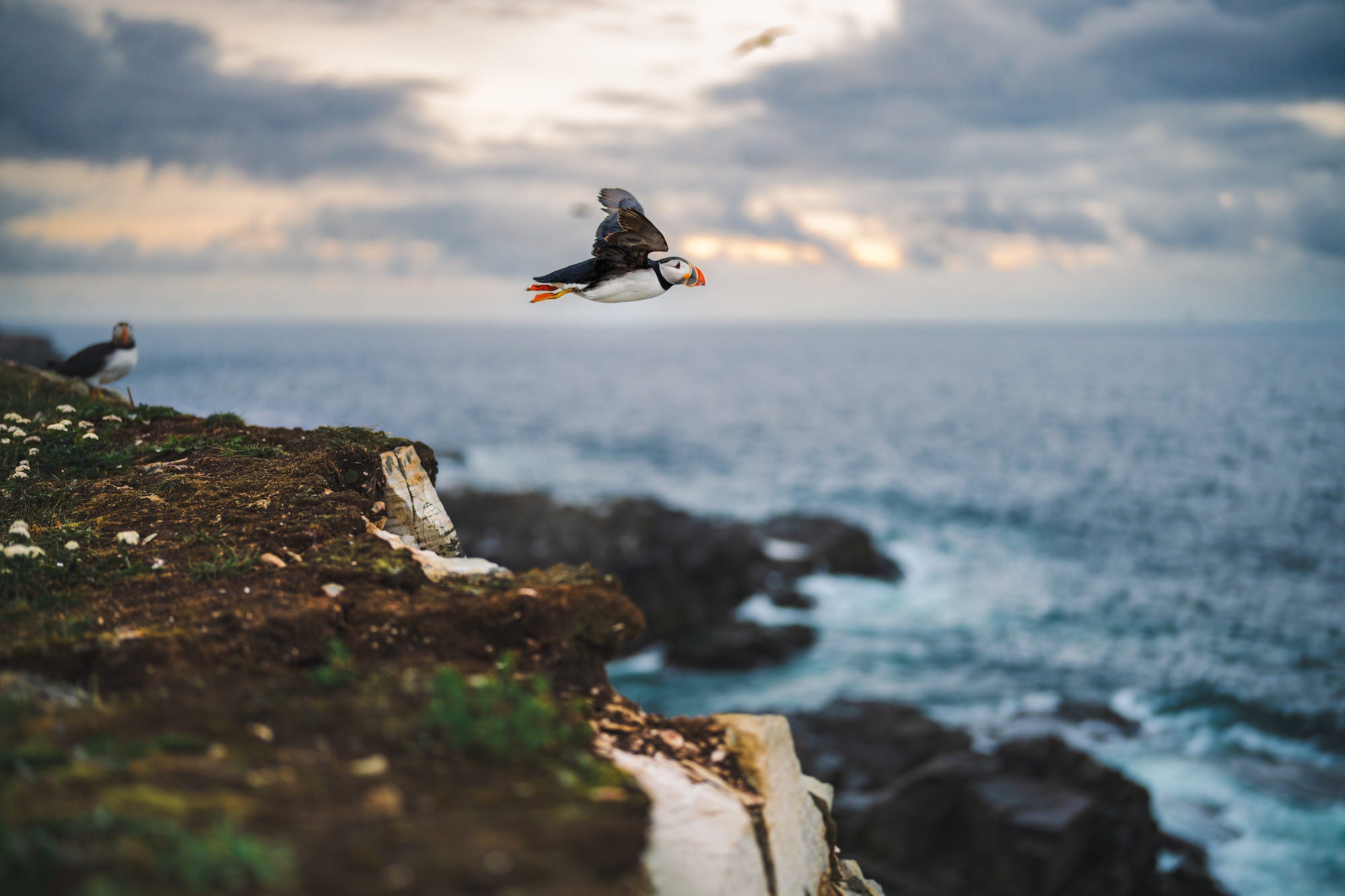
Photo by Isaac Polanski. Alpha 1. 50mm f/1.4 G Master. 1/2500-sec., f/1.4, ISO 1000
Photographing Birds In Frame
Atlantic puffins are one of the most recognizable birds in the world. The Steller’s sea eagle is less well known, but equally as stunning. When both of these species were seen together just miles apart in southeast Newfoundland, I knew I had to make a trip. I went to Newfoundland with one idea in mind: capture something different. Tight portraits of puffins are quite popular. They’re great photos, but I like capturing something different. Small birds in frame is a concept I love a lot. Seeing how these birds interact with the earth around them helps frame how these birds behave quite well. The beautiful landscapes along the ocean would provide the perfect backdrop for these stunning birds.
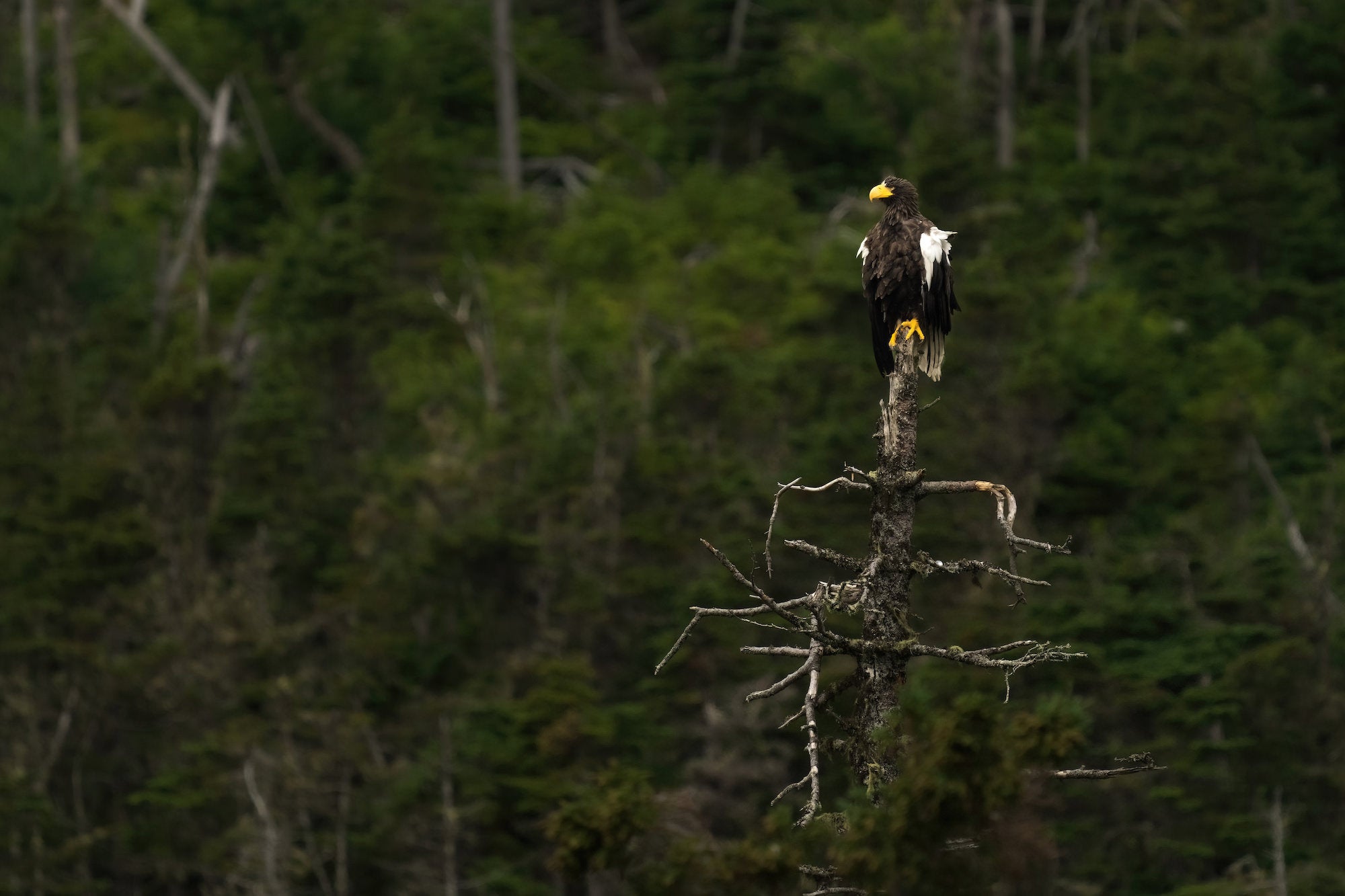
Steller's sea eagle. Photo by Isaac Polanski. Alpha 1. 200-600mm f/5.6-6.3 G. 1/3500-sec., f/6.3, ISO 1000
Planning For The Best Shooting Conditions
Planning these shoots is a lot of fun. I get to combine my passions of weather and photography. Weather impacts bird activity, how much light is available, the mood of each scene. I forecast cloud cover, precipitation, temperature, and wind days in advance to try to select days that will give the best shooting conditions for each idea I have.
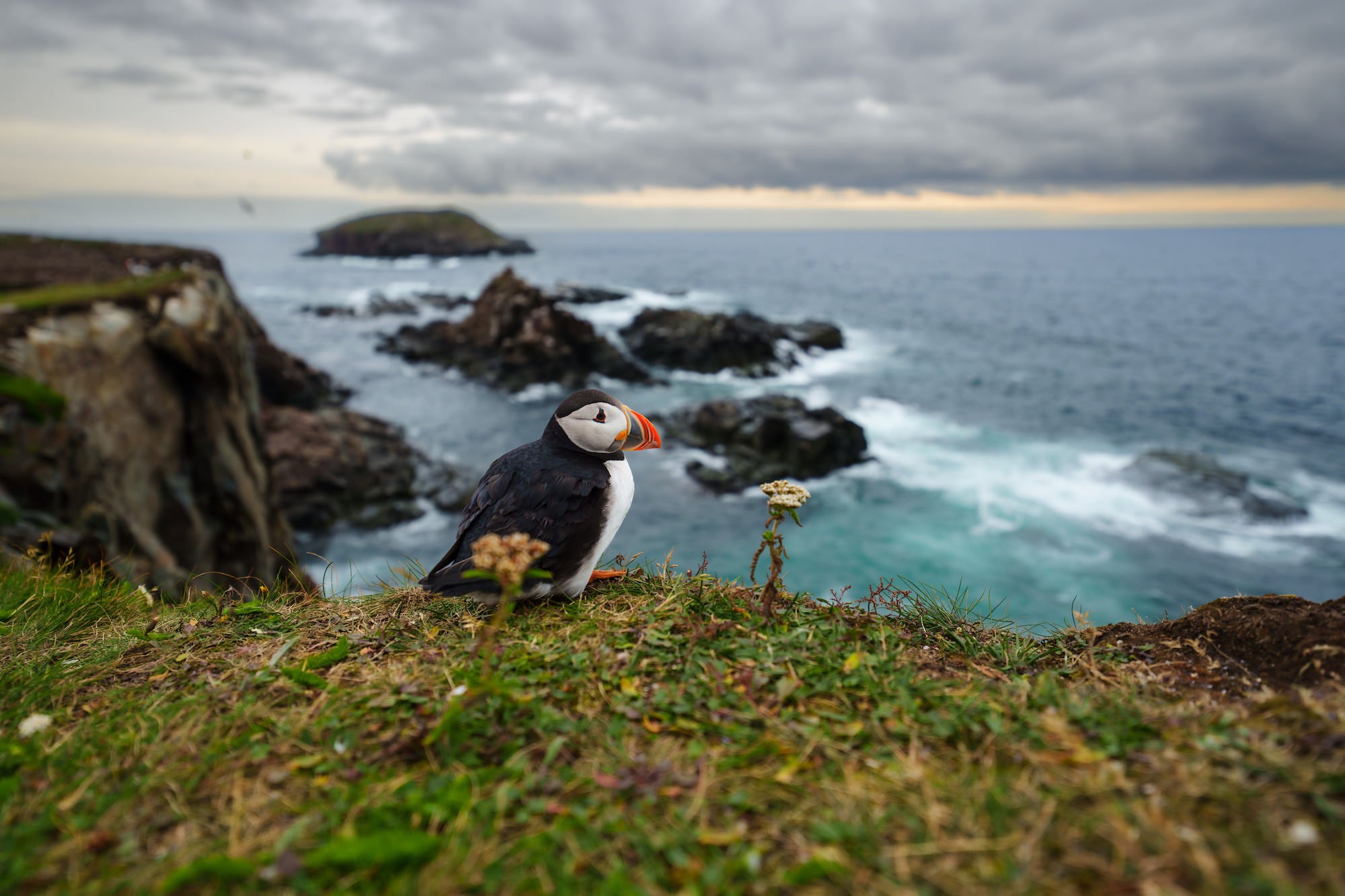
Atlantic puffin. Photo by Isaac Polanski. Alpha 1. 12-24mm f/2.8 G Master. 1/1250-sec., f/2.8, ISO 500
Choosing The Right Gear
I shot this entire trip with my Alpha 1 camera. The Continuous Eye-AF gives me incredible freedom to create many different images that I think of in my head. I do not have to worry if the bird is in focus or not or if the camera is tracking the bird well. I can just focus on composition and getting my settings right. The weather sealing has been put to the test and performed great. From photographing for days by saltwater to literally being inside a tornado, the camera has never let me down. For this shot I used my Sony 50mm f/1.4 G Master. The very wide aperture allowed me to get a shallow depth of field at quite a wide angle for wildlife photography. It also helps me keep a high shutter speed for those quick flight shots.
Practicing Patience In Bird Photography
I shot this a little after sunrise, letting enough light come in for birds in flight shots. I spent the sunrise shooting puffin silhouettes before getting ready for flight shots. I set the shutter speed to 1/2500 to freeze the bird and keep it sharp while they flew by. I opened the aperture to f/1.4 to isolate the puffins and give the scene a bit of a dream-like feel. For a little boost of exposure, the ISO was at 1000. I’ve comfortably shot at ISO 128000 many times, so 1000 is no big deal. In wildlife photography, higher ISO’s are sometimes a fact of life.
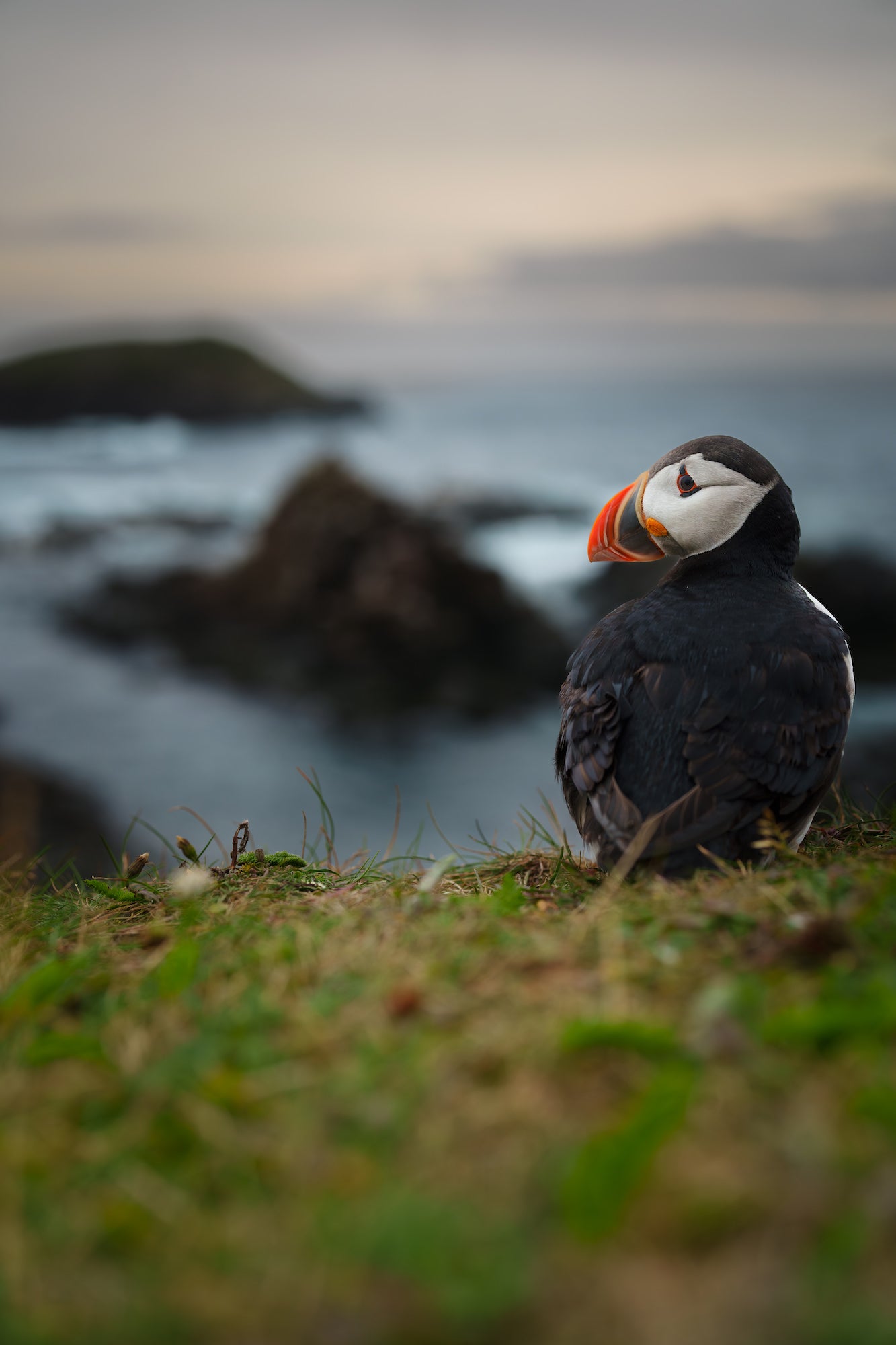
Photo by Isaac Polanski. Alpha 1. 50mm f/1.4 G Master. 1/1250-sec., f/2.8, ISO 500
I positioned myself near the cliff edge facing the rising sun. The mostly cloudy sky meant I wasn’t dealing with harsh backlighting, but still gave me enough variety in the sky. I angled myself so I would be shooting the puffins as they left land and began their long hunt for food. Part of the challenge and thrill of wildlife photography is frankly that birds have wings. They’re unpredictable and patience is required when looking to get a specific shot. Once I was positioned, it was up to the puffins to fly close to the shore. Not many did, so I did not take the few opportunities for granted. I have waited hours in one spot before trying to get the "perfect" shot. Sometimes it never comes together. That's the thrill of the chase. One hundred failed tries are all worth it when the planets align and you nail the shot.
Photo by Isaac Polanski. Alpha 1. 50mm f/1.4 G Master. 1/2500-sec., f/1.4, ISO 1000
Creating The Final Product
All of my edits were done in Adobe Lightroom. Editing the RAW file into how my eye saw the scene is just as enjoyable as capturing the scene. These are the steps I took:
- Subject mask around the puffin to raise the tone curve and bring down the clarity a tad.
- Linear masks to darken the sky and enhance cloud detail back to what the eye saw.
- Brush tool to increase the highlights in the water and cliff slightly.
- Used the color wheel to subtlety increase the vibrancy of the sky and ocean.
- Lightroom’s AI denoise program to clean up some noise, but still leave some fine grain in.
I like to make sure I don’t increase the contrast, saturation, clarity or dehaze sliders too much. These sliders can quickly make an image appear unnatural if too much of any tool is applied. Light edits to enhance the scene are what I like. For masking, especially with birds, care must be taken with making sure the areas around the feathers are properly masked or not. The automated masking tools are powerful, but not perfect, and usually require some fine tuning.
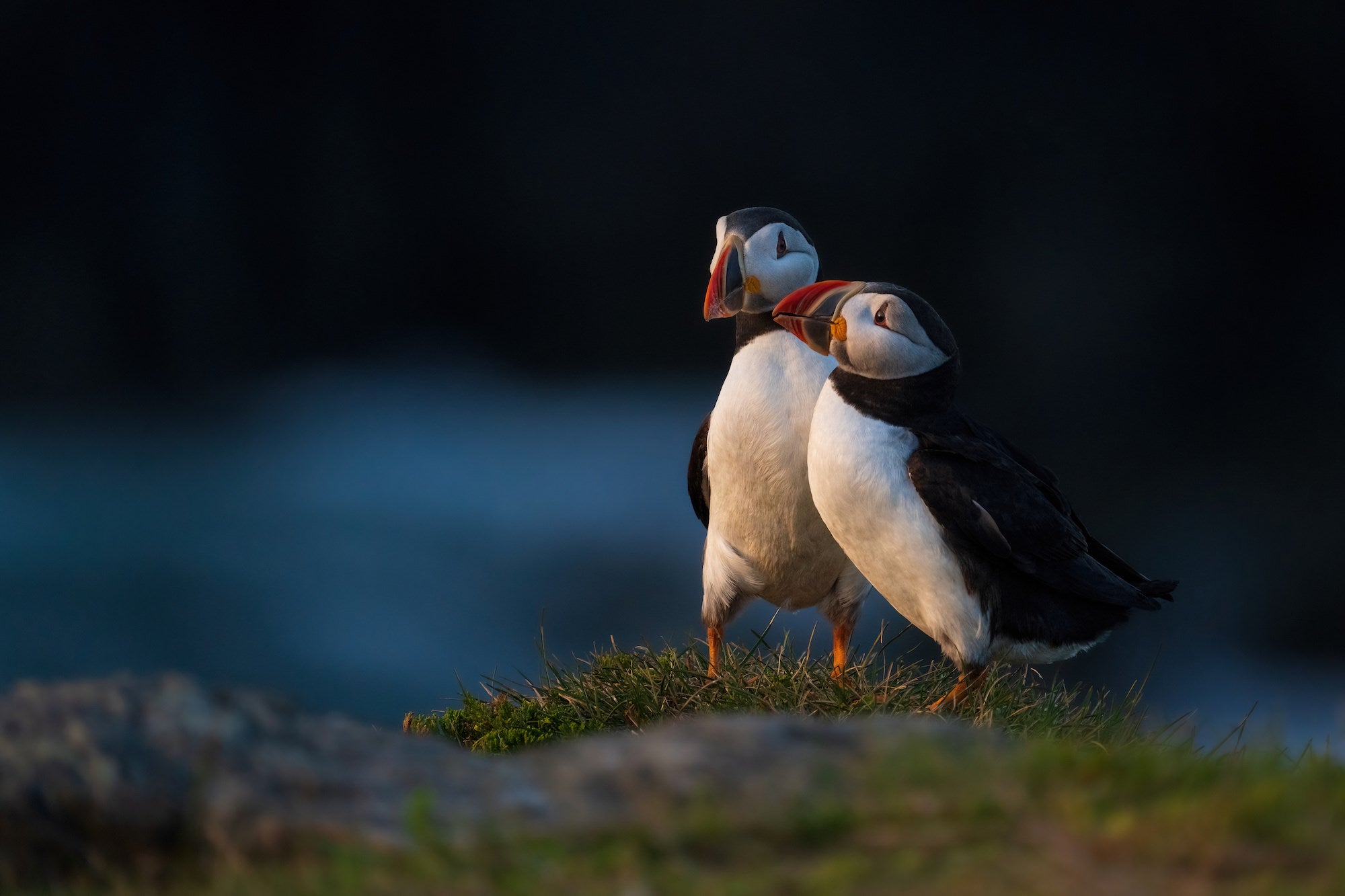
Steller's sea eagle. Photo by Isaac Polanski. Alpha 1. 200-600mm f/5.6-6.3 G. 1/3500-sec., f/6.3, ISO 1000
This trip had so many magical moments just watching all these different bird species interact with each other. So many stories of these birds get told when I’m out there. This trip made my travel bug get out of hand! Between fall colors in Colorado, the 2026 solar eclipse in Iceland, and tornado chasing, I have many ideas for combining birds with unique landscapes.
See more of Isaac Polanski’s work on Instagram @stormbird_photography.