Simone Marulli is a professional photographer and CEO of a graphic design studio that produces 3D animations. “Ever since I was a child, I remember always having many passions, but three in particular shaped my life: photography, military aircraft and 3D graphics,” he explains. “My unconditional and endless love for aviation likely stems from a couple of movies I fell in love with as a child, ones I think everyone knows, and was further fueled in the early ’90s by a video game, a PC flight simulator I was absolutely obsessed with: Strike Commander.”
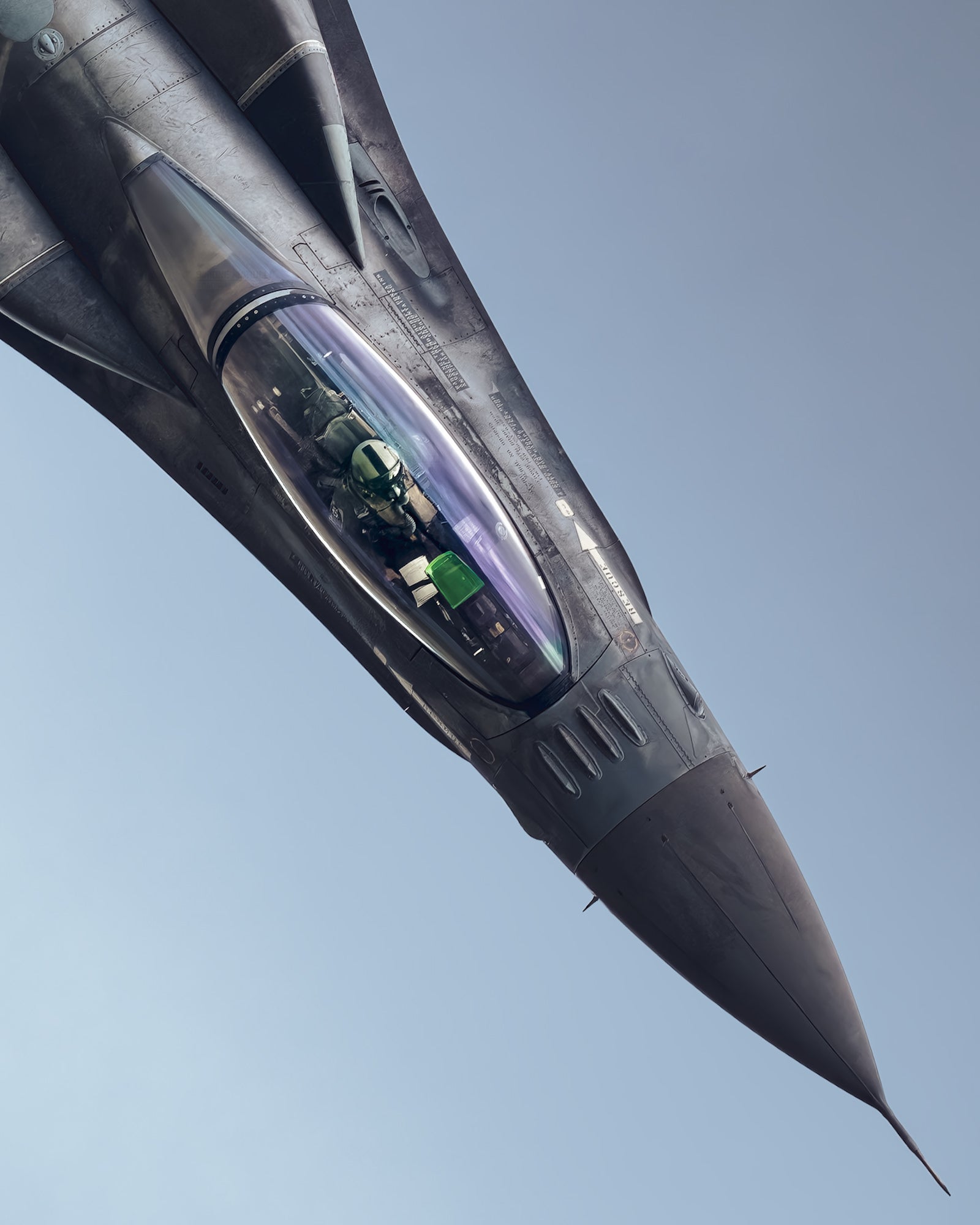
Photo by Simone Marulli. Alpha 1. 600mm f/4 G Master.
Simone combined his love for photography and aviation into one: aviation photography. “For a couple of years, I’ve been going to Malpensa Civil Airport, near Milan, to experience the thrill of aviation. Even just hearing the engines of a commercial airliner revving up for takeoff gave me chills and filled me with excitement.” We came across these jaw-dropping images he captured of fighter jets in flight. Keep reading as he shares his story behind the shots, plus his go-to gear for aviation photography.
Aviation Photography: Planning & Preparation
I’ve been traveling around Europe for the past 20 years to capture the thrill of military fighter jets. For the past year, I’ve also been doing this in the United States. Military bases are usually the go-to spot to see them up close, ideally right next to the runway, but I also often head to public beaches, just outside from military airports, up on hills, or even high in the mountains, depending on the type of event or training exercise. There’s usually a lot of planning behind the shoot, which typically lasts a couple of days, sometimes three, or maybe just two hours or less, but that’s just the culmination of months of planning and preparation.
In fact, to get to these locations, you often have to wait for the dates to be officially announced (in the military, there are never any certainties), book a flight, rent a car, book hotels, and ideally get accredited, if you’re lucky. Sometimes, however, you organize everything without the slightest certainty of anything; for example, in Wales there is an area called the "Mach Loop" that is used for actual low-altitude flight training. When you decide to go, it can also happen that they don’t fly at all during your visit, perhaps due to bad weather or some other reason unknown to us. So with scheduled events, like airshows, we can expect almost certain results; in all other cases, however, nothing is ever a given.
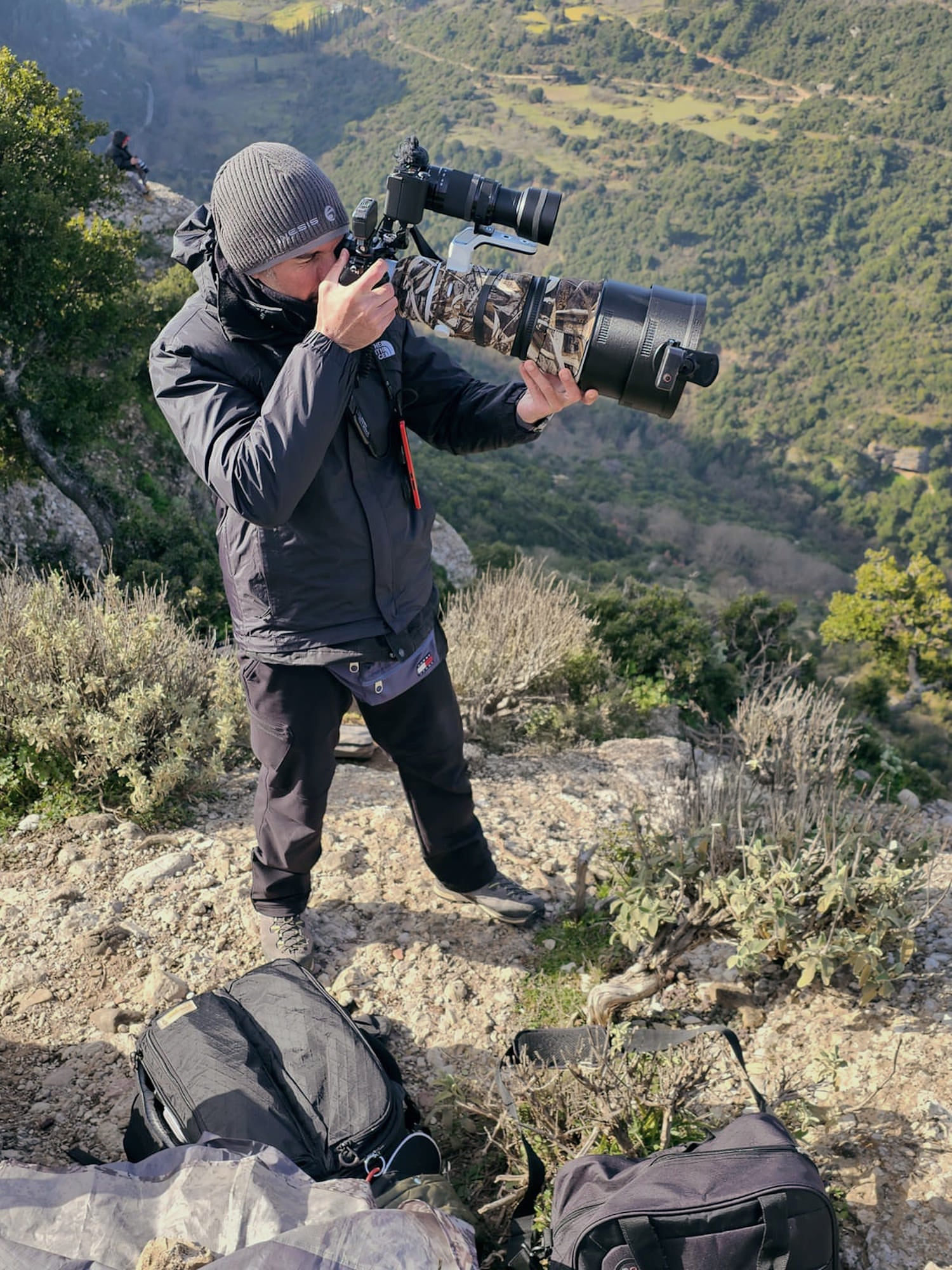
Photographer Simone Marulli
Aviation photography began and grew out of a passion, and over time it evolved. Within the limits of my financial and time constraints, I’ve always looked for opportunities to pursue my passion. Then, as my skills and financial means grew, I began doing it more frequently until I managed to make contact with the Italian Air Force, and the first commissioned shoots and publications began to come in.
Simone’s Gear For Aviation Photography
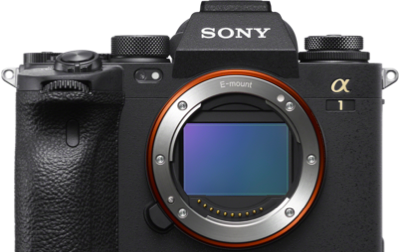
When Sony’s flagship Alpha 1 was released in 2021, I couldn’t believe it was real. To me, it was a dream come true! Being able to shoot at 30 fps at 50 MP is, for me, the ultimate and unmatched feature, and the main reason I bought it right away. Not only that, but I previously used an Alpha 7R IV, an excellent camera, but nothing compared to the Alpha 1. In fact, just a few months later, I bought another one. Military fighter jets are small subjects and almost always far away, so cropping is unfortunately something every aviation photographer has to deal with. Having 50MP allows you to capture incredible details and gives you the option for greater cropping, and this feature is truly essential for high-quality photos.
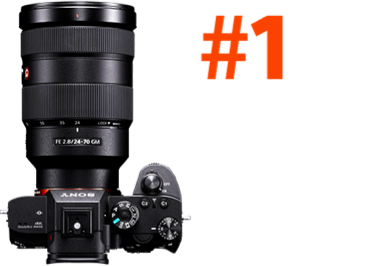
My setup usually includes three camera bodies: two always in operation and one ready to use in case I need to combine different types of shots. I use two kits simultaneously because I love to maximize my options without ever compromising on quality; in fact, the two Alpha 1 cameras are equipped with a 600mm f/4 G Master or 400mm f/2.8 G Master (depending on the average shooting distance), while the other one is always set up with a 200-600mm f/5.6-6.3 G or 70-200mm f/2.8 G Master II (again, depending on the average distance). A setup with prime lenses and a setup with a zoom lens.
I generally use the 600mm f/4 G Master or 400mm f/2.8 G Master for single aircraft and the 200-600mm f/5.6-6.3 G or 70-200mm f/2.8 G Master II zooms for aircraft in formation or for takeoffs and landings, where being able to zoom allows me to get a few more shots. In these situations, the planes are usually closer, and with a prime lens you tend to crop them out; conversely, during a fighter jet display a prime lens is almost always more useful for the higher photo quality, both for lower ISO settings and for the lens’s optical superiority. Sometimes, as was the case recently in Virginia, USA, I had to pair the two Alpha 1 cameras with an Alpha 7R IV and a 24-105mm f/4 G lens to capture the planes taxiing just a few meters away from me.
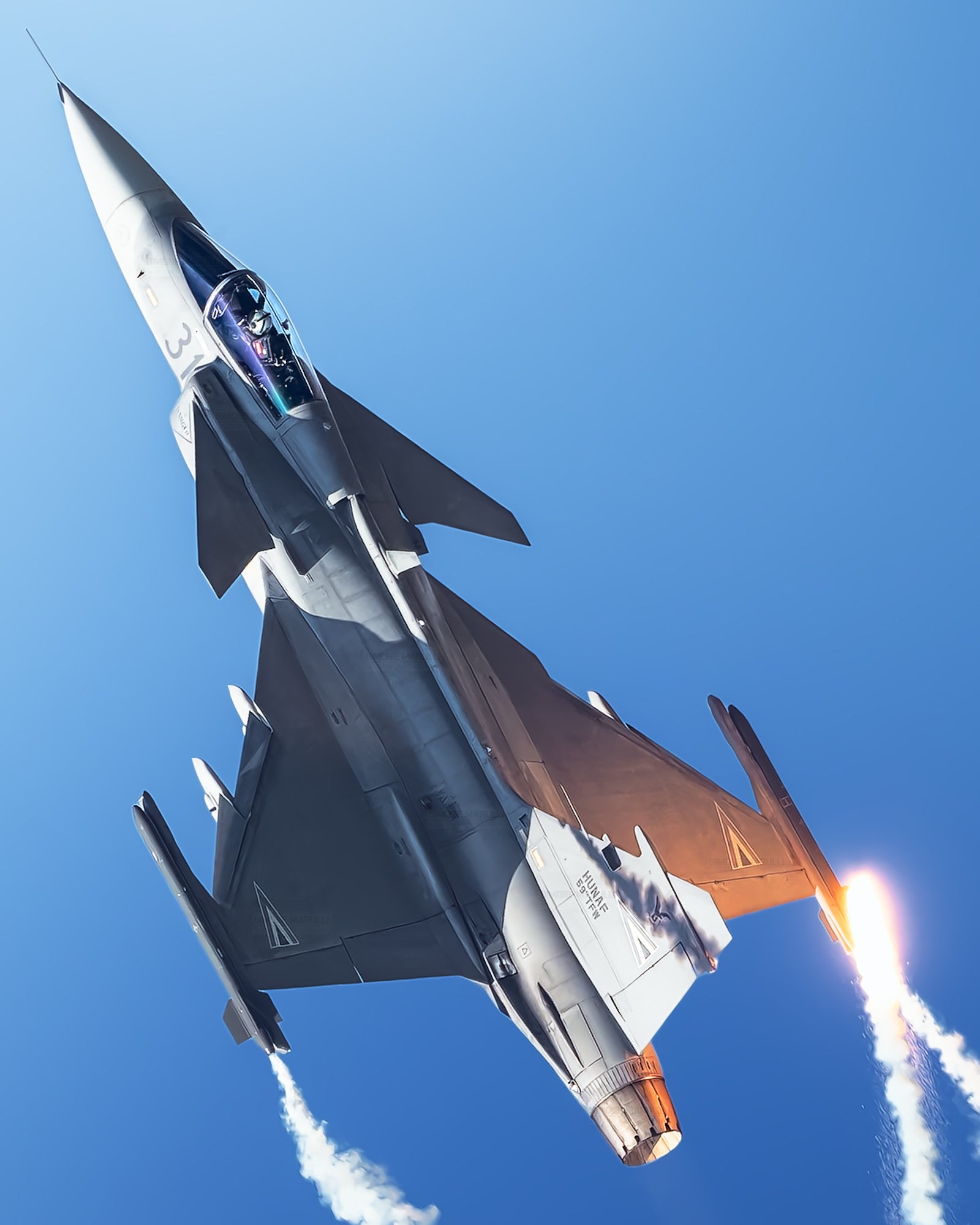
Photo by Simone Marulli. Alpha 1. 600mm f/4 G Master. 1/2500-sec., f/4, ISO 400
It took me a few years to put together what I call “the dream kit,” which consists of:
In-flight photos:
–2x Alpha 1
–1x Alpha 7R IV (which I also modified to capture IR photos)
–600mm f/4 G Master
–400mm f/2.8 G Master
–2x 200-600mm f5.6-6.3 G (one for photos, one for video)
–70-200mm f2.8 G Master II
–2x teleconverter
–1.4x teleconverter
Ground photos:
–50mm f/1.2 G Master
–24-105mm f/4 G
–12-24mm f/2.8 G Master
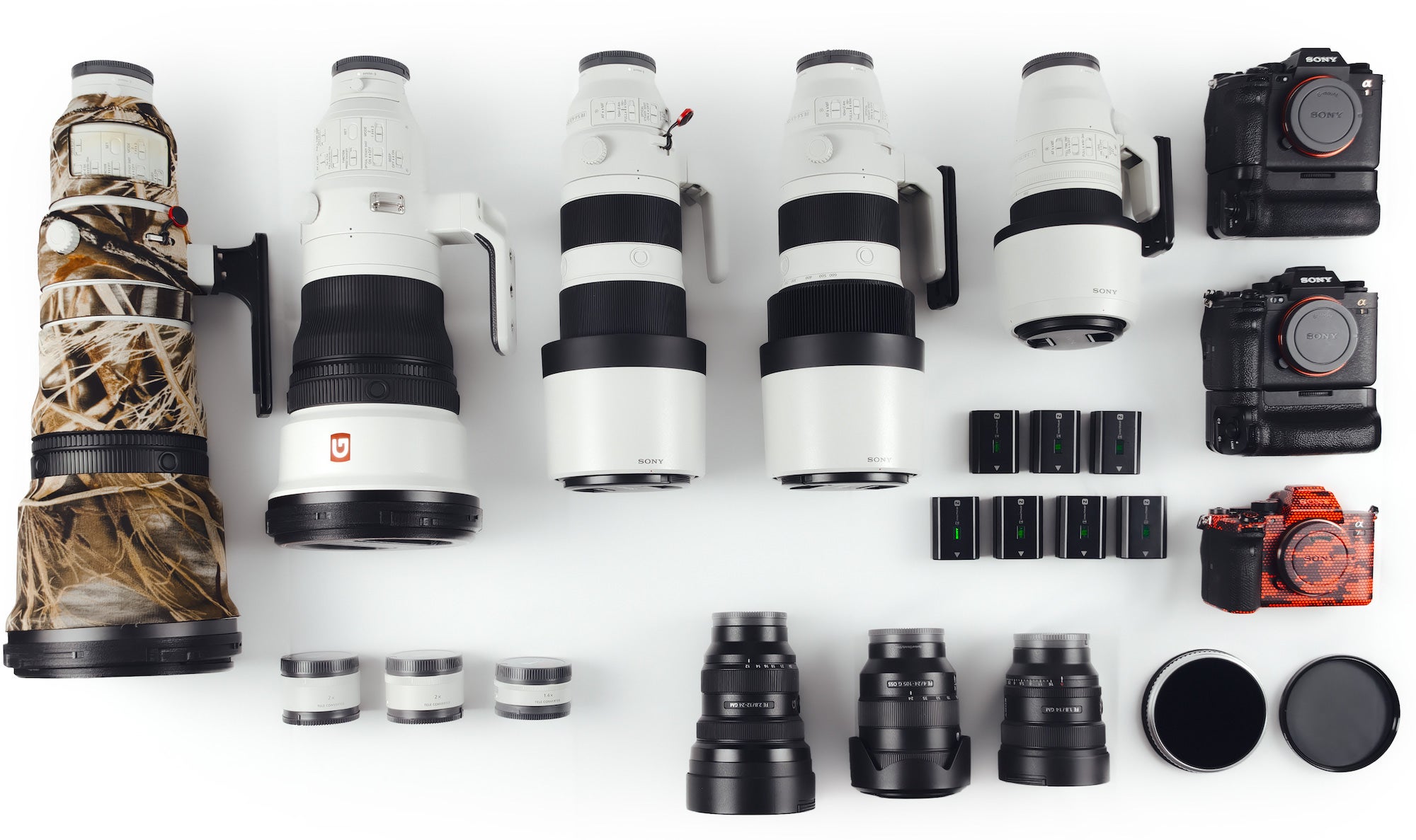
Simone Marulli's Sony Alpha "dream kit"
One of my dreams has always been to be able to shoot video as well, but unfortunately, you can either take photos or shoot video, it’s impossible to do both simultaneously. But in the fall of 2025, I began seriously exploring ways to solve this problem, and I think I’ve finally come up with a definitive solution. In fact, I found a way to mount a second Sony Alpha camera body on top of my main camera, using some custom adapters I designed and 3D-printed myself, which allow me to perfectly align the two cameras. So while I’m shooting with the main setup, the camera mounted on top is recording 4K video at up to 120fps, something truly incredible that I’m really happy about! Not happy with that, I’ve also found a way to mount a third camera, which I use to shoot fantastic behind-the-scenes videos of everything happening around me. I can’t imagine doing any more than this right now, but I know myself, I’m always looking for ways to improve, and in life, you never know what I might come up with tomorrow!
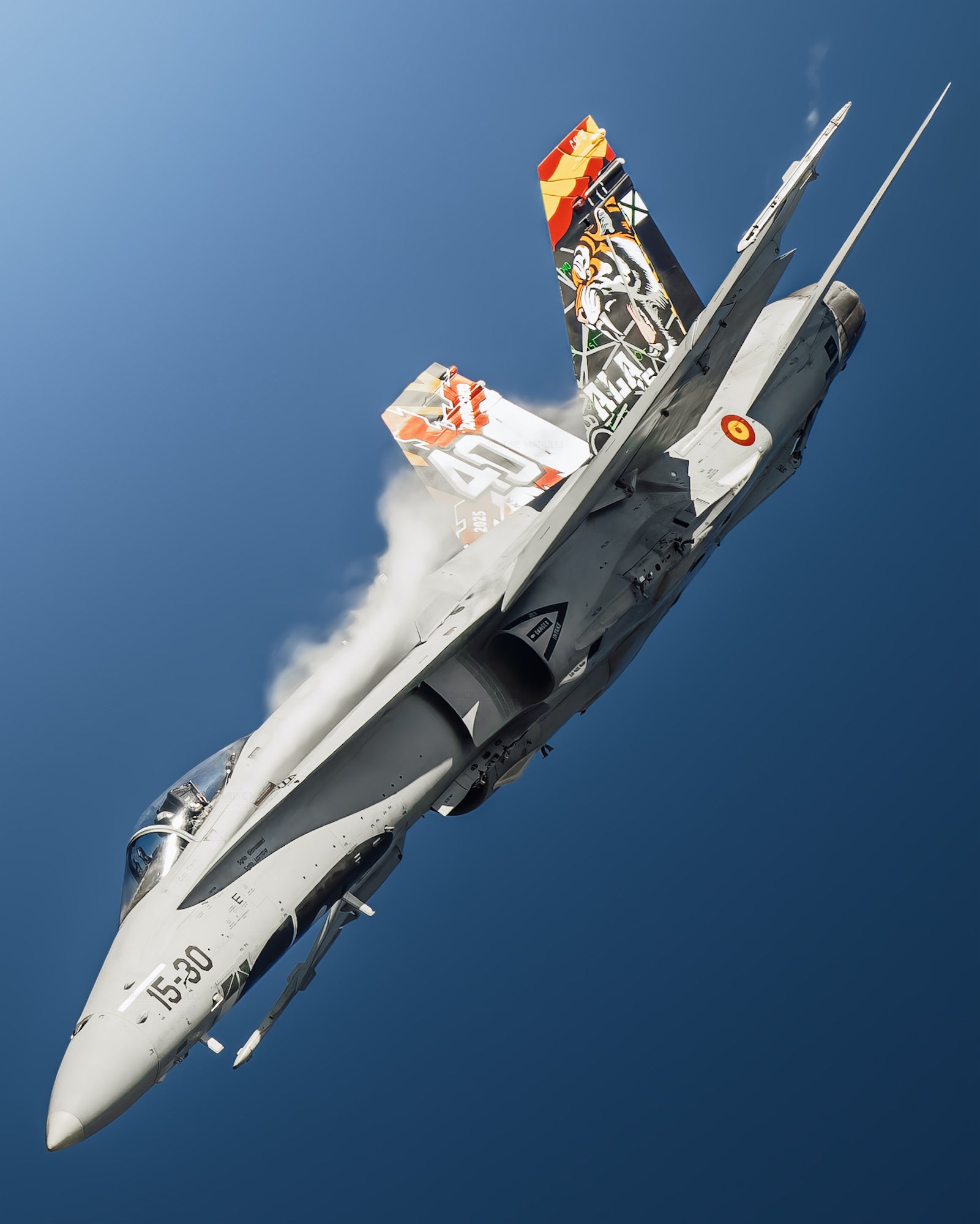
Photo by Simone Marulli. Alpha 1. 600mm f/4 G Master + 1.4x TC. 1/1600-sec., f/5.6, ISO 1000
Camera Settings: How Simone Photographs Fighter Jets In Flight
As I mentioned at the beginning, it takes months to get everything ready, and on the day of the shoot I always try to get to the shooting location as early as possible, ideally arriving among the first, even if it means getting up in the middle of the night, and this happens practically every time! It’s essential to find the best spot, especially in terms of lighting and the vantage point that offers the best perspective for photographing the planes. In fact, one thing that’s very important to me is the “composition” I manage to capture, and this depends not only on the fighter’s relative position but also on the shooting position. In fact, an airplane seen from the side, and therefore “flat”, doesn’t really excite me personally. On the other hand, a photo of a fighter seen head-on or in a three-quarter view, perhaps banked while making a tight turn with contrails, gives me that thrill that’s impossible to get from a side view. So, I wake up before dawn, always moving with a headlamp to get to the right spot, and then wait for flight activity to begin, usually a few hours later.
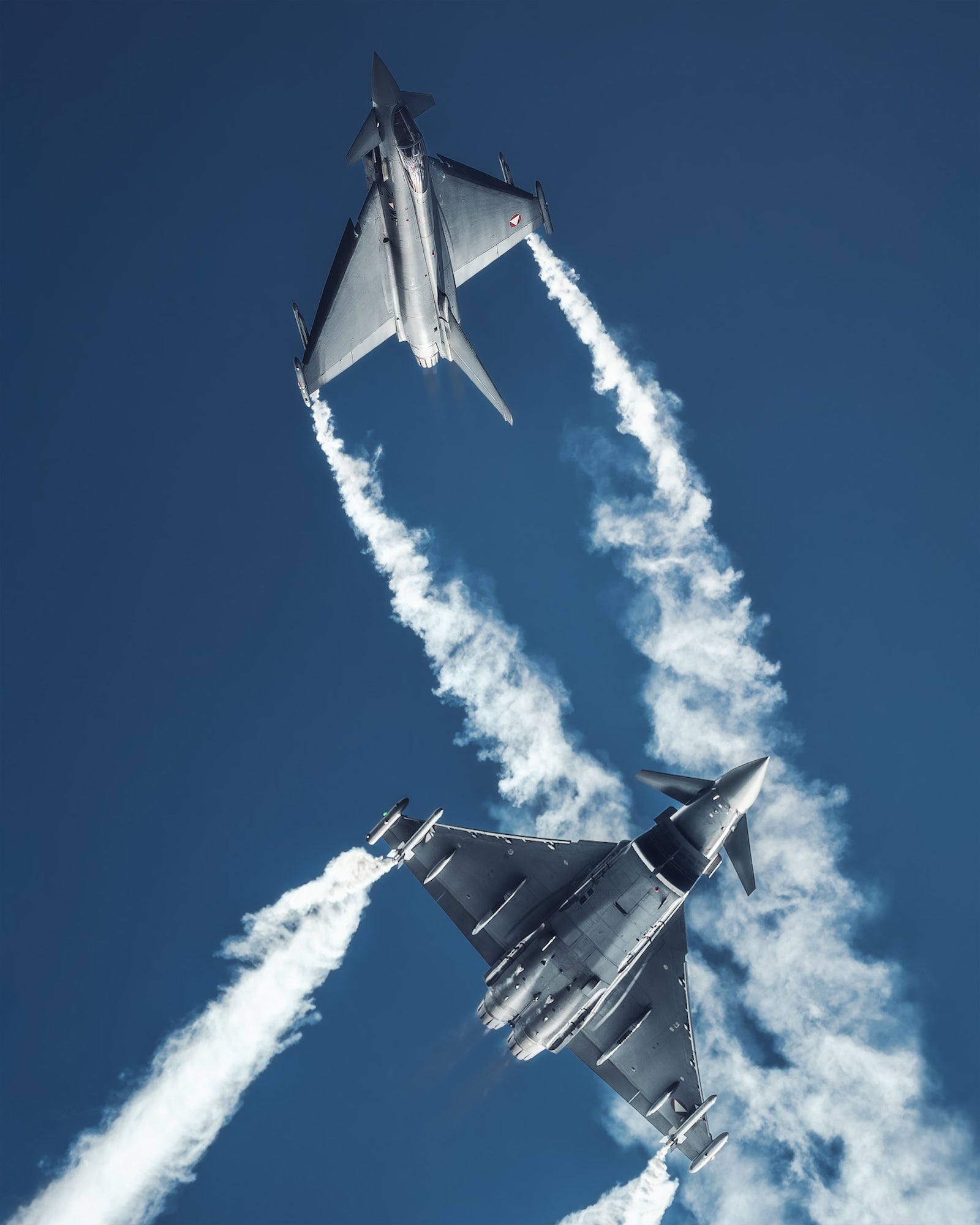
Photo by Simone Marulli. Alpha 1. 600mm f/4 G Master. 1/2500-sec., f/4, ISO 400
The camera settings depend on the type of shot I want to get, and I usually set the camera in two ways. If the background is mainly the sky, I set it to manual mode and auto ISO. This way, I have full control over the aperture and shutter speed. Since the fighter jet is very far away, I always shoot at full aperture; the depth of field will always be sufficient to keep the entire aircraft in focus, and at the same time I can keep the ISO as low as possible. For the shutter speed, I usually set a fast speed between 1/1250-sec. and 1/2500-sec., depending on the speed and proximity of the subject. If, on the other hand, the type of shot involves a background other than the sky, then I switch to shutter-priority mode, still with auto ISO, letting the camera handle the aperture and ISO while I focus on the shutter speed, which I set differently depending on various factors, especially the relative speed between the plane and the background.
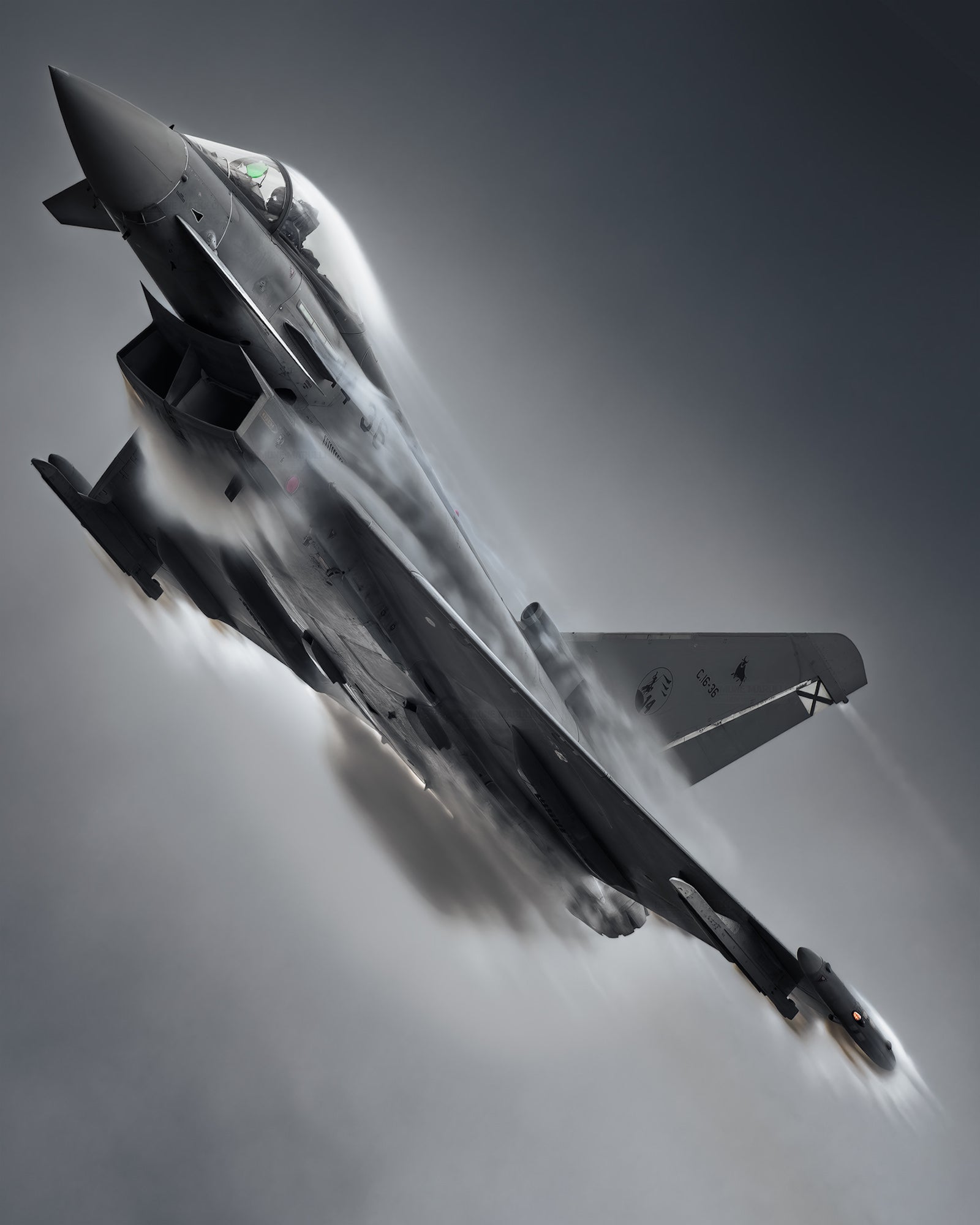
Photo by Simone Marulli. Alpha 1. 600mm f/4 G Master +1.4x TC. 1/2000-sec., f/5.6, ISO 500
For fighter jets passing through a canyon, for example, I mostly use speeds between 1/160-sec. and 1/500-sec.. It’s a different story altogether if the subject is propeller planes or helicopters; in this case, I go even lower, even down to 1/15-sec. to capture the full circle of the propellers. In fact, I believe there’s no worse photo than one of a plane or helicopter with its blades frozen in mid-air. The two Alpha 1s give me the confidence that I’ll always get the shot I want; they have unmatched performance and a sensor that I find truly exceptional. I always take the shot handheld. I've tried using monopods in the past, but this significantly slows down the process, which would prevent me from capturing a large portion of the shots. In fact, very often we’re talking about a matter of seconds from when the plane appears, as a tiny dot in the distance, to when it has already passed, and sometimes there are even several consecutive passes. It would be truly impossible to frame and track such a fast-moving target unless you’re holding everything in your hands. The light is, of course, always natural; there’s no way to have even the slightest control, and you’re at the mercy of weather conditions, which always determine the final result. That said, whether it’s raining, sunny, or cloudy, every shot has a certain charm in my opinion, making it always worth taking.
Limited Editing To Protect Authenticity
I’ve been selling images professionally since 1998, and I’ve been using Photoshop since then, so I’ve come a long way to develop the editing style I use today. I’ve studied extensively and taken countless courses with various world-renowned gurus and photographers; if I had to name just one, it would be Marianna Santoni, who is truly the best in Italy in my opinion. I have learned and independently developed some very sophisticated techniques for the key steps in my editing workflow. I primarily use two software programs: Lightroom and Photoshop. The first is what sets the tone for the photo, it accounts for 90% of the final result, and then in Photoshop, I finalize the image with some corrections and the finishing touches. What I want to emphasize is that I have never done photo montages or retouching; in other words, I limit myself to highlighting everything that is already in the original shot. I bring out all the details that others normally overlook or even miss, and I emphasize them. Everything you see in each of my photos was there originally, 100% guaranteed.
See more of Simone Marulli’s work on Instagram @simonemarulli_aviation and at marulliphoto.com.