Specializing in birds of prey and other wildlife, Mark Smith (@mark.smith.photography) creates award-winning ultra-slow-motion videography and stunning photography that reveals the hidden beauty of nature. His work has been viewed billions of times – in fact, you’ve probably already seen it. We sat down with Mark to learn more about the Alpha cameras and Sony lenses he uses to get some of the best photos and videos of birds we’ve ever seen. Watch and read below until the end, where Mark reveals some of his top-secret tips that helped him take his photos and footage to another level.
Shop This Kit:
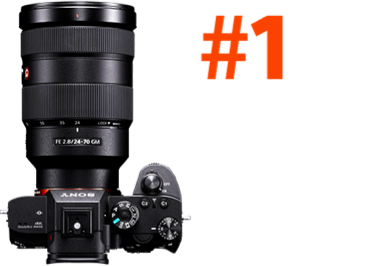
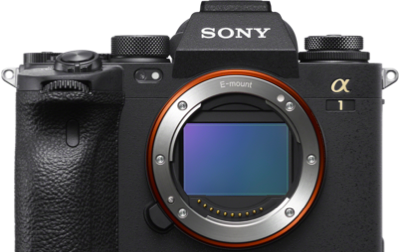
Cameras: Alpha 1 II, Alpha 1
Lenses: 200-600mm f/5.6-6.3 G, 600mm f/4 G Master, 70-200mm f/2.8 G Master II, 16-35mm f/4 G PZ
Accessories: ECM-B10 Digital Shotgun Microphone
Cameras In Mark's Bird Photography Kit
Alpha 1 II: "I find the Alpha 1 II to be a little bit more advanced than the Alpha 1, with the auto focus, and I would say acquisition and tracking. I typically have the Alpha 1 II with the 200-600mm f/5.6-6.3 G."
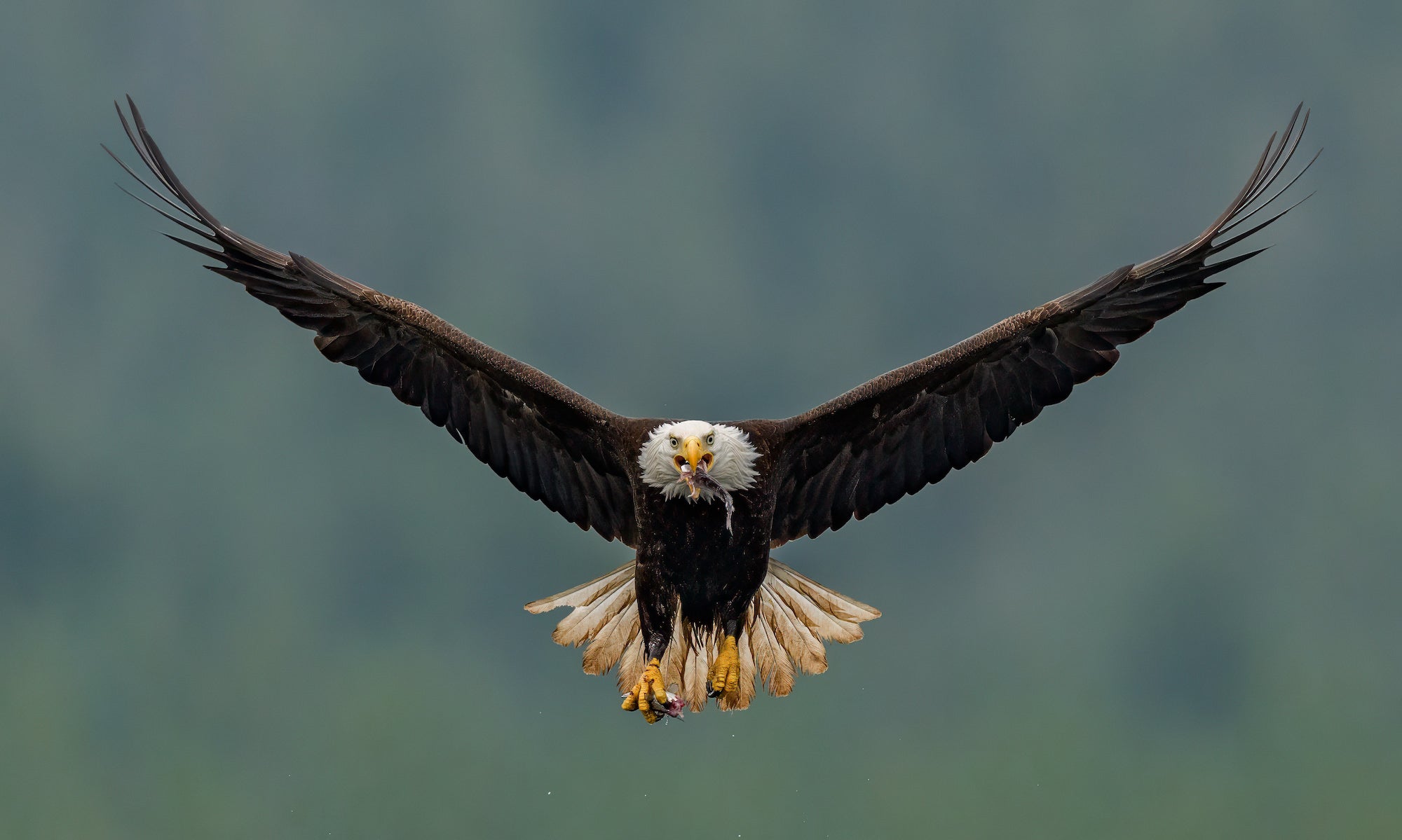
Photo by Mark Smith. Alpha 1 II. 600mm f/4 G Master.
Alpha 1: "This is my older camera that I now will usually pair with my 70-200mm f/2.8 G Master II."
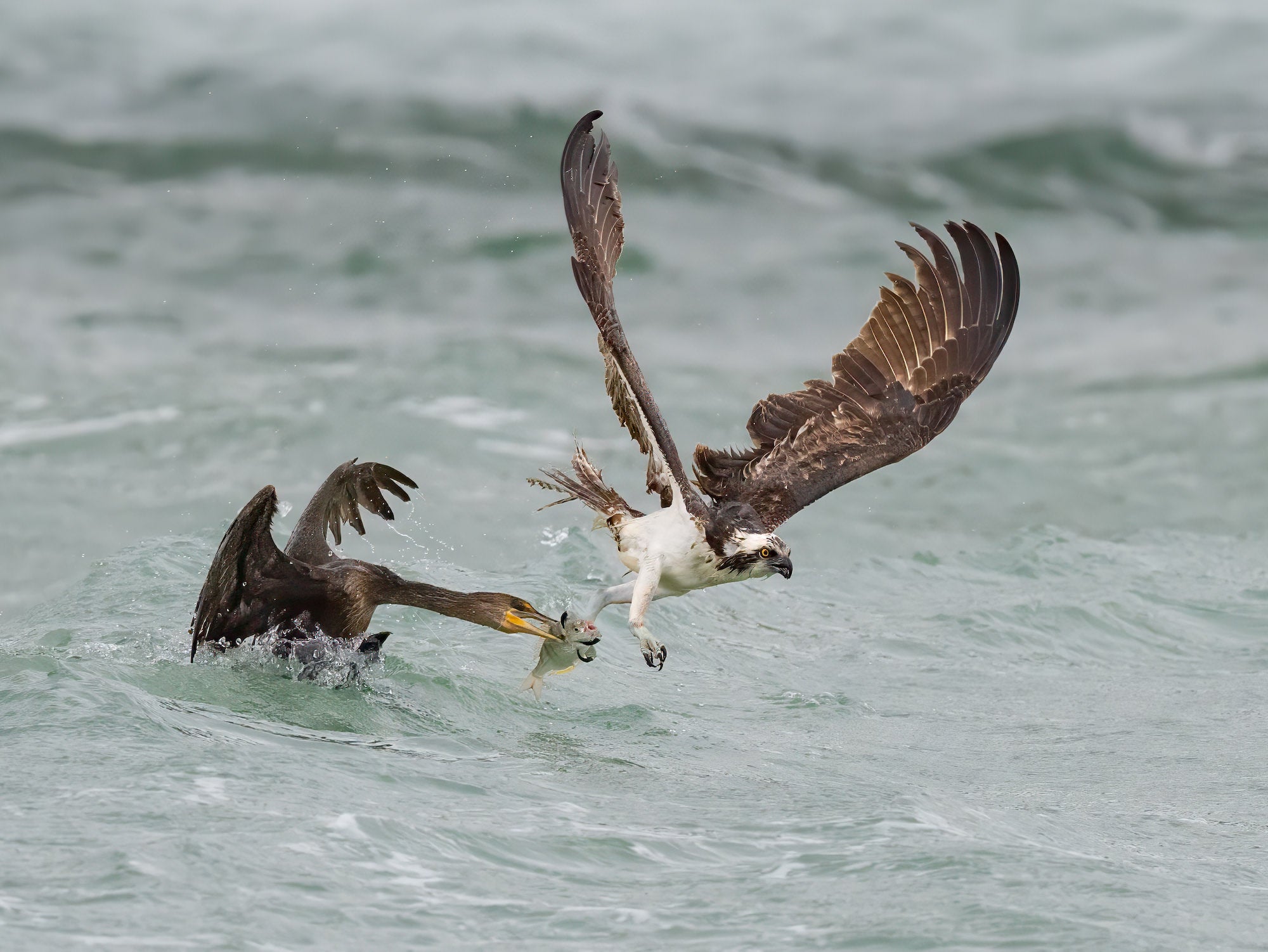
Photo by Mark Smith. Alpha 1. 600mm f/4 G Master. 1/3200-sec., f/5.6, ISO 2000
Lenses In Mark's Bird Photography Kit
200-600mm f/5.6-6.3 G: "I would say my main piece of equipment for 90% of what I do is the 200-600mm lens. It’s invaluable to me in what I do, especially when it comes to capturing video of birds. I don’t really think there’s anything else like it on the market. I would say this is my sole video capture beast."
He continues, "This has become my most-used tool in my bag specifically for capturing video of fast-moving birds, like ospreys, diving into the water, or eagles sometimes going over 50 or 60 miles an hour. The ability to kind of find them in the viewfinder at 200mm and actually handhold this lens, because to me it’s light, and it’s extremely well balanced. So I can hold this for hours at a time, but the ability to grab them at 200mm at a distance and then slowly change the focal length to 600mm without kind of jarring or changing any of this, to me was a gamechanger. It allowed me to do things that I could not do prior."
600mm f/4 G Master: "For stills, I would probably mostly be using my 600mm f/4. The image quality on the 600mm f/4 is…I’ve never really seen anything quite like it. And when you pair it with the high-resolution sensor that you have on the Alpha 1 or the Alpha 1 II you can really capture a lot of fine detail at great distances, which is amazing."
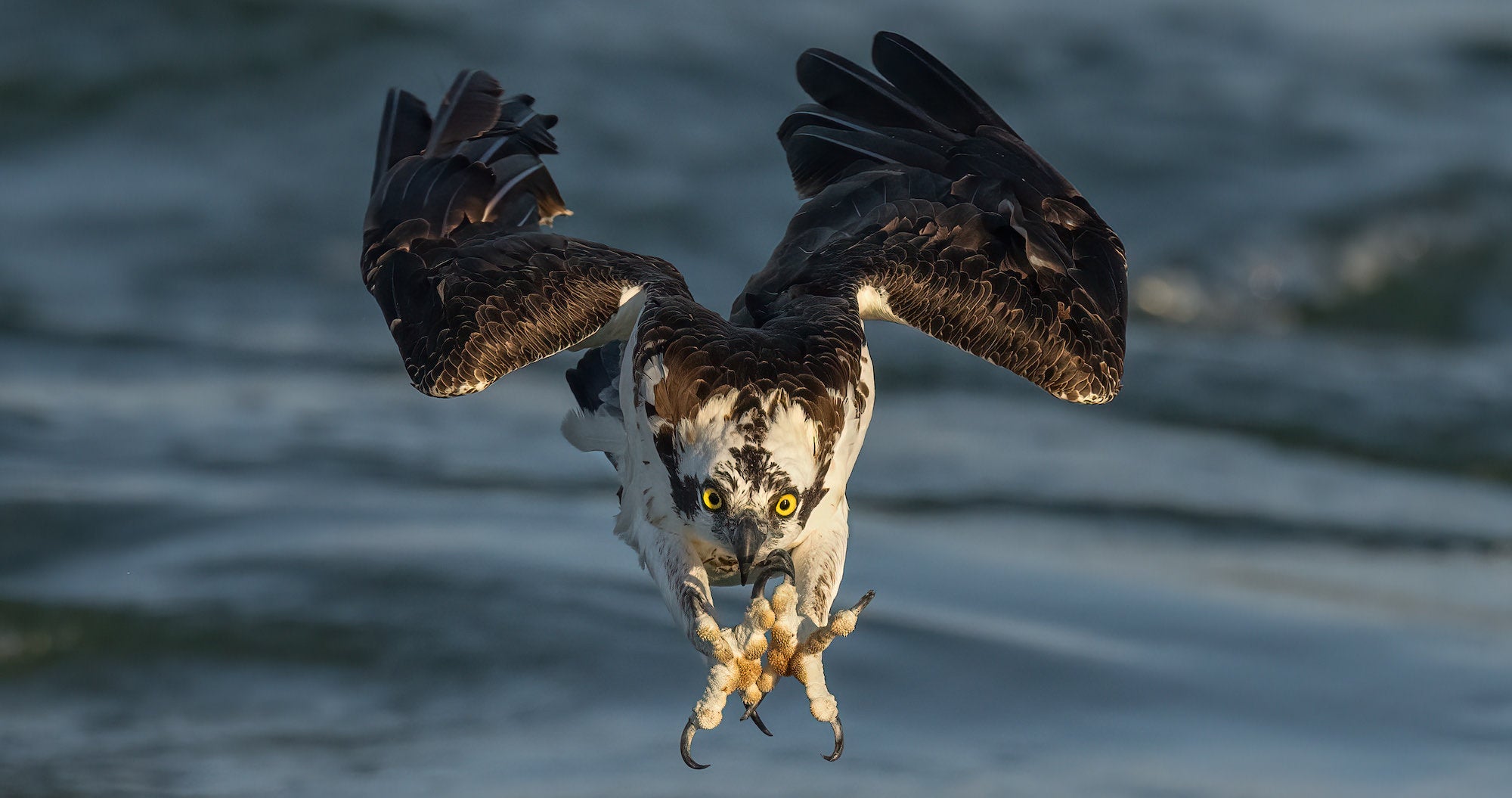
Photo by Mark Smith. Alpha 1 II. 600mm f/4 G Master.
70-200mm f/2.8 G Master II: "I would have my older Alpha 1 on the 70-200mm f/2.8, which is an amazing lens if you can get close enough to the wildlife."
16-35mm f/4 G PZ: I brought this lens with the idea of maybe doing some vlogging on one of these cameras kind of handheld.
Accessories In Mark's Bird Photography Kit
ECM-B10 Digital Shotgun Microphone: This little shotgun mic is amazing. This goes right in the hotshoe of the Sony cameras and gets really good audio quality. Because a lot of times when you’re capturing these animals, you can’t actually get the audio while you’re doing it. So I might use this to just capture ambient noise or wildlife to add it in post for a nice effect.
Hat: Sun protection is really important to me.
Gloves: To keep the sun off of the backs of my hands.
Batteries: Of course I have extra batteries.
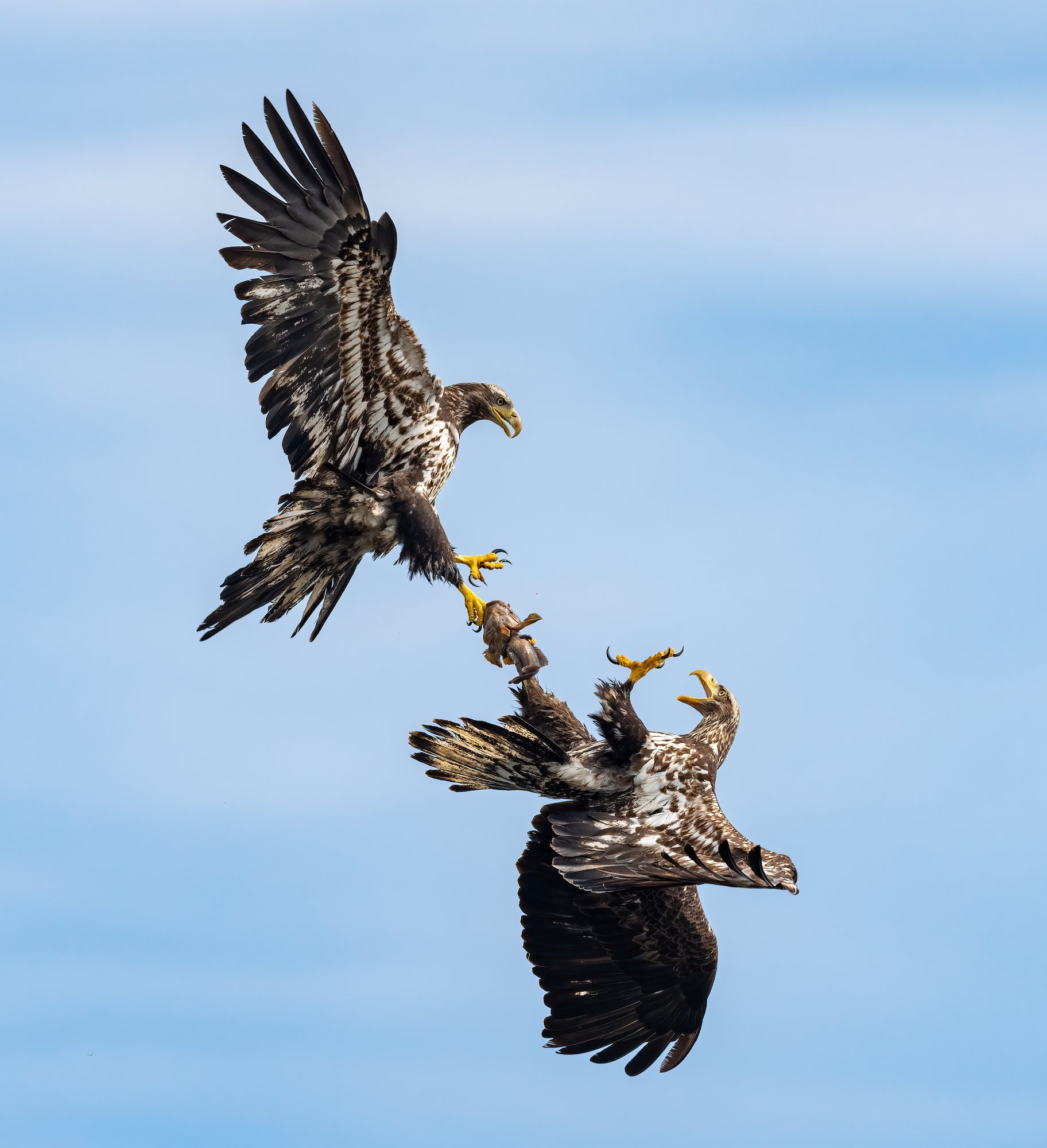
Photo by Mark Smith. Alpha 1. 600mm f/4 G Master.
Mark’s Process: Using Video To Create Better Photos
As Mark mentions, the 200-600mm f/5.6-6.3 G lens allows him to grab focus on the bird at 200mm at a distance, and then slowly change the focal length to 600mm without any kind of jarring change. “It was such a cool process,” he explains, “because as I was doing all of this with the video, I was learning more about my subject, which was initially what got me into photography anyway. And as I started to film these guys, I was shooting a lot of 1080p 240 as a test. If you’re shooting at 1080p 240, your camera renders it in slow motion so the output file that you get out of the camera is already slowed down.”
An osprey diving into the water at 50 miles an hour and then coming back out with a fish is a moment that happens in an instant, but with the ability to slow it down using your camera, you can really dive into the details. “When you slow it down, and put it under like eight times slow motion, it’s like you have this time dilation,” Mark explains. “I learned all of these like subtle little signals that the birds were making that I could then translate back into real time. I would watch these videos back, I would over pan like a second long and I’d kind of be yelling at my screen, ‘Pan up, pan up!’ because it was now exposing all of these flaws that I had in my technique and in my ability to track these birds. Doing that, I was able to see where I was making mistakes and say, ‘OK, I need to practice somehow watching these animals and stopping when they stop.’”
Mark says he did this for six or seven months straight, shooting and dissecting each video to remember the micro-moments. “After I did that, I decided to go back and try stills again,” he explains. “So I picked up my big 600mm f/4 G Master, and all of these hard shots with ospreys diving in, everybody wants to get the moment before they hit the water with the talons locked out. I got it every single time because I had built up all of this muscle memory from tracking the birds, and I was also able to stop when they stopped. I was able to capture things nobody had seen before simply because of the 600mm f/4 G Master lens and I would say, kind of my obsession to do it over and over again.”
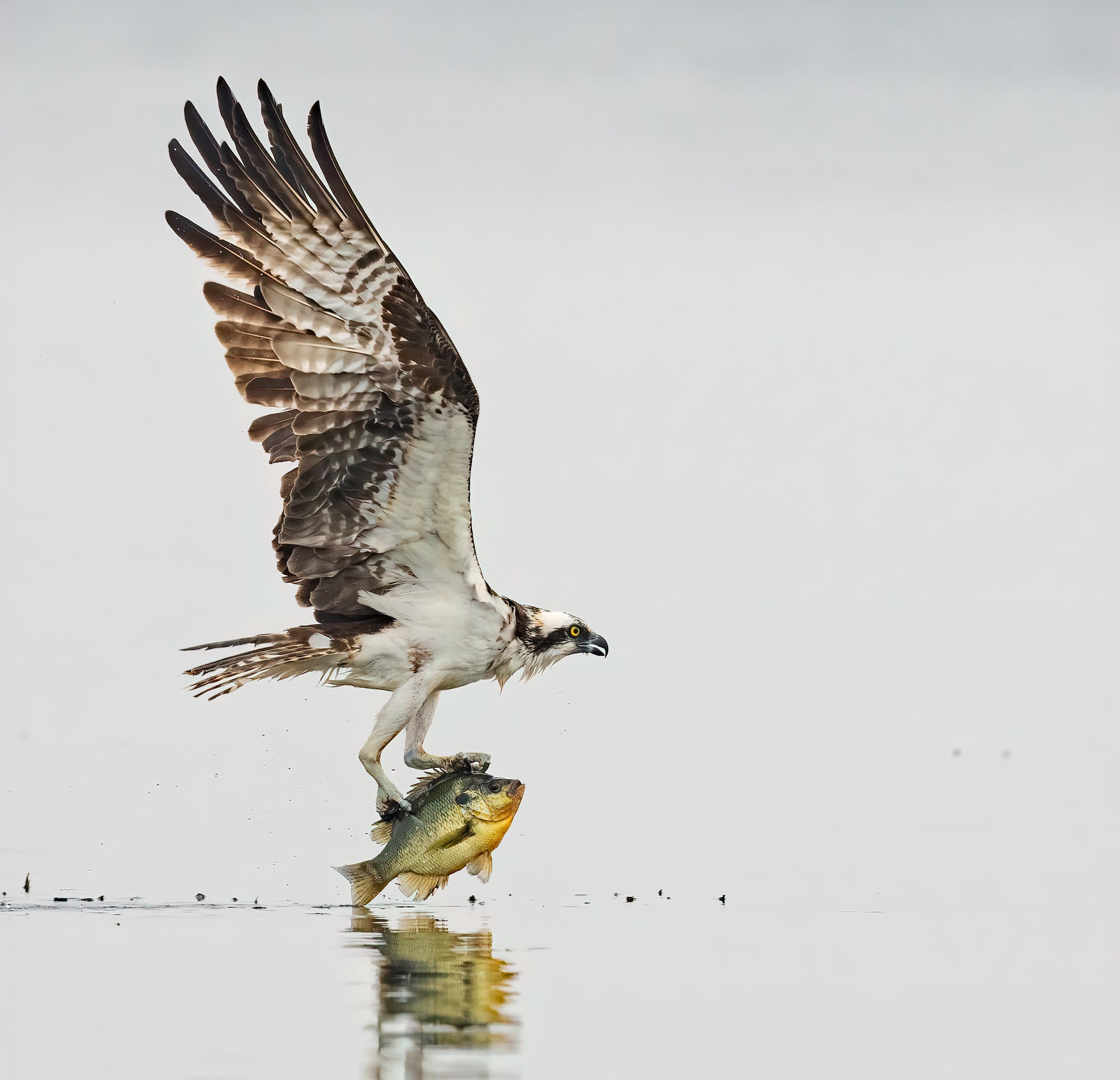
Photo by Mark Smith. Alpha 1. 600mm f/4 G Master.
Pro-Tip: Shoot With Both Eyes Open
When Mark is shooting these fast-moving birds, he says he does it with both eyes open. “It’s crucial when these animals are coming down really quickly and there’s going to be some type of obstruction, be it water or weeds or a tree, that you know to stop when you’re doing that,” he says. “So if you can keep one eye open, it takes a little bit of training, kind of follow the animal down, and you’re maintaining an awareness in your peripheral vision of when this obstacle might come into play. So for ospreys, a lot of times that’s the waterline, because when they hit the water I want to be able to stop with them. And as long as I have this eye open, I can see the horizon coming where that waterline is, and I can know to stop my panning in time and keep them in frame the entire time.”
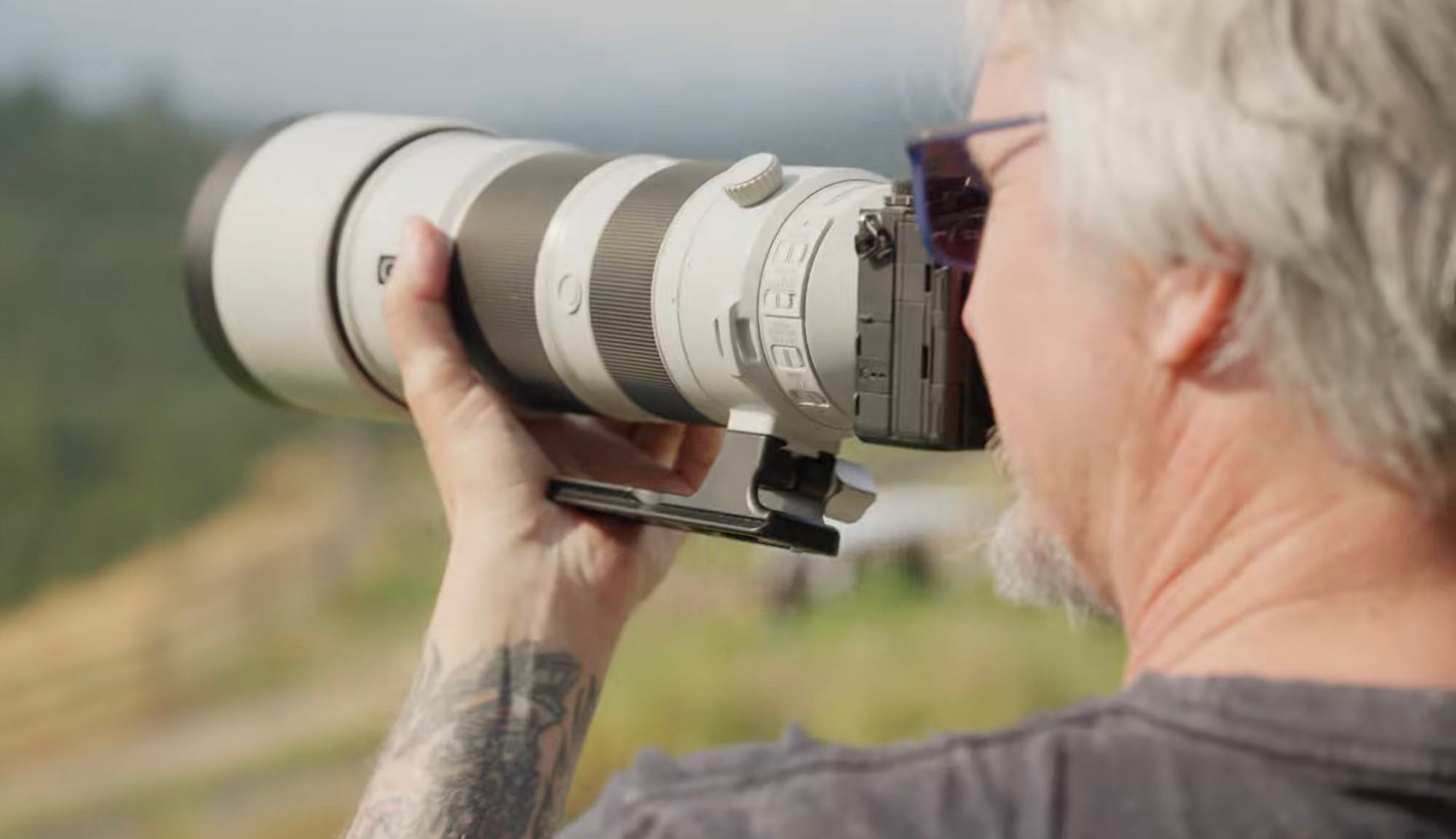
"Shoot with both eyes open." – Wildlife photographer Mark Smith
See more of Mark Smith’s work on Instagram @mark.smith.photography and his YouTube channel.
Watch more videos featuring your favorite creators on the Alpha Universe YouTube Channel.