For this What’s In My Bag, Sony Artisan and conservation photographer Melissa Groo heads to Canada on assignment for Audubon Magazine. "I'll be heading up to shoot a story on small, swift birds called Snow Buntings and the people that study them," she says. "I’ll need to photograph the birds both in flight, and while they’re resting or feeding on the ground. I’ll also be photographing the researchers who capture them, take their measurements, and add bands on their legs to help track them. All this to better understand their movements in winter, in hopes that the reason for their dramatic declines in number – and solutions to help them – might become clear." Keep reading as she shares what's in her bag for a magazine assignment on birds.
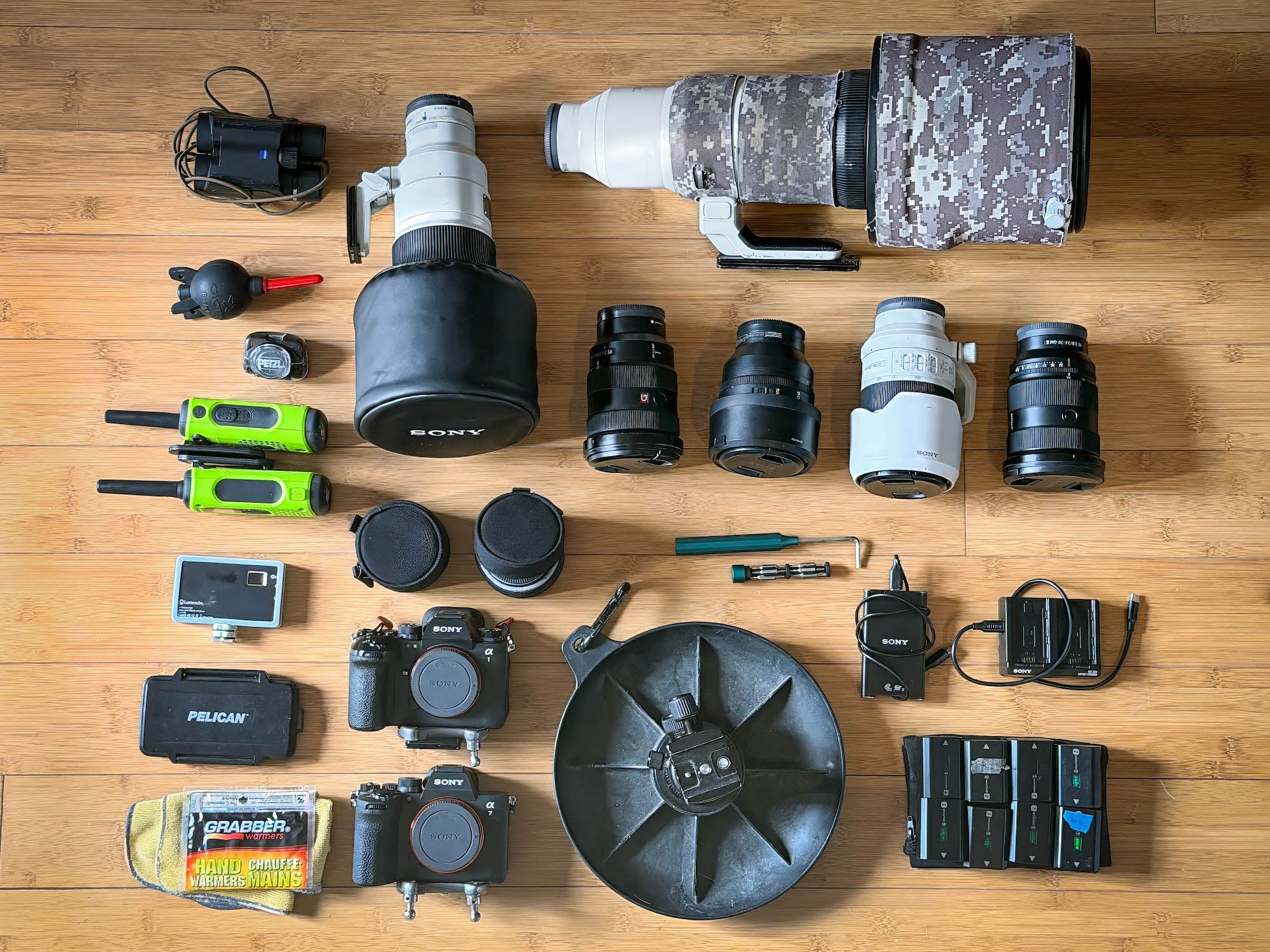
Shop This Kit:
Cameras: Alpha 1 II, Alpha 7 V
Lenses: 600mm f/4 G Master, 300mm f/2.8 G Master, 70-200mm f/4 Macro G II, 50mm f/1.2 G Master, 24-70mm f/2.8 G Master II, 16-35mm f/2.8 G Master
Accessories: 1.4x Teleconverter, 2x Teleconverter, NP-FZ100 Batteries, BC-ZD1 Dual-Battery Charger, MRW-G2 CFexpress Type A/SD Memory Card Reader
Cameras
Alpha 1 II: This is my go-to workhorse. It has the best of everything I need for this job: fast focus acquisition, persistent tracking, incredible bird-eye detection, a high frame rate of 30fps, a stacked 50MP sensor, Pre-capture, and excellent performance in low light. Knowing Sony, they’ll come up with something incredibly cutting edge in the next year or two that I’m not even aware yet that I need, but for now this is the be-all and end-all for me.
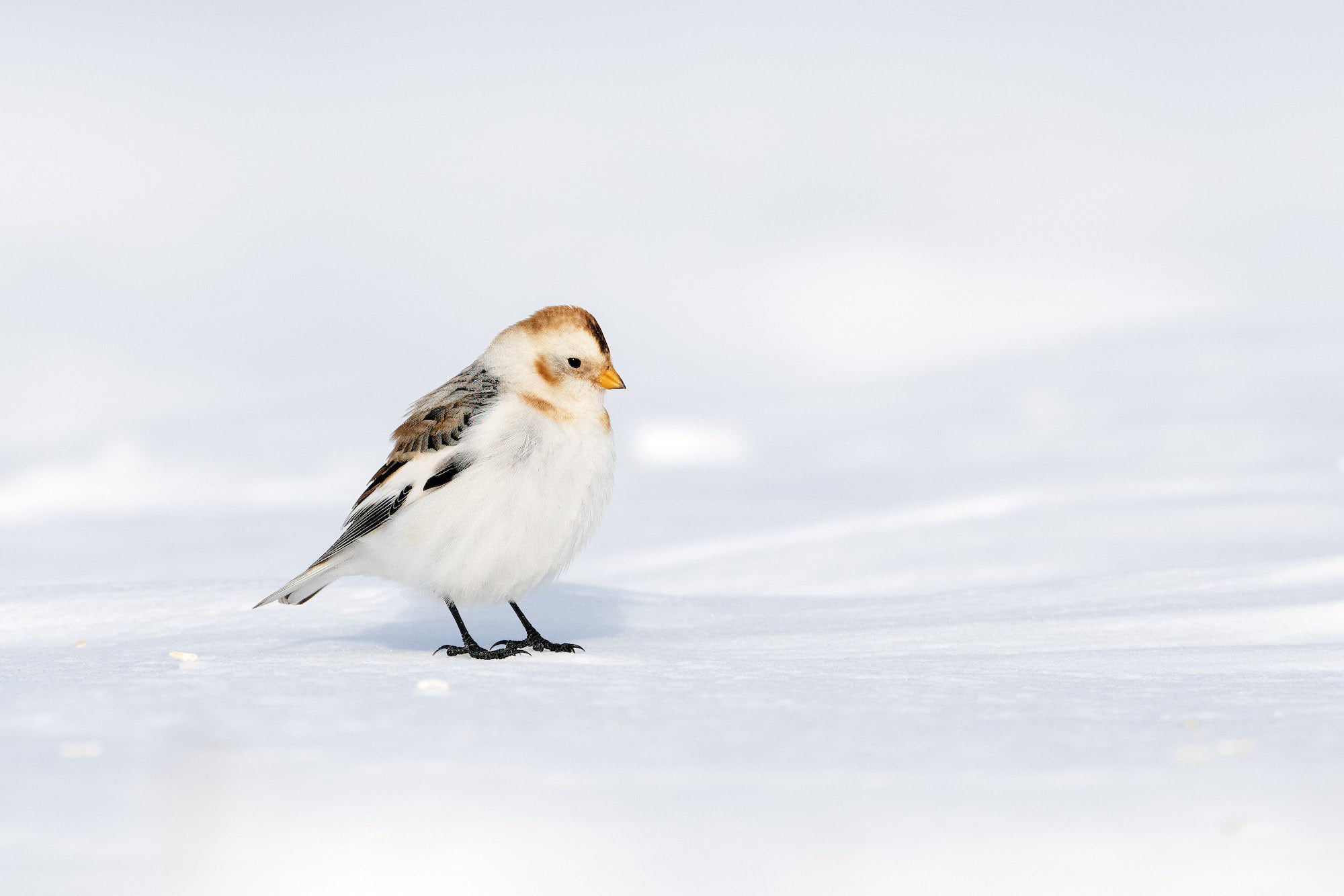
Photo by Melissa Groo. Alpha 1 II. 600mm f/4 G Master + 1.4x TC. 1/3200-sec., f/7.1, ISO 2000
Alpha 7 V: I recently added this new camera to my arsenal, and I’m super excited to put it to the test for this job. Given the relatively low price point, I was astonished to discover what a powerhouse it is. The AF speed and Bird-eye recognition is at least as good as the Alpha 1 II’s, and the high frames-per-second shooting (30) with no viewfinder blackout is terrific for wildlife. It also offers Pre-capture capability, which allows the camera to buffer images and save up to a full second of action before the shutter button is fully pressed. This, paired with a blackout-free 30 fps electronic shutter, is perfect for capturing unpredictable subjects like wild animals! And the 4-axis, fully articulating LCD monitor helps me be nimble and flexible with camera placement, especially when I need to shoot low to the ground but can’t get my body into position fast enough.
Lenses
600mm f/4 G Master: When I’m photographing birds, this is often my top choice, particularly when dealing with small birds as in this assignment. I usually have it attached to the Sony 1.4x teleconverter which yields me 840mm total. I appreciate such a long length as it enables me to keep a good distance from the birds, lessening the chance that I will disturb them. It’s pretty hard to beat the beautiful bokeh of this lens and its lightning-fast autofocus.
300mm f/2.8 G Master: Recently I purchased this lens, and have really fallen in love with it. It’s amazingly light and compact, and very sharp. I like to use it to give a greater sense of the environment around a bird. If I have to go in tight, I can easily attach teleconverters to extend the reach. I think it’s particularly noteworthy that it works very well with even the 2x teleconverter in good light situations. And being able to carry this lens, and swing it around so easily, given its compact build, makes it a great choice to take on long hikes.
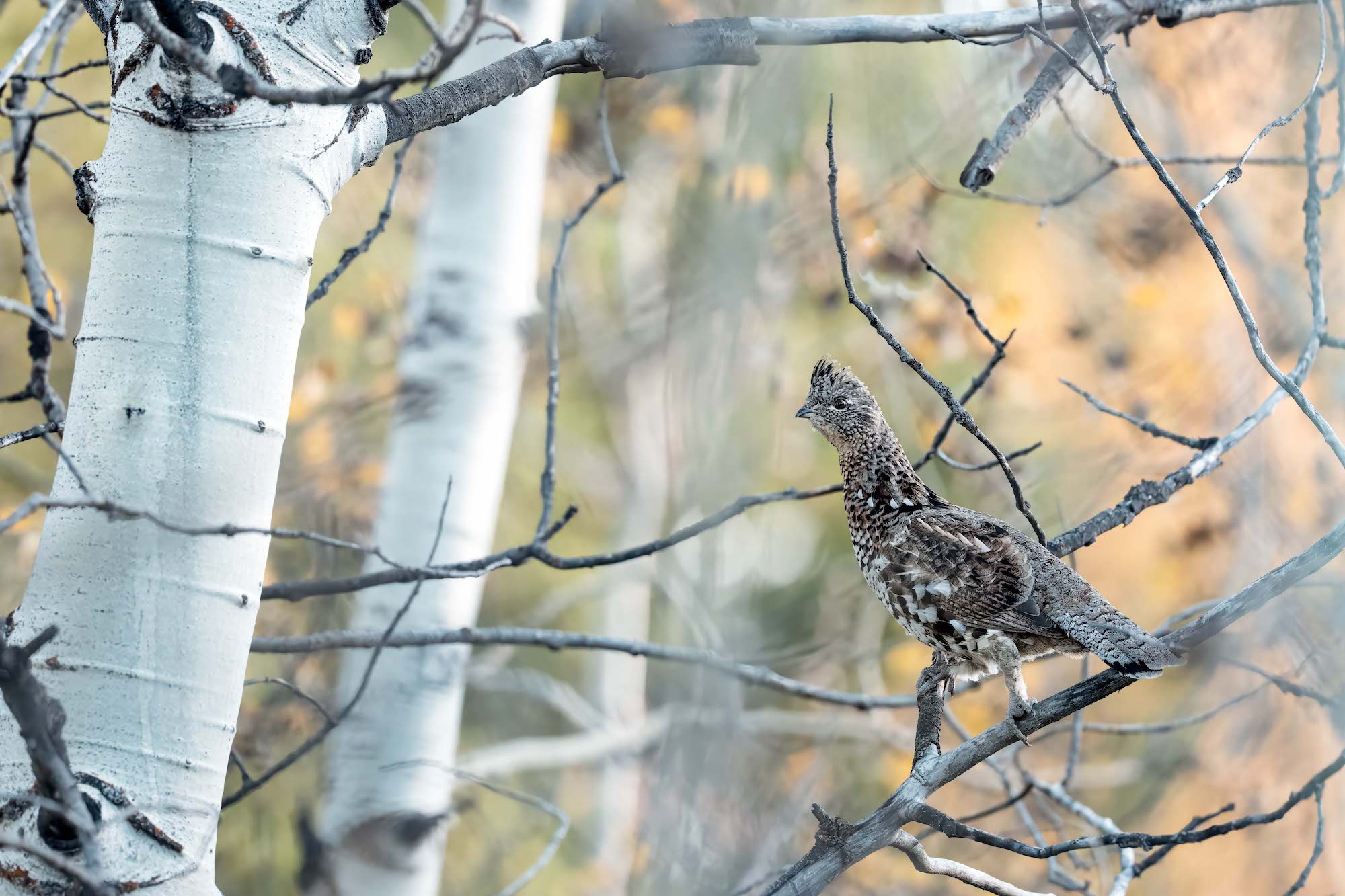
Photo by Melissa Groo. Alpha 1 II. 300mm f/2.8 G Master. 1/1250-sec., f/4, ISO 6400
70-200mm f/4 Macro G II: This will be a great lens to have along for its macro capabilities when I’m doing close-ups of birds as they’re being studied by researchers. I think it will also be helpful for taking portraits of the researchers, offering compression for flattering, close-up headshots,
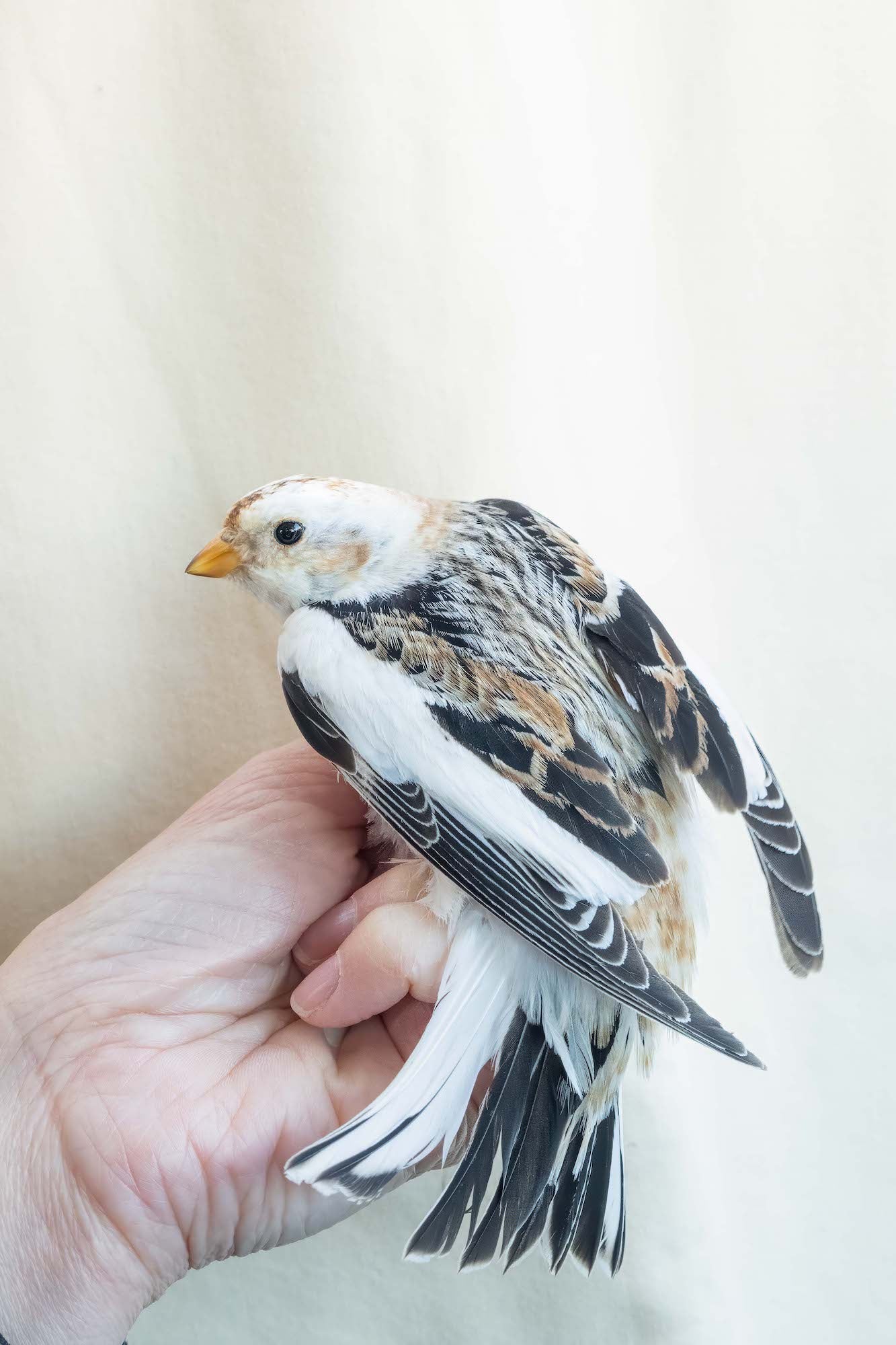
Photo by Melissa Groo. Alpha 9 III. 70-200mm f/4 Macro G II. 1/250-sec., f/9, ISO 3200
50mm f/1.2 G Master: This is a lens I have recently been turning to more and more for taking people portraits. The subject isolation is stellar, and the bokeh super smooth and creamy.
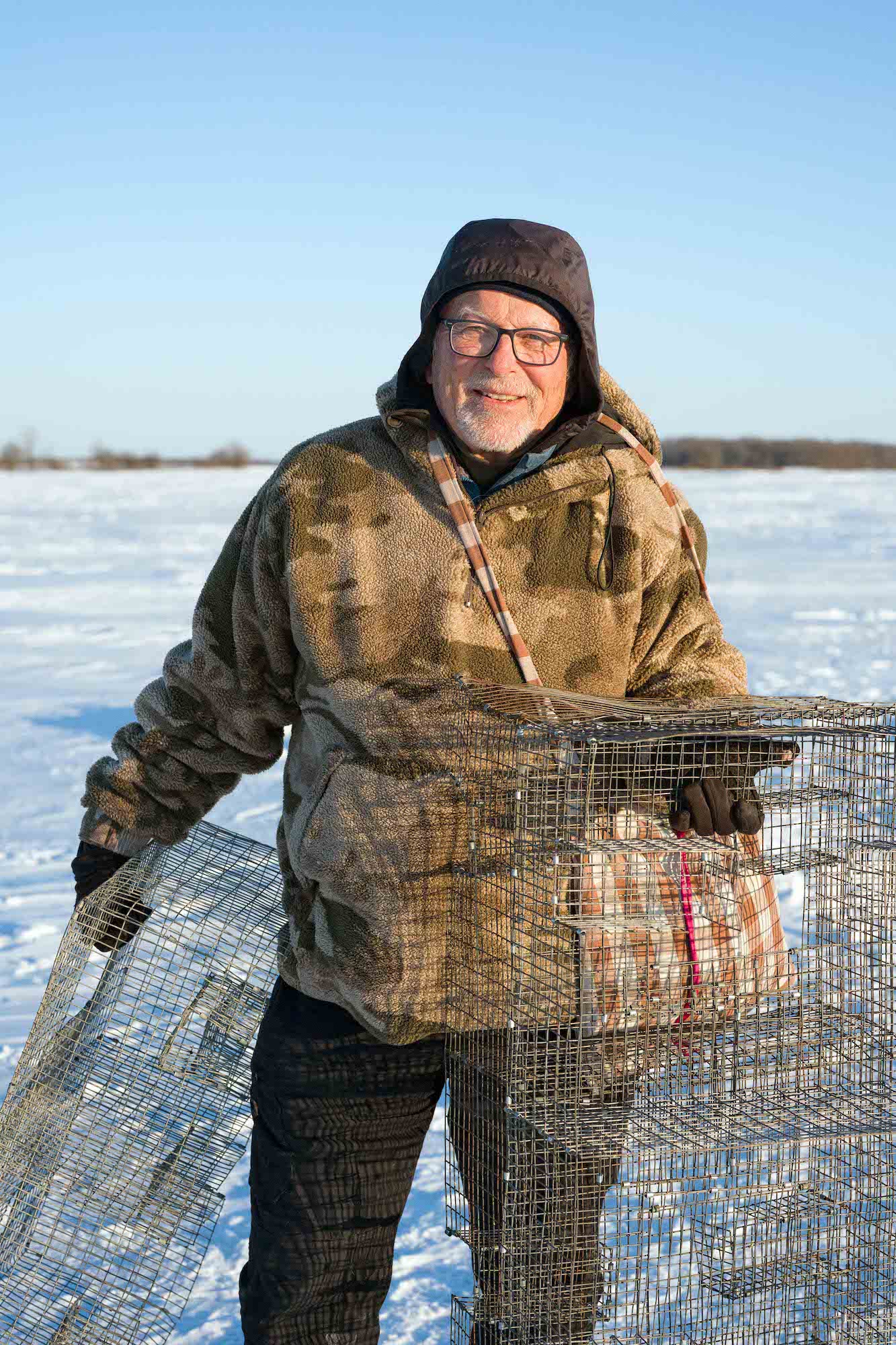
Photo by Melissa Groo. Alpha 7 V. 50mm f/1.2 G Master. 1/6400-sec., f/5, ISO 2000
24-70mm f/2.8 G Master II: This is such a great walkaround lens, enabling me to capture a variety of different kinds of scenes, whether it’s a wide view of a flock of birds in flight, an environmental scene, or researchers in the field.
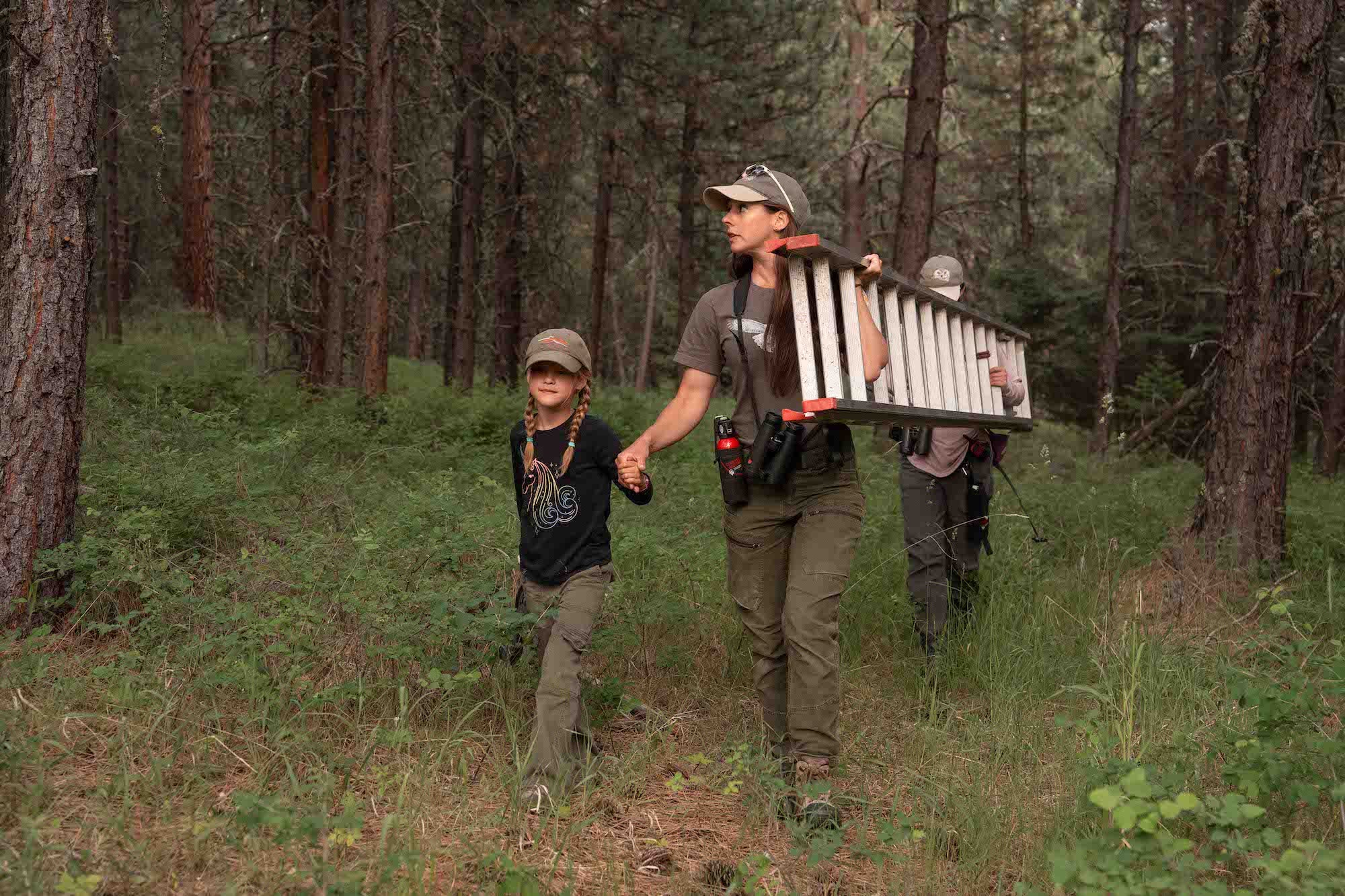
Photo by Melissa Groo. Alpha 1 II. 24-70mm f2.8 G Master II. 1/400-sec., f/5.6, ISO 1600
16-35mm f/2.8 G Master: This lens will be useful in showing a wide view of the landscape, and for use in a remote control set-up near the capture site for the birds.
Accessories
1.4x Teleconverter and 2x Teleconverter: Both are always with me no matter what wildlife I’m photographing as I never know when I will need a bit more reach. Being prepared is everything when it comes to wildlife photography!
Multiple Sony NP-FZ100 rechargeable lithium-ion batteries, the Sony BC-ZD1 Dual-Battery Charger, and the Sony MRW-G2 CFexpress Type A/SD Memory Card Reader.
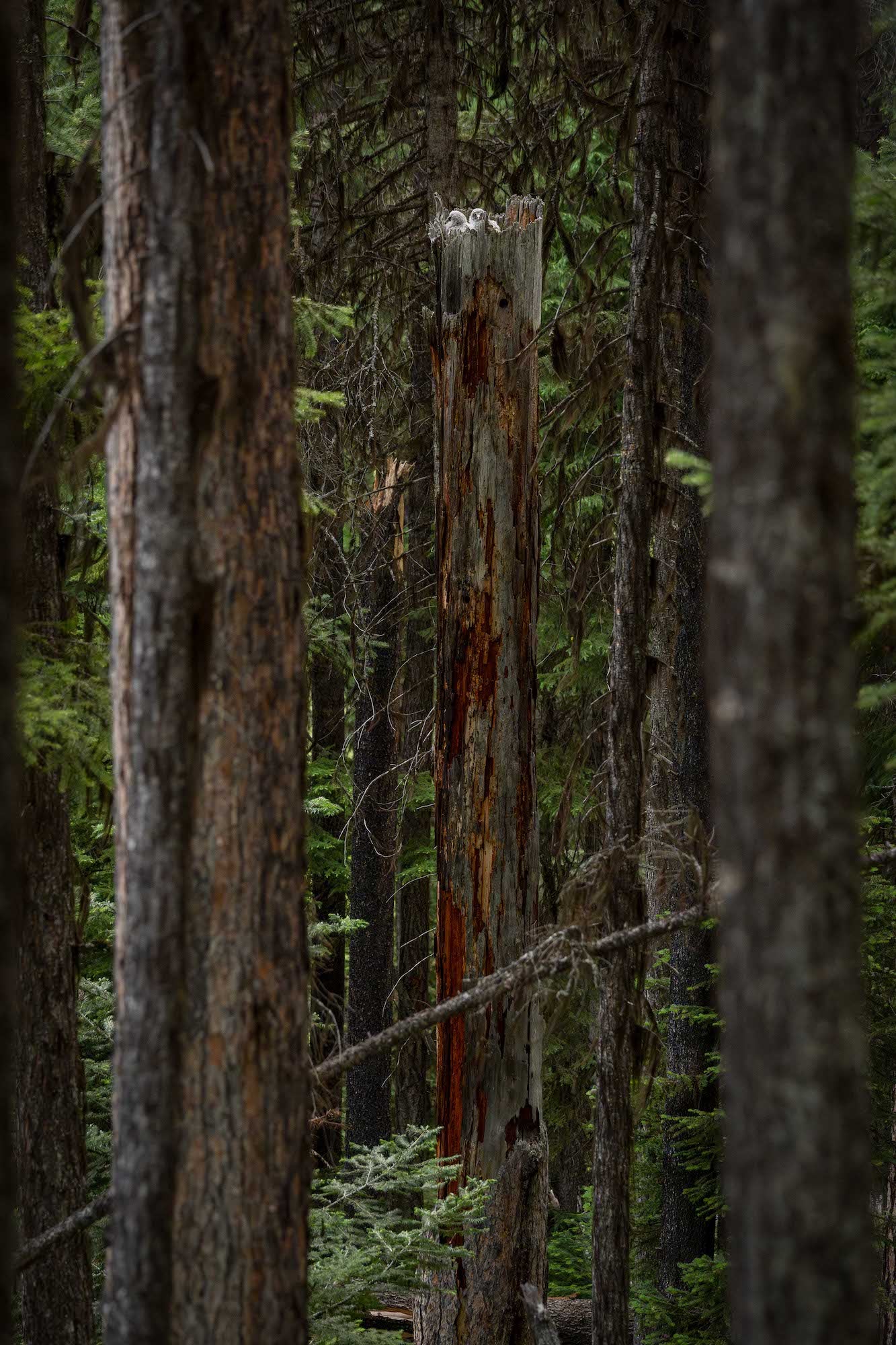
Photo by Melissa Groo. Alpha 9 III. 70-200mm f/4 Macro G II. 1/1250-sec., f/7.1, ISO 2500
My other accessories include my trusty small binoculars to aid me in locating and identifying birds, walkie talkies to communicate with researchers in remote places if needed, head lamp, lens blower, memory card case, hand and toe warmers, microfibre cloth, screwdriver set, cold shoe light cube, and a ground pod with ballhead for shooting low and for remote control work.
See more of Melissa Groo's work on her Alpha Universe Profile, on Instagram @melissagroo and at melissagroo.com.