A white bear moves through a rainforest in British Columbia, slipping between mossy trunks and deep green shadows. It is an image that can seem almost supernatural – especially near Halloween – but for photographer Jack Plant, it is a reminder to slow down.
Plant has spent more than a decade in the Great Bear Rainforest, a place he says he first learned about as a teenager while watching a nature documentary. It just so happens that it was a National Geographic Documentary featuring Sony Artisan Paul Nicklen. In it he was photographing Spirit Bears: rare white-coated Kermode bears, a color phase of the American black bear – while documenting the rainforest and the threats facing it.
“It was the first time I’d ever heard of the Great Bear Rainforest, let alone Spirit Bears,” Plant says. “Then I just became obsessed.”
The contrast alone captivated him.
“It was this idea of a random white bear in the green, dark forest,” Plant says. “It just didn’t seem right.”
Years later, he made the journey from the U.K. to the rainforest, hoping to see one for himself. He did…but the experience became about much more than a rare sighting.
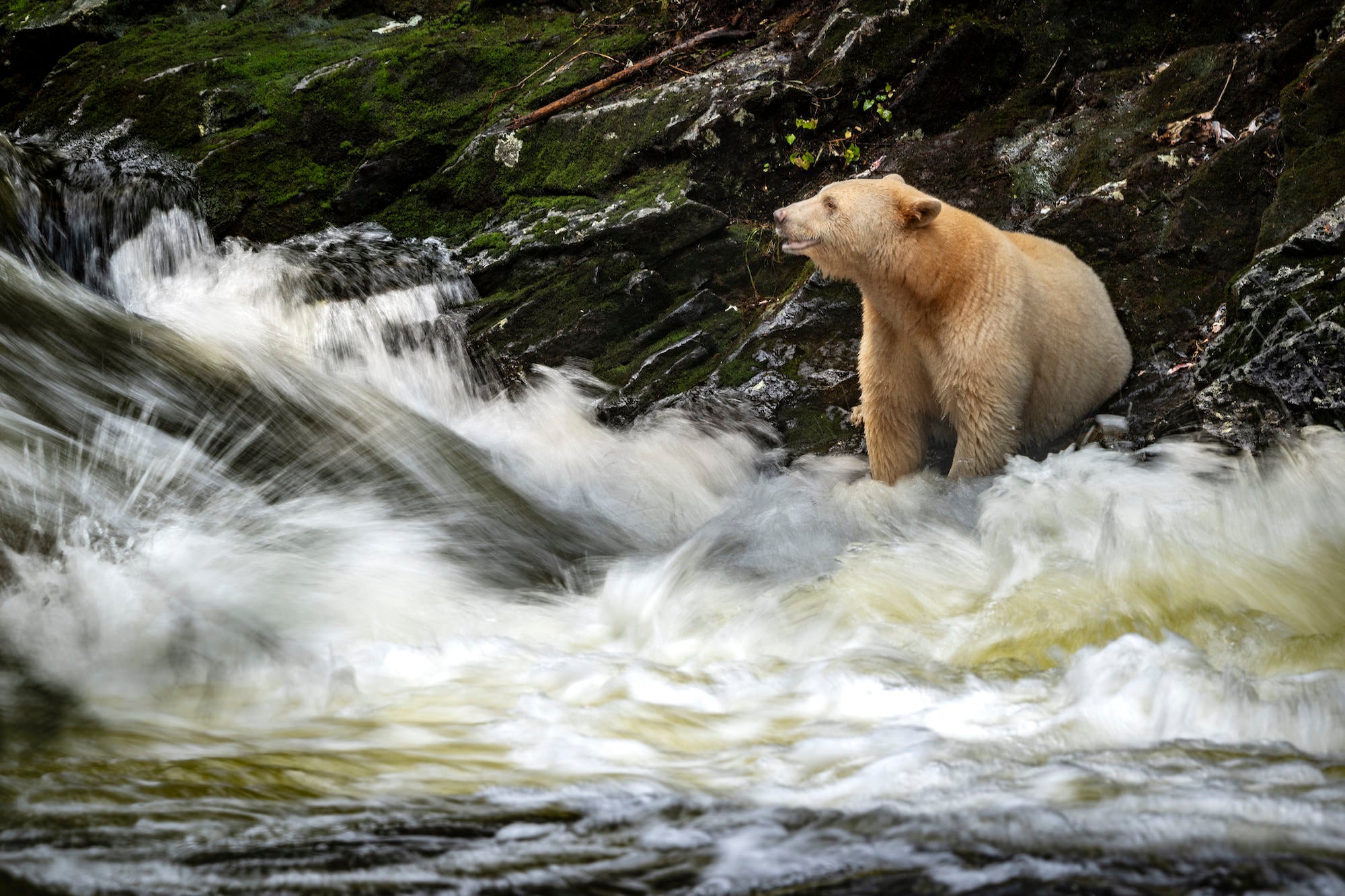
Photo by Jack Plant. Alpha 1. 200-600mm f/5.6-6.3 G. 1/15-sec., f/10, ISO 100
Spirit Of The Great Bear
Plant began working at a tourism lodge in Klemtu, formed close relationships within the community and returned again and again. The result is his book, Spirit of the Great Bear, a long-term photographic record of the region’s wildlife, landscapes and people.
When Plant had made his own way to the rainforest and began photographing there, he unexpectedly met Nicklen in the field. “I was like, ‘I know who you are. I have to thank you, I’m here because of you,’” Plant recalls.
The two later reconnected, and Nicklen became part of the creative circle Plant leaned on while editing his book. For Plant, it is a fitting full-circle moment: the photographer whose work first introduced him to Spirit Bears also helped inspire a decade-long project of his own.
“I’ve learned so much from these experiences throughout the years,” Plant says. “What has really had me sticking around is the Indigenous people and the way they welcomed me as family and cared so much for the area.”
That perspective informs his approach to wildlife photography. The goal is not simply to come home with the closest frame. It is to make photographs that preserve the scale, mystery and wildness of the place
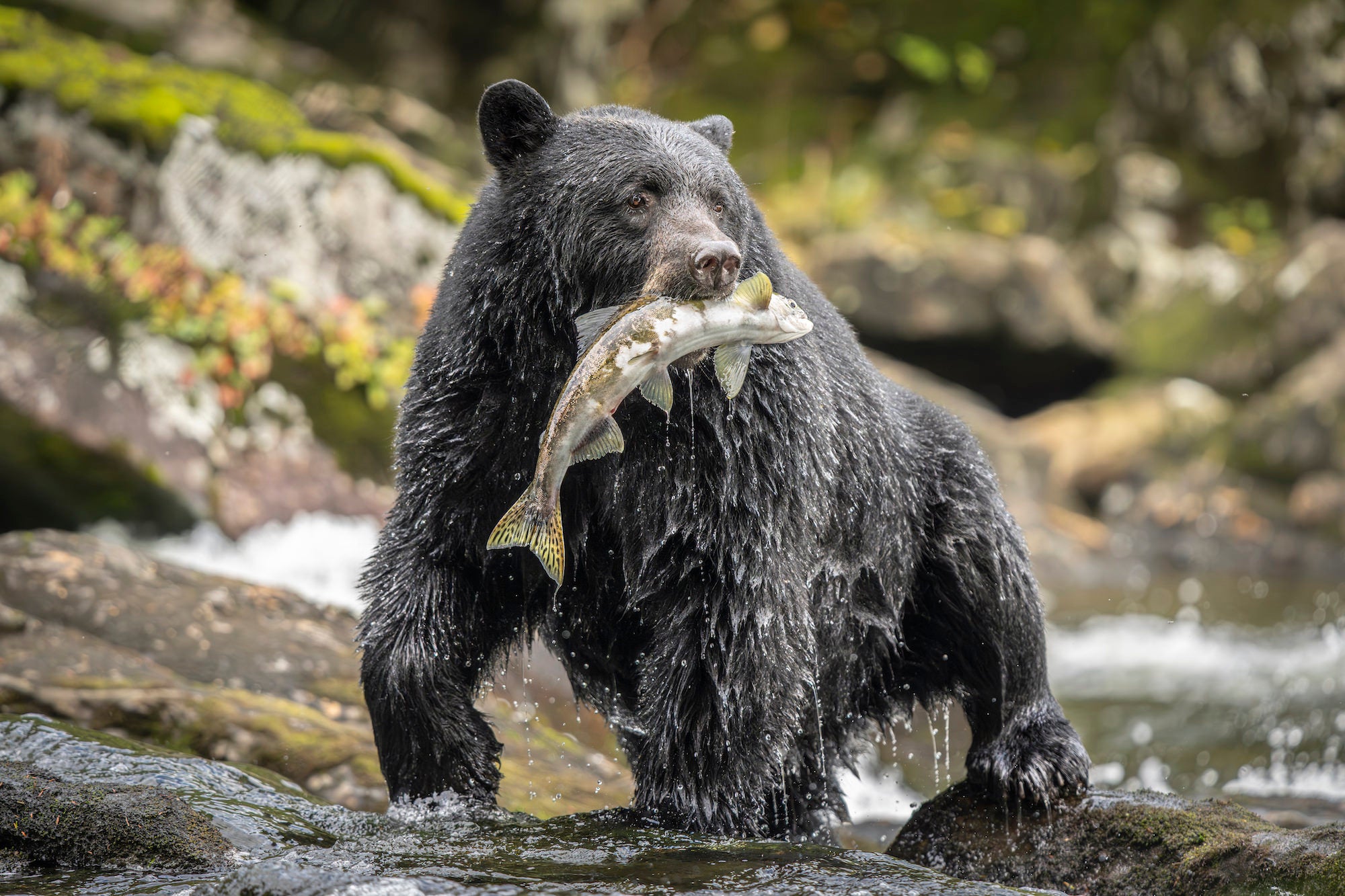
Photo by Jack Plant. Alpha 1. 200-600mm f/5.6-6.3 G. 1/1000-sec., f/6.3, ISO 4000
Built For Fast Action & Difficult Light
The Great Bear Rainforest is demanding photographic territory. Heavy rain, dark canopy and unpredictable wildlife encounters are normal. In those conditions, Plant needs a camera that can find and hold focus quickly, preserve detail across challenging tonal ranges and keep up when a moment unfolds without warning.
His primary camera is the Alpha 1, which he pairs most often with the 200-600mm f/5.6-6.3 G.
Before moving to Sony mirrorless, Plant photographed with an older DSLR. The transition to the Alpha 1, he says, was “literally like night and day.” Its autofocus performance has been especially valuable when a bear is moving through foliage, emerging from shadow or suddenly changing direction along a riverbank.
In wildlife photography, Plant notes, the frame can disappear as quickly as it arrives. A bear may step into an opening for a few seconds, pull a fish from the water or turn toward a shaft of light – and the camera needs to respond immediately. The Alpha 1 gives him the speed and dependable autofocus he needs to stay with those unpredictable moments. He says he does plan to upgrade to the Alpha 1 II, but his Alpha 1 continues to get the job done.
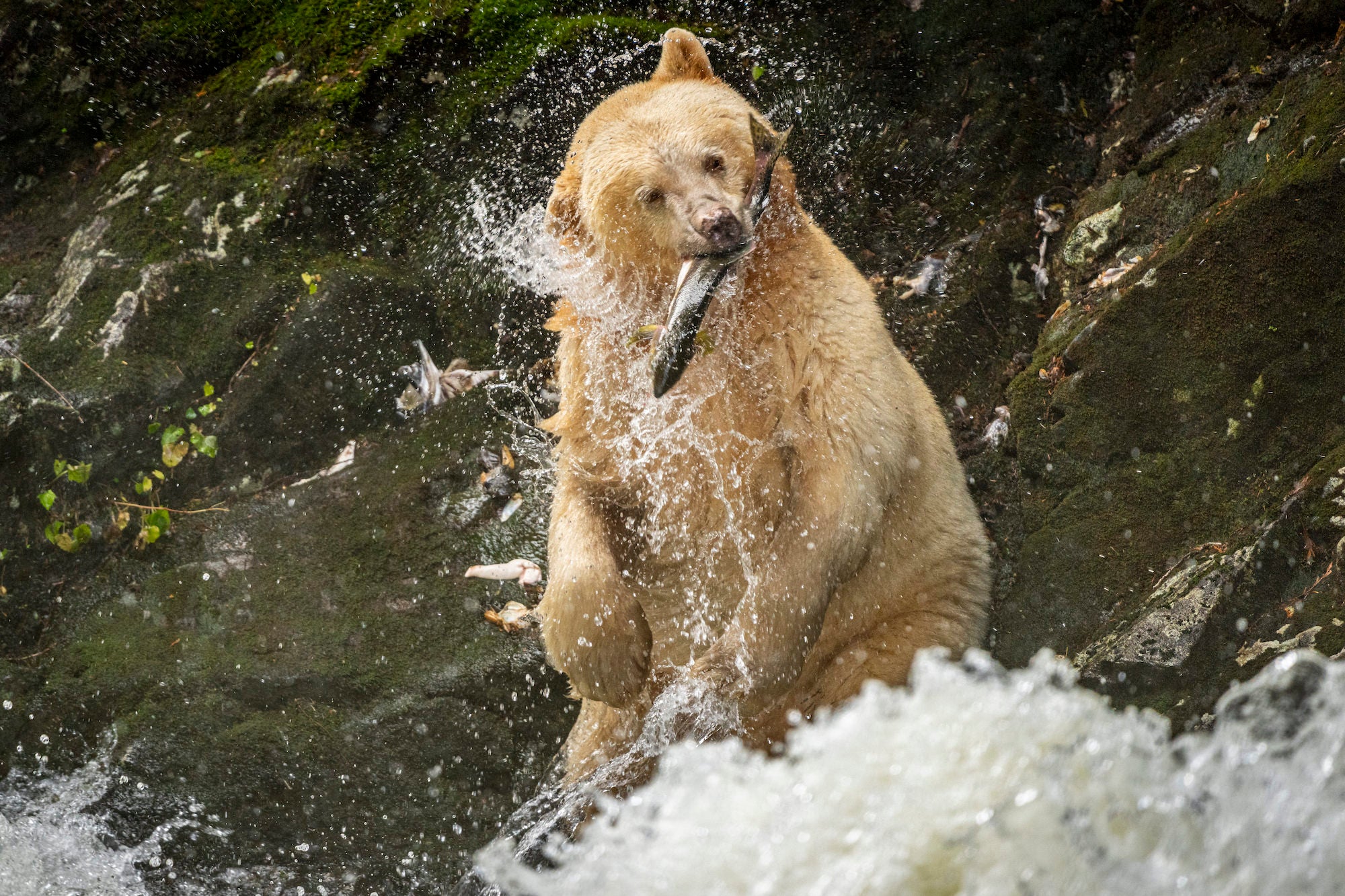
Photo by Jack Plant. Alpha 1. 200-600mm f/5.6-6.3 G. 1/640-sec., f/6.3, ISO 1600
The rainforest’s low light is another constant. Even on brighter days, dense canopy can leave the forest floor dark while pockets of sunlight create intense contrast. Plant relies on the Alpha 1’s low-light capability and dynamic range to retain detail in both the deep shadows and bright highlights that define the region.
“The balance of light was always much easier to work with,” he says. “The detail in these files, I love so much.”
That latitude matters across Plant’s work, from bears moving through dark forest to moments inside the Big House in Klemtu, where he photographed with available light. It gives him the flexibility to build images that feel true to the atmosphere of the place rather than flattening it into a uniformly exposed scene.
The 200-600mm f/5.6-6.3 G is equally central to Plant’s wildlife work. Its reach allows him to create detailed images while maintaining appropriate distance from the animals – a practical advantage when bears may appear only briefly at the edge of a river or deep within tangled foliage.
When The Wider Story Matters
Plant also carries an Alpha 7R IV with the 24-105mm f/4 G for a different kind of image – one that puts the animal back into its environment.
That combination was used for one of his most recognizable Spirit Bear photographs, which later became the cover of Spirit of the Great Bear. Rather than filling the frame, the image places the bear within the immense forest around it. The white coat is striking, but the composition makes the viewer feel how easily the animal can disappear.
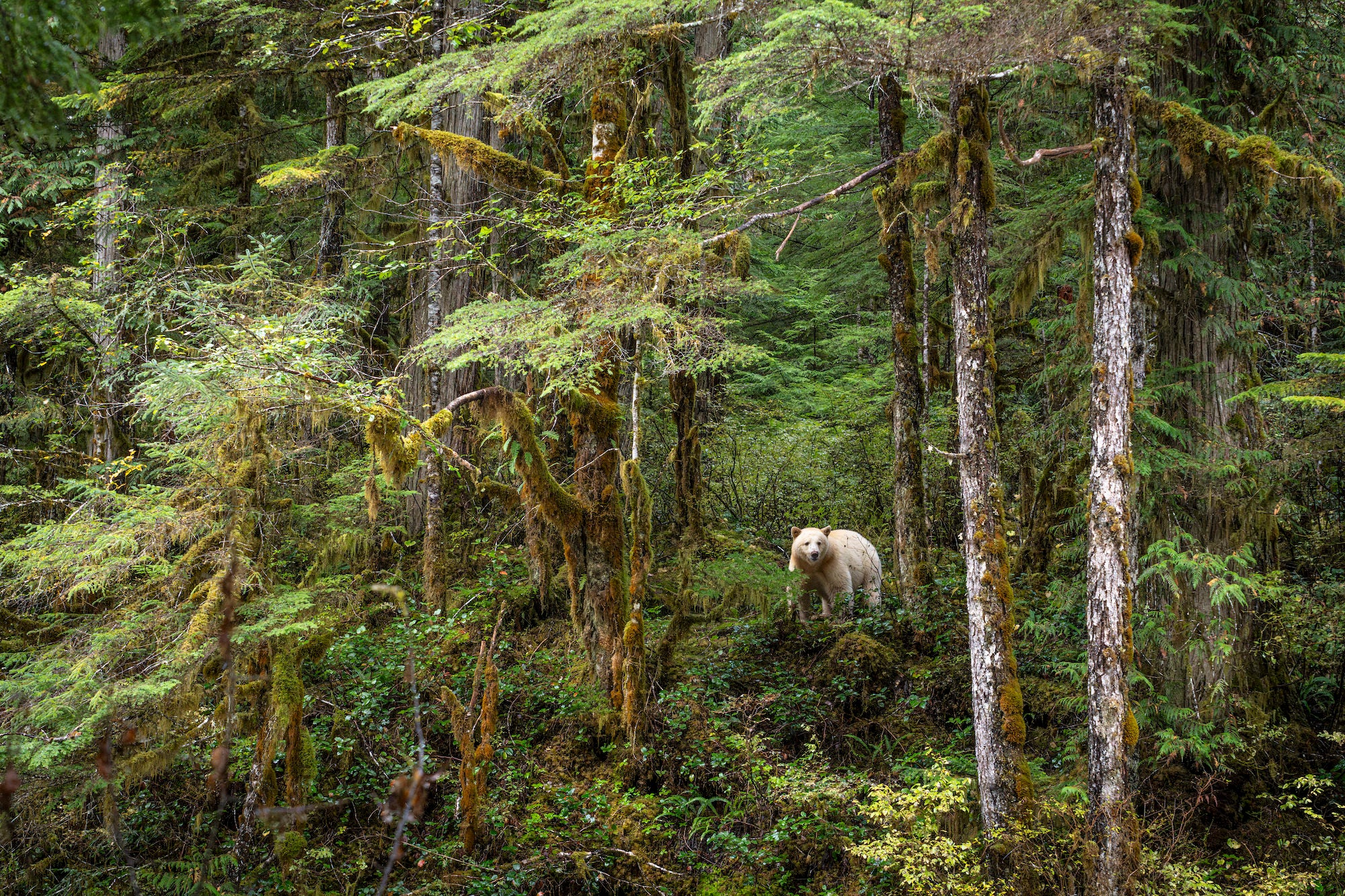
Photo by Jack Plant. Alpha 7R IV. 24-105mm f/4 G. 1/500-sec., f/7.1, ISO 4000
“That bear showed up for a moment in the foliage,” Plant says. “He didn’t come down to the river. He just looked around a little bit and then went back off.”
The photograph captures the quality that drew him to Spirit Bears in the first place: their apparent impossibility. But its wider framing also honors reality. This is not a creature staged against a blank background. It is one animal in a vast, complex ecosystem.
“It makes the elusiveness really there,” Plant says.
More Than Wildlife Photography
Some of Plant’s most personal photographs from the rainforest do not include a bear at all.
One supplied image shows Chief Charlie inside the Big House in Klemtu, standing in a short-lived shaft of natural light during a potlatch. Plant had been granted permission to photograph – an honor he emphasizes, particularly in a space where cameras are generally not allowed.
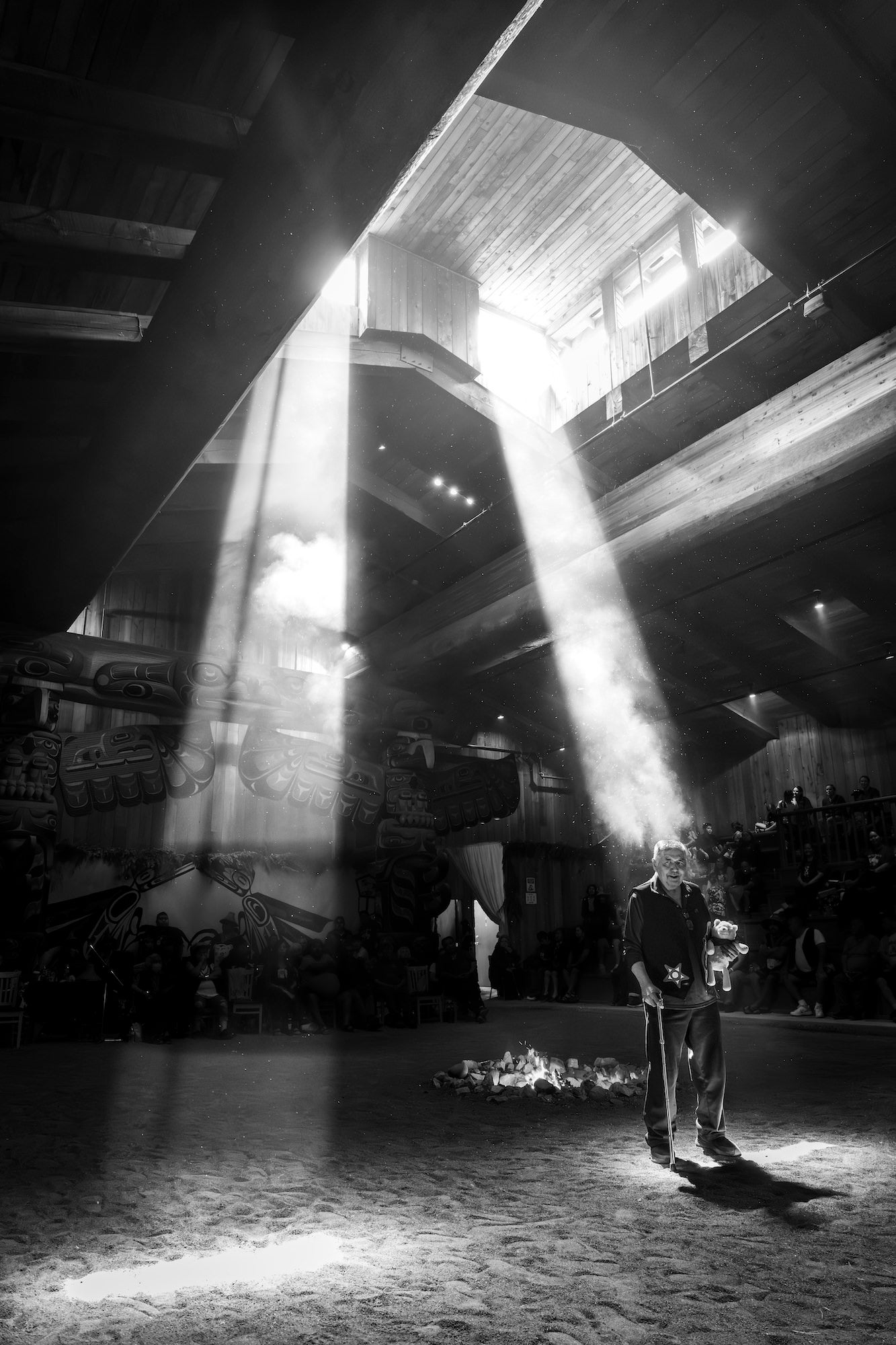
Photo by Jack Plant. Alpha 1. 24-105mm f/4 G. 1/100-sec., f/4, ISO 4000
The Alpha 1 helped him work appropriately: no flash, no shutter noise and enough low-light performance to preserve the atmosphere of the room. When Plant noticed the sunlight, he quietly asked Chief Charlie if he would stand in it for a moment. Charlie did, holding a teddy bear he had just been given as a gift.
The following year, Chief Charlie passed away.
“He kind of took me under his wing, adopted me and taught me a lot about being around wildlife in a much more spiritual way than you learn from college or anything else,” Plant says.
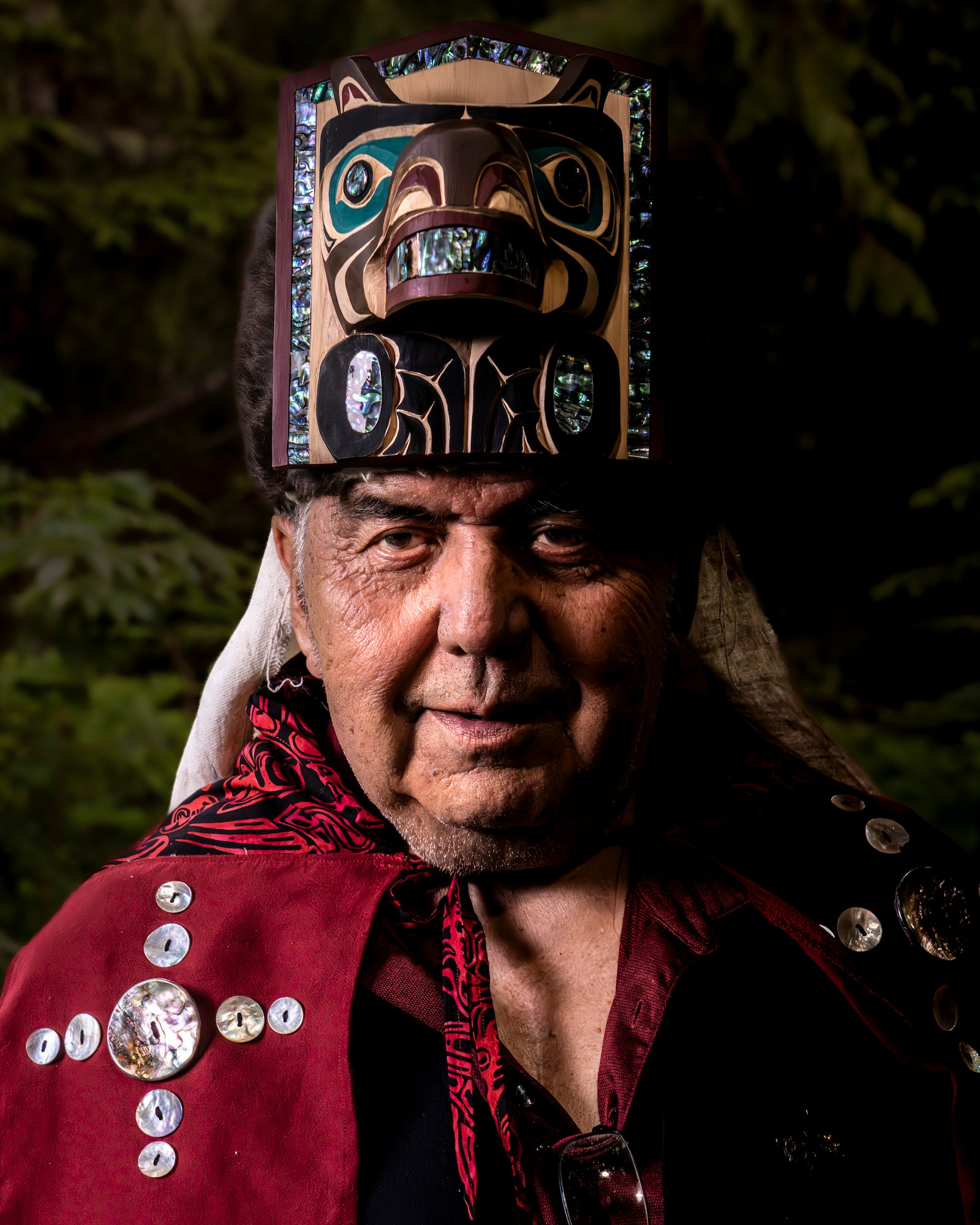
Photo by Jack Plant. Alpha 1. 24-105mm f/4 G. 1/50-sec., f/6.3, ISO 3200
It is a telling moment in Plant’s body of work. His photographs are made with high-performance cameras and long lenses, but their value is shaped by trust, access and the willingness to respect what should not be rushed.
The Patience Behind The Photograph
For every extraordinary encounter, there are long stretches when nothing happens. Plant is direct about that reality.
“More days than not, you sit in the rain and don’t get anything,” he says.
Across a decade of work, he selected only 90 photographs for his book. The edit is a measure of the patience involved – not only in waiting for wildlife, but in returning over time, learning the landscape and understanding when to lift the camera and when to let the moment pass.
For Plant, Spirit Bears are not Halloween ghosts. They are living symbols of a rainforest that deserves attention, care and protection. His Sony Alpha cameras help him be ready when that fleeting white shape emerges from the forest. The rest of the work is earned through time.
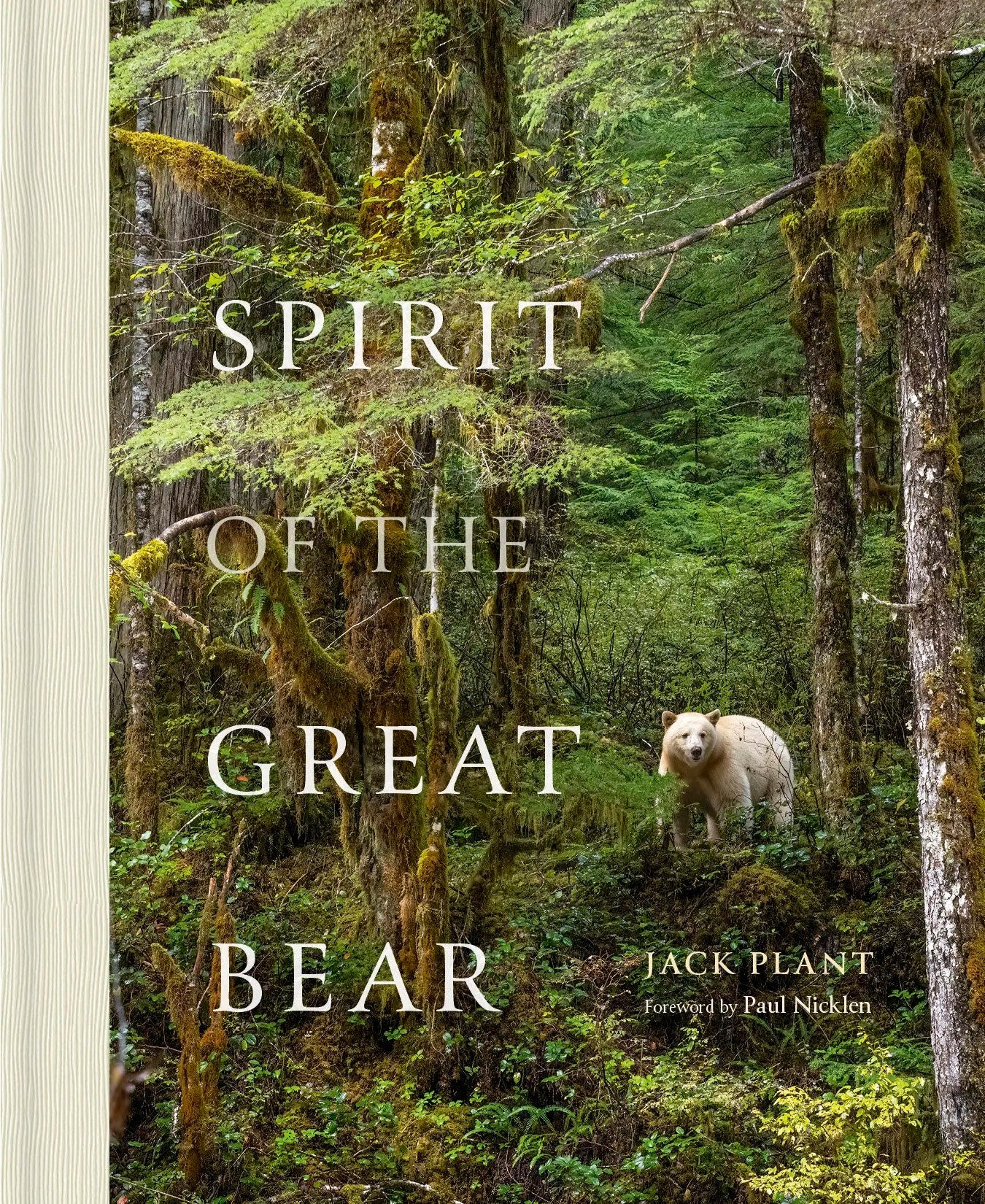
Jack Plant's book, Spirit of the Great Bear
See more of Jack Plant’s work on Instagram @jackjeplant and at jackplant.com. Check out his book: Spirit of the Great Bear.
Interested in learning more about wildlife photography?
–Click here to take the Wildlife Photography 101 course.
–Click here to see our Best Lenses For Wildlife Photography.
–Click here to explore more wildlife photography content across the Alpha Universe.