Photographing nature and wildlife is a privilege. On Earth Day – and every day – the image is only part of the story. The way we make the image matters just as much. Ethical fieldcraft reduces stress on animals, preserves natural behavior and keeps fragile habitats intact. Today’s Sony Alpha bodies and G/GM lenses offer a genuine ethical edge: silent capture, pre-capture, subject-recognition AF, long focal lengths, and remote operation help us work farther back, move less and disappear into the environment – while still coming home with sharp, story-rich frames.
Why Low Impact Creates Better Stories
Low-impact practices start with sound, or really the lack of it. Silent shooting transforms the dynamic in the field, especially in the hushed conditions of dawn and dusk when wildlife is most active. Cameras like the Sony Alpha 7R VI, Alpha 1 II and Alpha 9 III enable silent, blackout-free bursts that keep you engaged with the action without the clatter that can raise heads, flush birds, or interrupt foraging. That lack of acoustic footprint is a form of respect that helps animals maintain their routines. When the quiet is paired with deliberate movement and pre-planned compositions, tension drains from an encounter, and behavior returns to baseline. The result is not simply a “cleaner” frame – it’s a more authentic one.
Photographer Brandon Kirk says low impact is especially important when on a wildlife safari if you want to get good photos. “Some wildlife photographers adhere to an ethical code of not disturbing an animal and affecting its behavior. Put another way, your presence should not be the reason an animal is behaving the way that it is. If you get too close to an animal, it will behave in a manner that is not normal or natural. Your transgressions will be evident in your photographs.” Read more about ethical photography during a safari in A Photographer’s Guide To Your First African Wildlife Safari, Part 3.
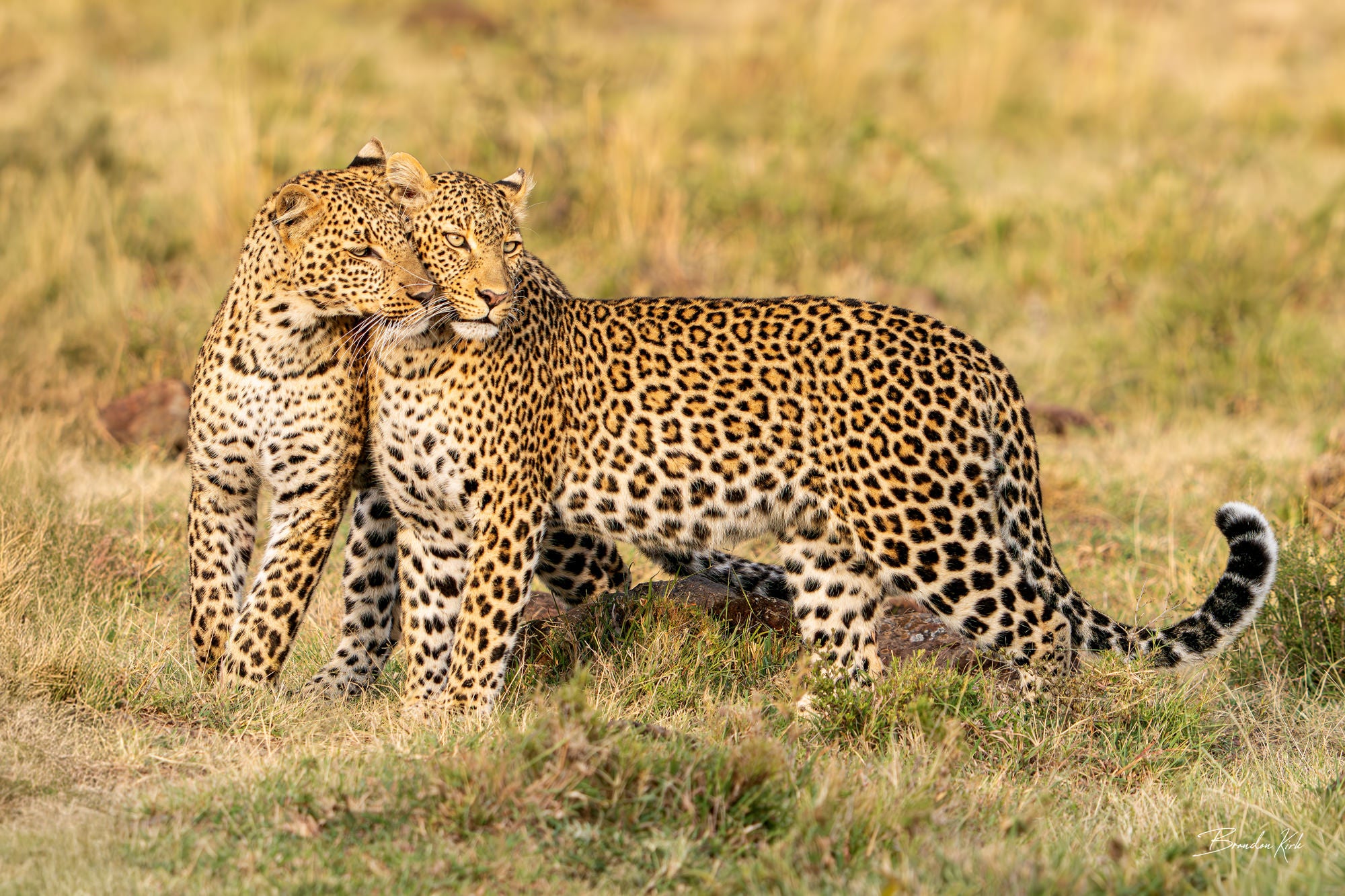
Photo by Brandon Kirk. Alpha 7R V. 200-600mm f/5.6-6.3 G.
Silence Is Respect
Beyond silence, timing technology helps reduce physical presence. The Alpha 9 III’s global shutter and pre-capture capability make it possible to catch wingbeats, takeoffs, and micro-gestures without repeating approaches that compound disturbance. Holding a composition and capturing decisive instants in a single, modest burst means you can step away sooner and revisit less often. The high frame rates and blackout-free viewing on the Alpha 9 III and Alpha 1 II keep you connected to the scene while you shoot shorter, smarter sequences. In practice, this translates to fewer intrusions and more keepers that reflect natural rhythms instead of startle responses.
Pre-Capture: Buffer Time, Lower Impact
Pre-Capture on select Sony bodies like the Alpha 7R VI, Alpha 9 III, Alpha 7 V and Alpha 1 II quietly changes the math of timing and disturbance by buffering images before you fully press the shutter, then saving up to a full second of action that already happened. For wildlife, that means you can hold a composition, keep still, and still catch the first wingbeat, the exact instant a heron’s bill pierces the water, or a fleeting yawn without repeating approaches.
Sony Artisan and conservation photographer Melissa Groo knows how challenging wildlife can be. It's filled with unexpected moments that we simply have no control over. "That’s why the Pre-Capture ability feels like a revolution," she says. "Pre-Capture, a camera setting now offered by several Sony bodies (Alpha 7 V, Alpha 9 III, Alpha 1 II), allows the camera to buffer images before the shutter is fully pressed. It does not save them to the memory card until you fully press the shutter, at which point it seizes the images from up to a full second prior. This allows you to now capture moments that happen unexpectedly or too fast for our response time. It's a particularly useful, exciting tool for wildlife photography, especially when capturing elusive or fast-moving animals." Learn more in How To Set Up Pre-Capture On Your Alpha Camera.
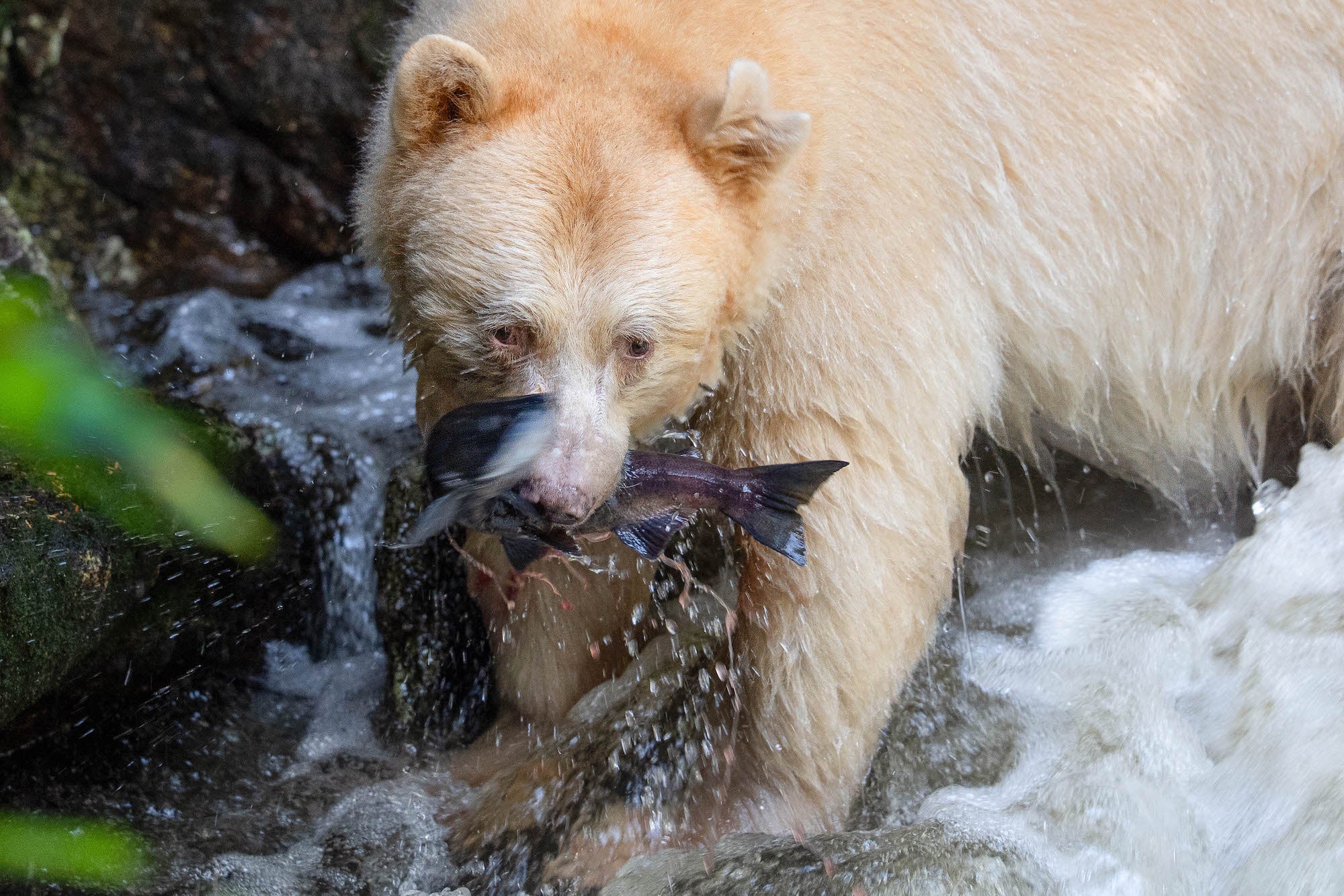
Photo by Melissa Groo. Alpha 9 III. 300mm f/2.8 G Master. 1/200-sec., f/4, ISO 1250
Let AF Do The Chasing So You Don’t Have To
Autofocus intelligence is another ethical ally. Subject-recognition AF – especially animal and bird detection on cameras like the Alpha 7R VI, Alpha 1 II, Alpha 7R V, Alpha 7 V, Alpha 6700 and Alpha 9 III – shifts the burden of pursuit from the photographer to the camera. Rather than fidgeting with focus points and tracking through repeated reframes, you can stay still and let Real-time Tracking with Eye AF do its work. That steadiness pays off. When you remain motionless and predictable, wary species continue courtship rituals, hunting sequences and parental care. Your gear doesn’t just lock focus – it unlocks behavior.
Reach Equals Respectful Distance
The right glass reinforces distance without diluting the details found in nature. Long-reach lenses like the 200-600mm f/5.6-6.3 G create those ethical buffer zones by preserving texture, catchlights and storytelling context from a respectful distance. For critical reach and speed, the 600mm f/4 G Master paired with teleconverters opens margins for low light and long distance when sensitivity is paramount (like during nesting or denning periods.) Versatile zooms like the 100-400mm f/4.5-5.6 G Master and the 70-200mm f/2.8 G Master II expand options for environmental portraits of larger mammals. On APS-C bodies like the Alpha 6700, these focal lengths become even more potent thanks to the crop factor, effectively multiplying ethical distance. Learn more about the best glass in Best Lenses For Bird & Wildlife Photography In 2026.
Ethics are at the heart of photographer Hayden Dumaw’s work, and his kit is designed to keep a respectful distance. “This respect ensures wildlife remains undisturbed in their own world while allowing me to share their beauty in its most natural form,” he says. “The gear I carry is purpose-built for wildlife photography, both on land and beneath the waves. From fast, reliable autofocus to lenses that bring distant subjects into stunning detail, my Sony equipment allows me to capture the magical images that define my style.” Learn more about the gear he uses for ethical wildlife photography in What’s In My Bag: The Perfect Kit For Bird, Wildlife & Underwater Photography.
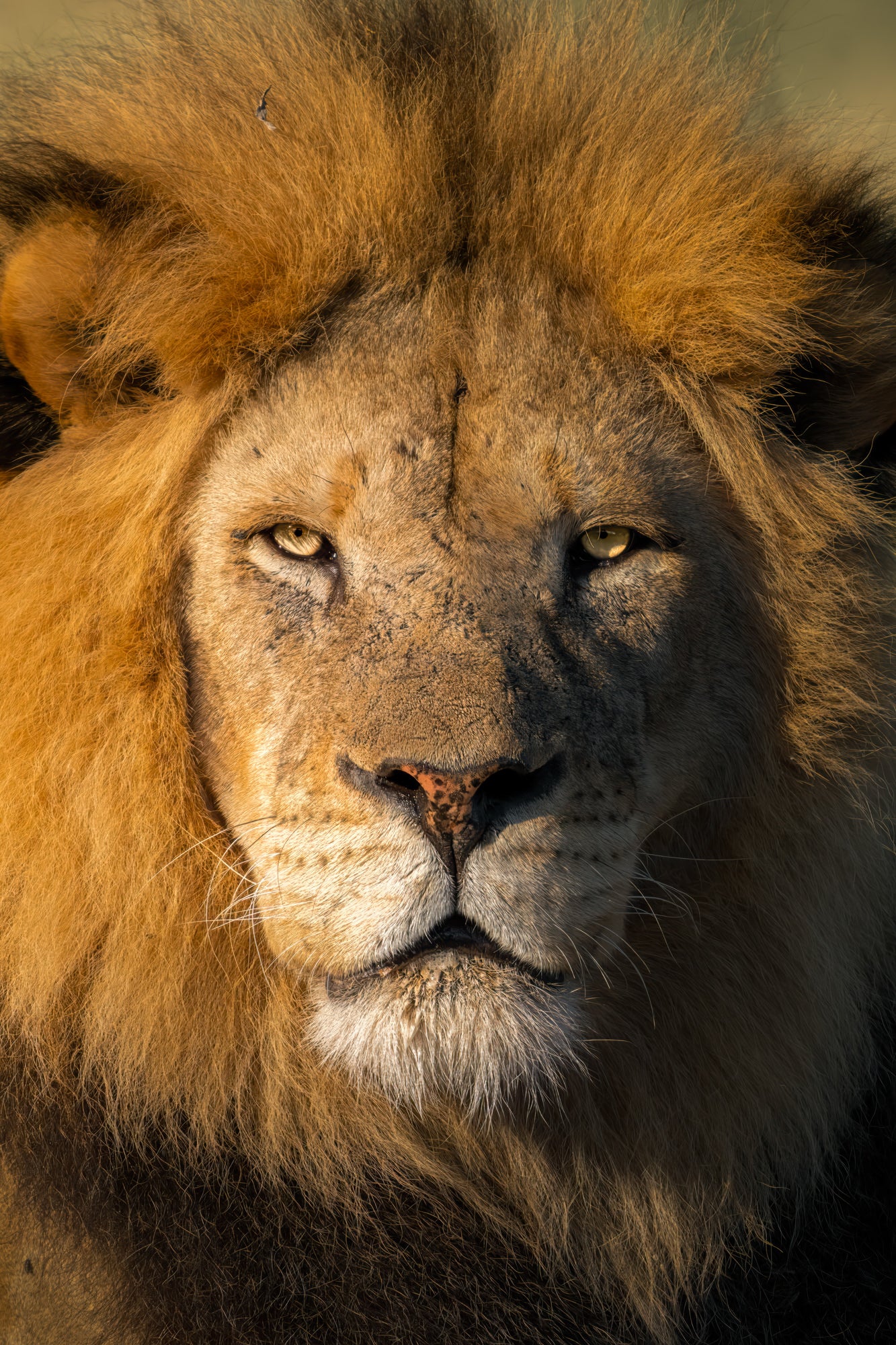
Photo by Hayden Dumaw. Alpha 7R IV. 200-600mm f/5.6-6.3 G. 1/2000-sec., f/6.3, ISO 1000
Low Light Without The Flash
Light itself can be managed with care that favors behavior. Sony’s in-body image stabilization combined with lens OSS makes slower shutter speeds more practical, reducing the temptation to introduce flash in low light. High-ISO performance on the Alpha 1 II, Alpha 9 III, and Alpha 7S III helps maintain image quality in crepuscular conditions when animals are active and pressure is lowest. Fast primes such as the 135mm f/1.8 G Master and 24mm f/1.4 G Master can render gentle, natural light that doesn’t intrude. In the edit, modern denoising closes the gap. The ethical choice – no flash, no disruption – often results in frames with mood and nuance that artificial lighting would have flattened.
Remote Tools, Smaller Footprints
Remote operation is an underused, overperforming strategy for sensitive environments. Tools like the Creators’ App make it possible to pre-compose near perches, burrows, or game trails based on observed patterns, then step away and let the moment unfold. Wireless remotes and interval shooting keep you out of the core area while the camera does its quiet work. The reduced footprint is tangible: fewer footsteps on fragile groundcover, fewer scent cues, and fewer minutes at the threshold between curiosity and stress for the subject. When paired with weather-sealed bodies and lenses – like the Alpha 7R VI, Alpha 1 II, Alpha 7R V, and Sony’s G/GM lineup – you can stay put through changing conditions instead of retreating and re-entering, which compounds wear on the same patch of terrain.
Fieldcraft That Protects The Moment
Ethical practice extends beyond the capture. In the field, choose angles that don’t demand encroachment. If a “cleaner” background requires breaking vegetation or stepping into a closed area, the shot isn’t worth the cost – frame around obstacles or elevate with a monopod from a durable surface. During breeding, molting, or tight migration windows, double your usual buffers and shorten session length. And when working near nests or dens, set a conservative time limit and stick to it. The best image is the one that leaves no trace once you leave.
Portraits Of Place
Earth Day is also a reminder to photograph places, not just portraits. Habitat imagery can tell a conservation story with less pressure on the subject. The 100mm f/2.8 Macro G Master lets you craft intimate narratives with pollinators at established flowers rather than chasing insects through delicate vegetation. Ultra-wide lenses like the 12-24mm f/2.8 G Master can situate species within ecosystems from established trails, rock slabs, or durable surfaces that minimize impact. Telephoto “environmentals” at 300-600mm compress layers and include behavior while preserving respectful distances – an elegant way to blend portrait and place into a single, durable frame.
Landscape and nature photographer Beth Mancuso likes to use a macro lens to get close...without getting too close. "I like the 100mm because it gives you a really comfortable working distance," she says. "You’re not right on top of your subject, which is especially helpful for things like insects, but you can still fill the frame with detail. The extra magnification is also a big plus. It goes beyond true 1:1, so you can get even closer when you want to capture more detail." Read more of Beth's thoughts in in Capture Butterfly Detail With The 100mm f/2.8 Macro G Master.
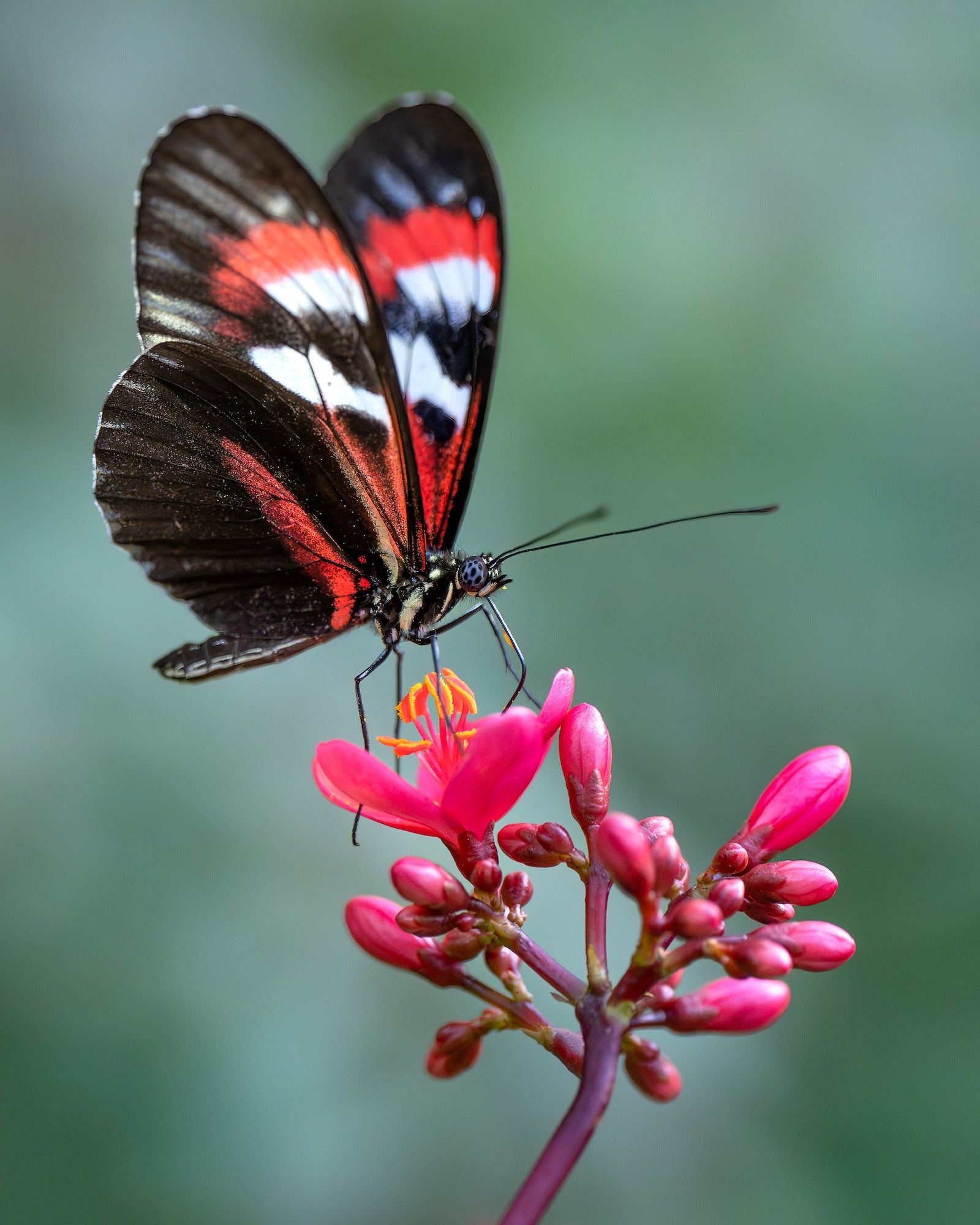
Photo by Beth Mancuso. Alpha 7R V. 100mm f/2.8 Macro G Master. 1/3200-sec., f/3.2, ISO 2000
Pack Light, Leave Less
A practical, low-impact wildlife kit might center on an Alpha 9 III, Alpha 1 II or Alpha 7R VI for silent, high-FPS capture with advanced AF, the 200-600mm f/5.6–6.3 G for reach, and a complementary lens like the 100-400mm f/4.5-5.6 G Master for flexibility or the 100mm f/2.8 Macro G Master for pollinators. Add a lightweight carbon support with rubber feet for delicate terrain, a wireless remote or the Creators’ App for off-camera control, a simple rain cover and a compact power bank. More important than anything else is the principle all this gear serves: creating the conditions where wildlife forgets you’re there. The less you move, the more nature relaxes.
Quick Ethics Checklist For Nature & Wildlife Photographers
- Is the subject showing alert or stress behaviors? If yes, increase distance or leave.
- Is this a sensitive time (nesting, denning, migration)? Double your buffer.
- Can I get the shot remotely? Use the Creators’ App and/or a remote trigger.
- Can I shoot it silently? Enable silent mode and reduce burst length.
- Will my path cause damage? Stick to durable surfaces and established routes.
Read more about ethical guidelines around wildlife at https://conservationphotographers.org/ethics.
Interested in learning more about wildlife photography?
Take the free Wildlife Photography 101 course on Alpha Camera Academy.