Jessica Sullivan is an RN from Seattle by trade and a wildlife photographer for fun. “I started shooting Sony about 5 years ago, and haven’t looked back since,” she says. “I was a travel nurse for the better part of a decade, and quickly got the itch for international travel along with that. I knew I wanted to capture moments and feelings better and started out doing a lot of travel/street photography. Over the last few years, I pivoted more to wildlife based with some of that still scattered in there. I now have quite a few Sony lenses and Alpha camera bodies to make sure I can cover a wide array of situations. I know that wherever I am in the world, I have gear I can trust.” Keep reading as Jessica gives us an inside look at the Sony Alpha cameras, lenses and more in her kit for wildlife photography.
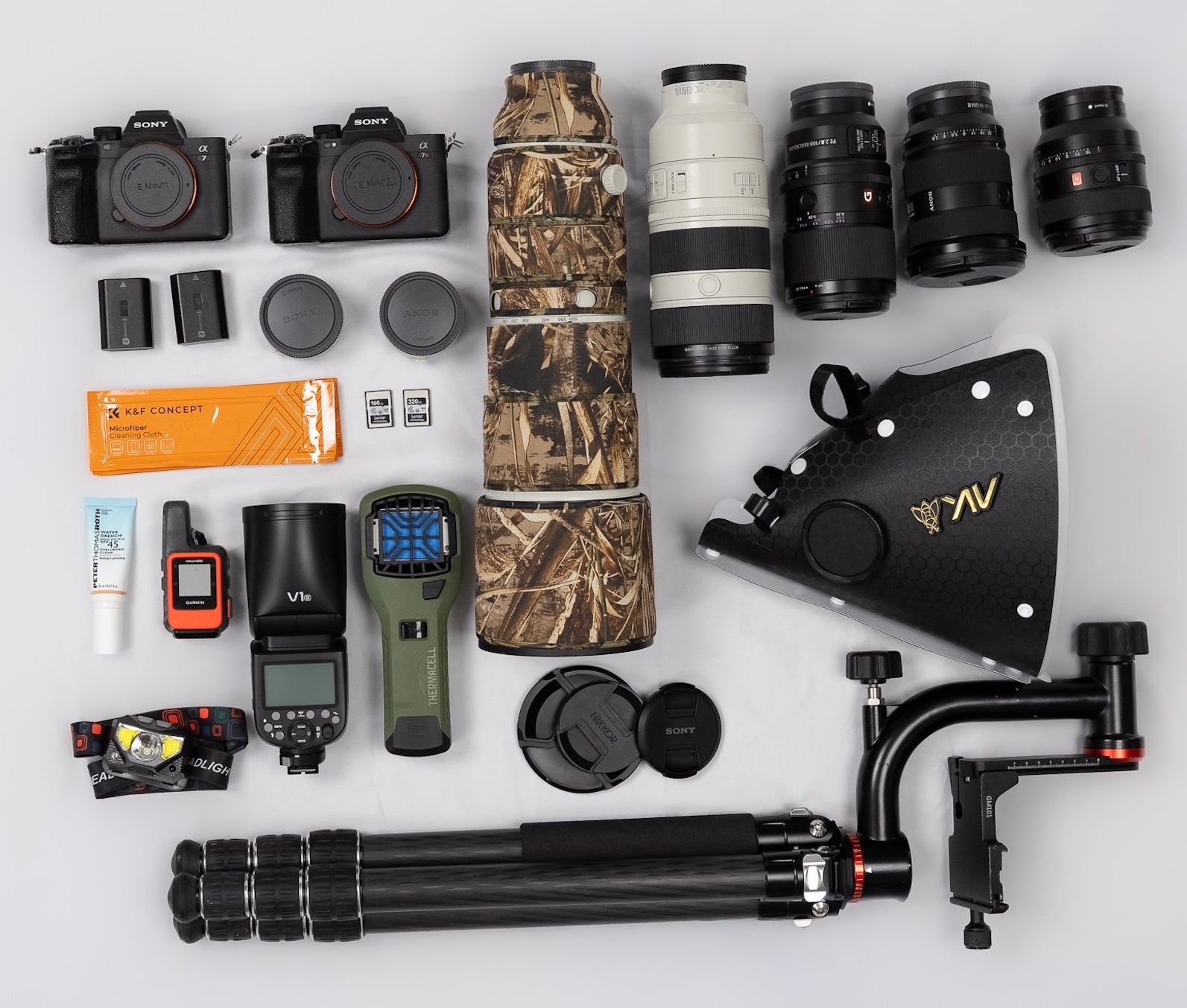
Shop This Kit:
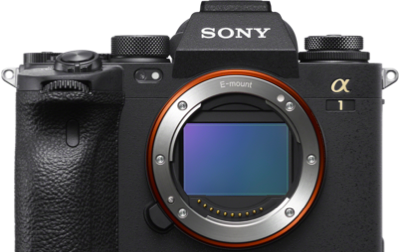
Cameras: Alpha 7R V, Alpha 7 IV
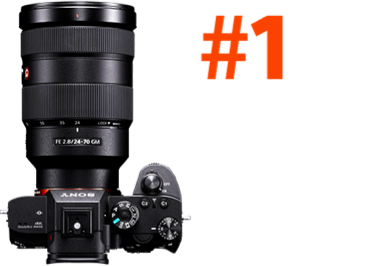
Lenses: 200-600mm f/5.6-6.3 G, 70-200mm f/2.8 G Master II, 24-70mm f/2.8 G Master II, 50mm f/1.4 G Master, 100mm f/2.8 Macro G Master
Accessories: 1.4X Teleconverter, 2.0X Teleconverter
Cameras
Alpha 7R V: This camera is my main body that I use constantly with wildlife. The biggest advantage of it is the 61 MP. Often there are times in wildlife that you can’t be very close to the animal. Having that many megapixels to work with allows me to crop in without losing detail. I also find myself shooting in APS-C mode often in these situations to get that extra reach. The autofocus capabilities are also fabulous on this camera. Wildlife is constantly on the go so I knew I needed a camera that could lock on and track things such as birds in flight.
Every year I like to photograph foxes at a local spot. I’ve seen this particular fox for years and she’s my favorite to photograph. I heard that when she was a baby, she got picked up by an eagle but escaped which is how she got her split ear.
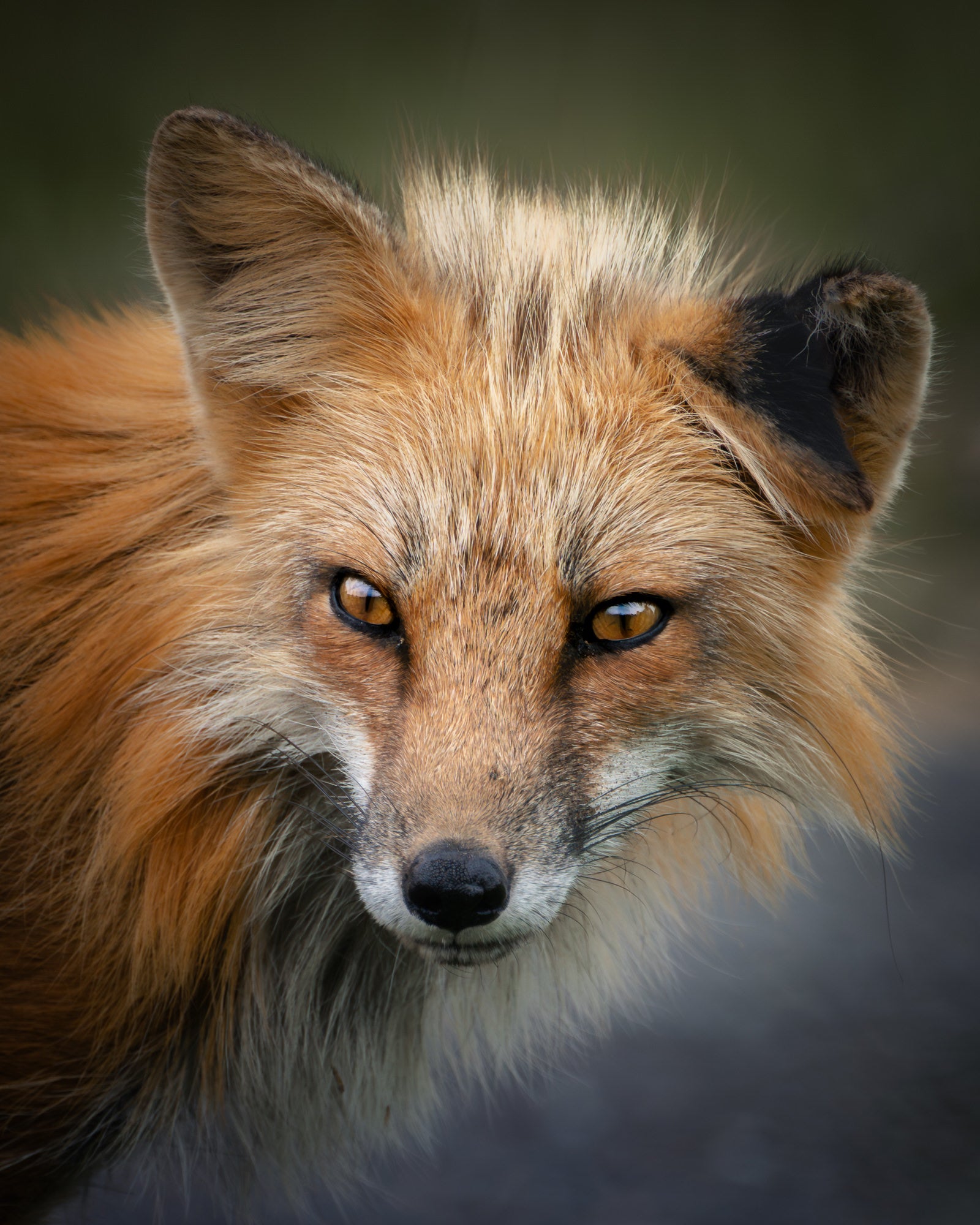
Photo by Jessica Sullivan. Alpha 7R V. 70-200mm f/2.8 G Master II + 2X TC. 1/1250-sec., f/5.6, ISO 600
Alpha 7 IV: This was my first camera when I knew I wanted to take photography more seriously. It was my travel companion for many years until I upgraded to the Alpha 7R V. I chose this camera for the autofocusing as well with the ability to differentiate between subjects. I decided to keep this body as my back up camera. I always love to have the option to keep my 70-200 on this body and my 200-600 on my RV whenever I am on safari. Things can get very dusty on the trucks so not having to switch lenses in the field is a game changer.
I knew when I traveled to Japan that I wanted to see the snow monkeys. I only had my Alpha 7 IV at this time but I have to say this was about the time I knew that I wanted to deviate to primarily wildlife! They were so cute.
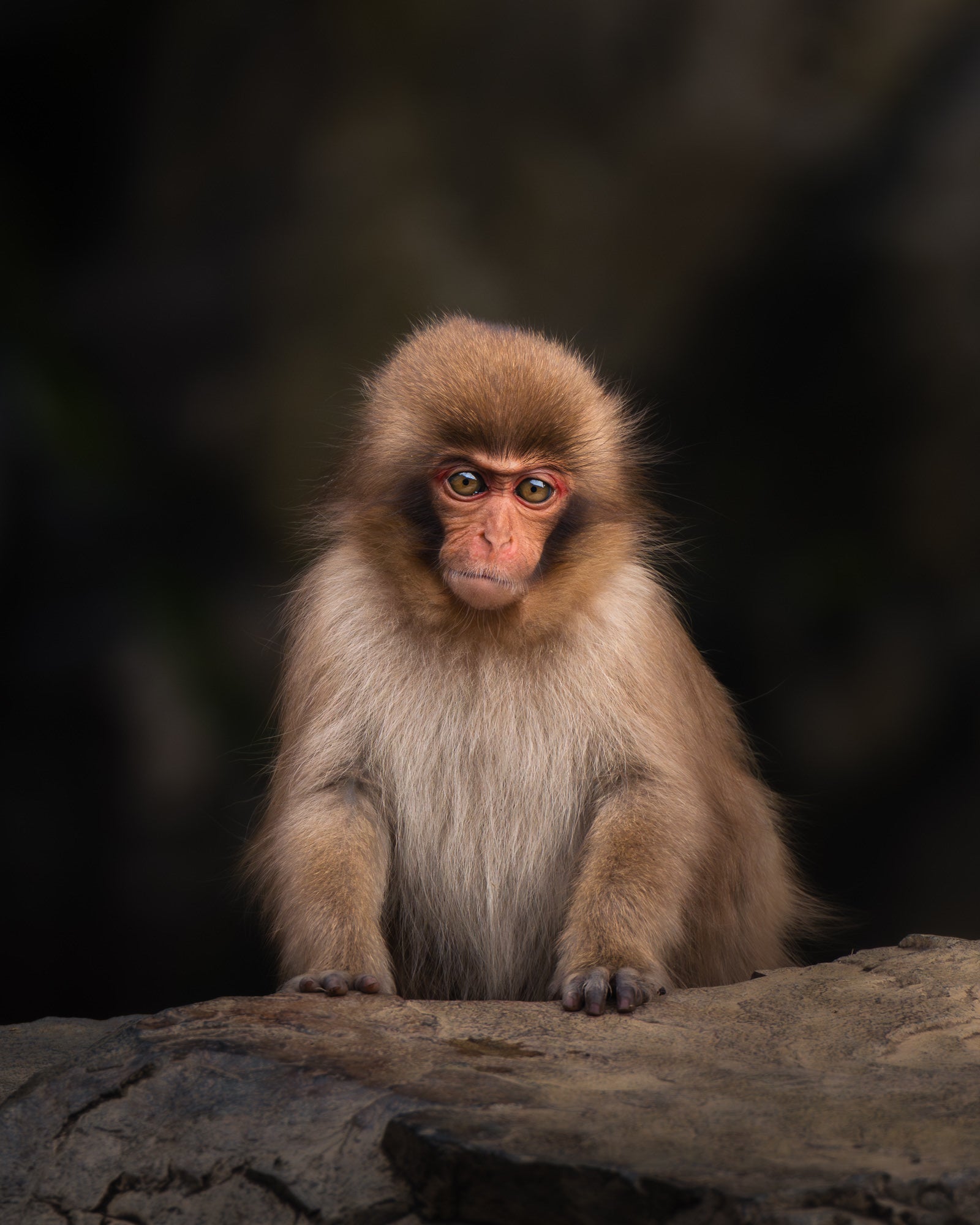
Photo by Jessica Sullivan. Alpha 7 IV. 70-200mm f/2.8 G Master II. 1/800-sec., f/9, ISO 1000
Lenses
200-600mm f/5.6-6.3 G: This lens rarely leaves my camera. In wildlife photography, it is always important to keep your distance for the well being of the animal. This range allows me to do this without stressing the animal out. It also produces high quality sharp images which is important to keep all of the details of whatever critter I'm photographing. I definitely have to do more arm workouts to hold up this bad boy, but it’s so worth a spot in my bag!
I recently won a Sony Alpha Female+ micro-grant for this photo. I had seen this eagle land on a rock off a cliff and when it took off I noticed something in its talons. I quickly grabbed my camera and spray and prayed before it got out of sight since it was eye level with me. I got lucky!
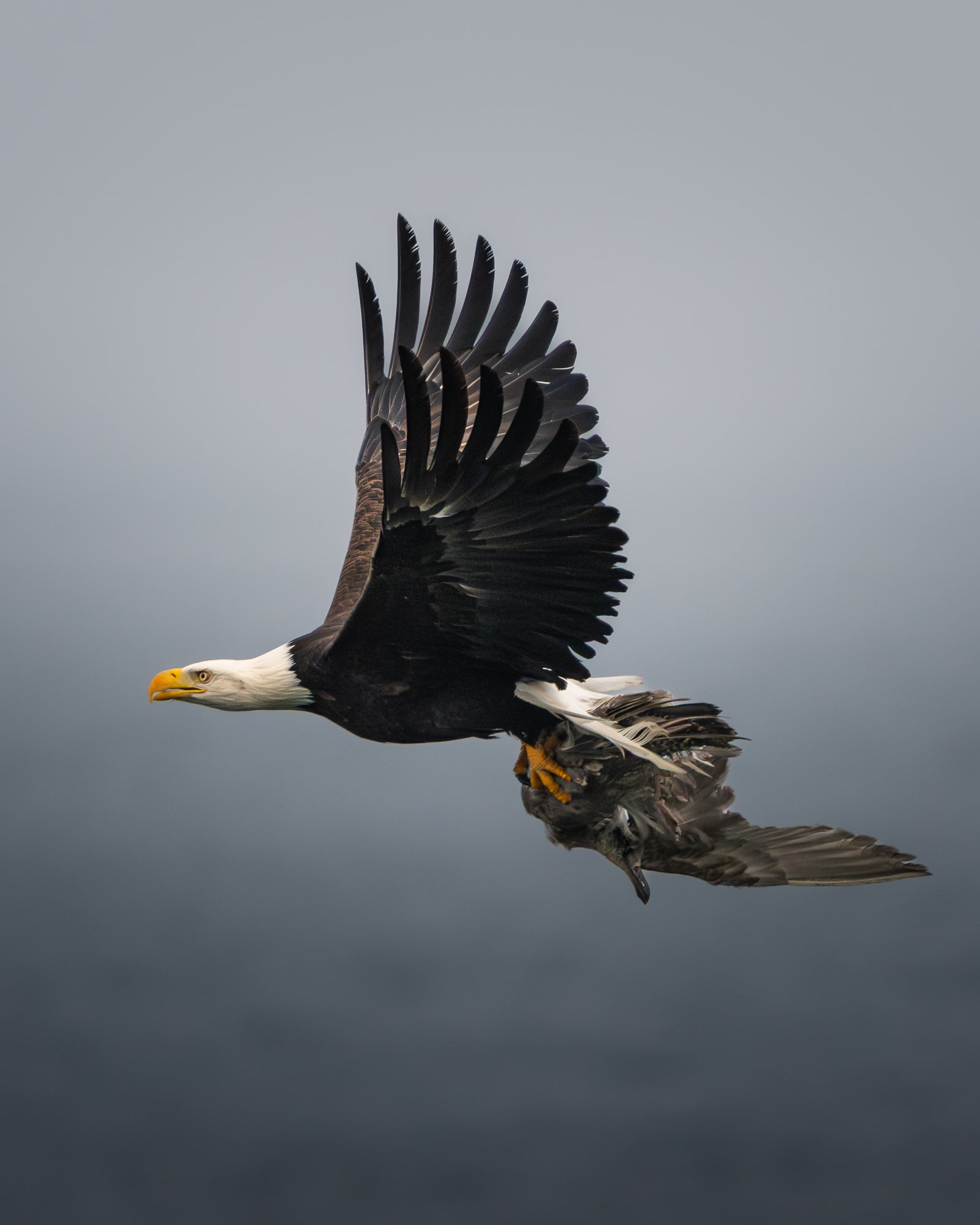
Photo by Jessica Sullivan. Alpha 7R V. 200-600mm f/5.6-6.3 G. 1/2000-sec., f/6.3, ISO 1600
70-200mm f/2.8 G Master II: I went out with a friend to Yellowstone that had this lens. Once I played with it and saw how insanely sharp it was, I knew I had to have it. This was my first GM lens. I love the versatility of it. On the rare occasion I can safely get close to an animal or bird, It produces some of the sharpest images I’ve ever taken. I also like to dabble in street photography on occasion and love that I have a little extra zoom for that with this lens. One perk is that it stays sharp even with teleconverters if there was a time I didn’t want to travel with my 200-600mm.
I recently took a trip to Romania that had bears on the side of the road. The 2.8 aperture really helped with the low light situation of the forest later in the day.
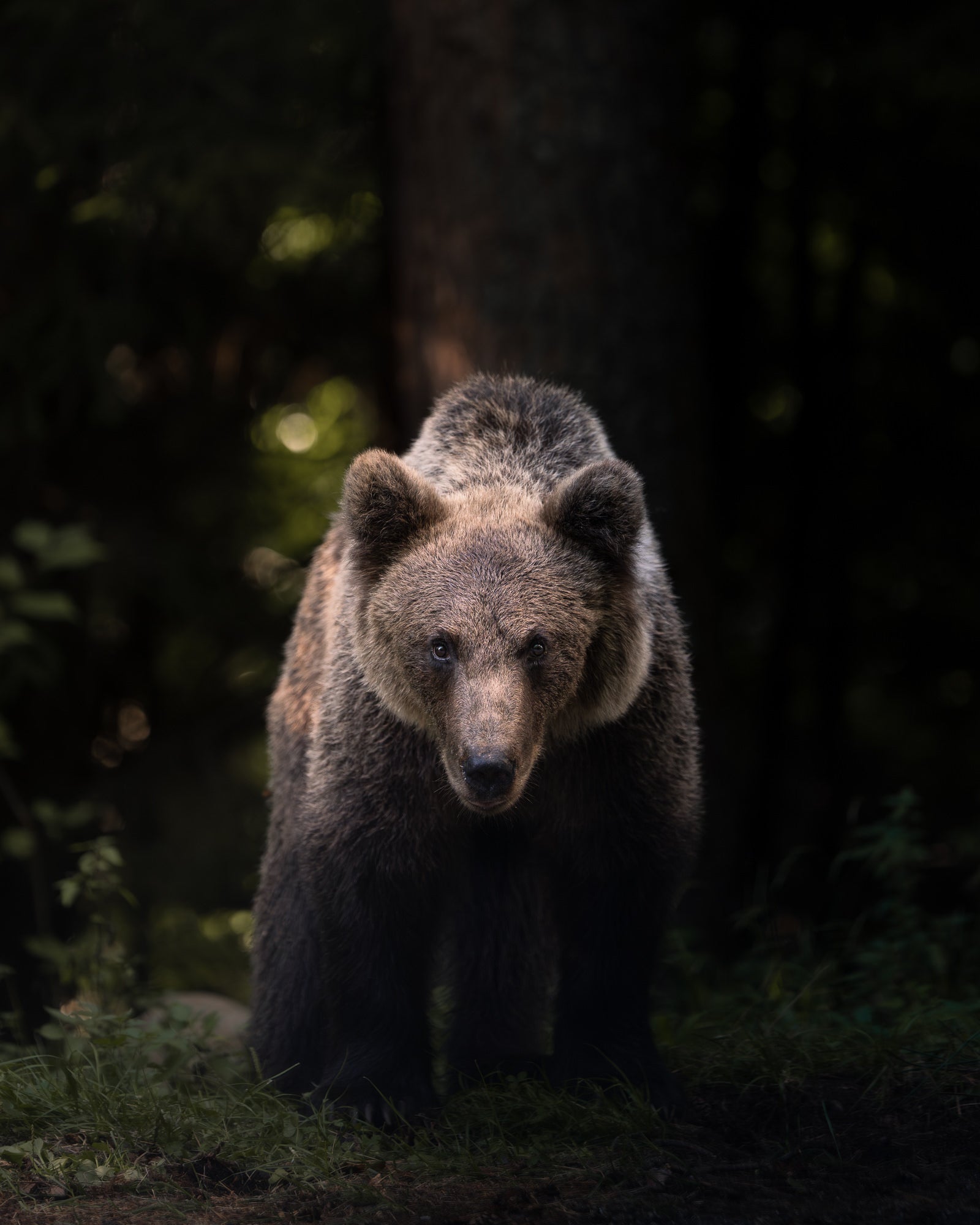
Photo by Jessica Sullivan. Alpha 7R V. 70-200mm f/2.8 G Master II. 1/640-sec., f/2.8, ISO 800
24-70mm f/2.8 G Master II: I recently bought this lens because I knew I wanted sharper glass for portraits, BTS, and environmental shots. I had off brand lenses before, but wanted to switch to all Sony gear and knew this was the lens for that. I was able to test it out a bit in Cali on some seagulls, and was impressed with how sharp it was compared to my previous lens. I'm definitely excited to add this to my bag for future travels!
I saw this seagull at sunset perched in a bed of flowers in Santa Cruz. He was my first test subject other than a few shots of myself I had taken.
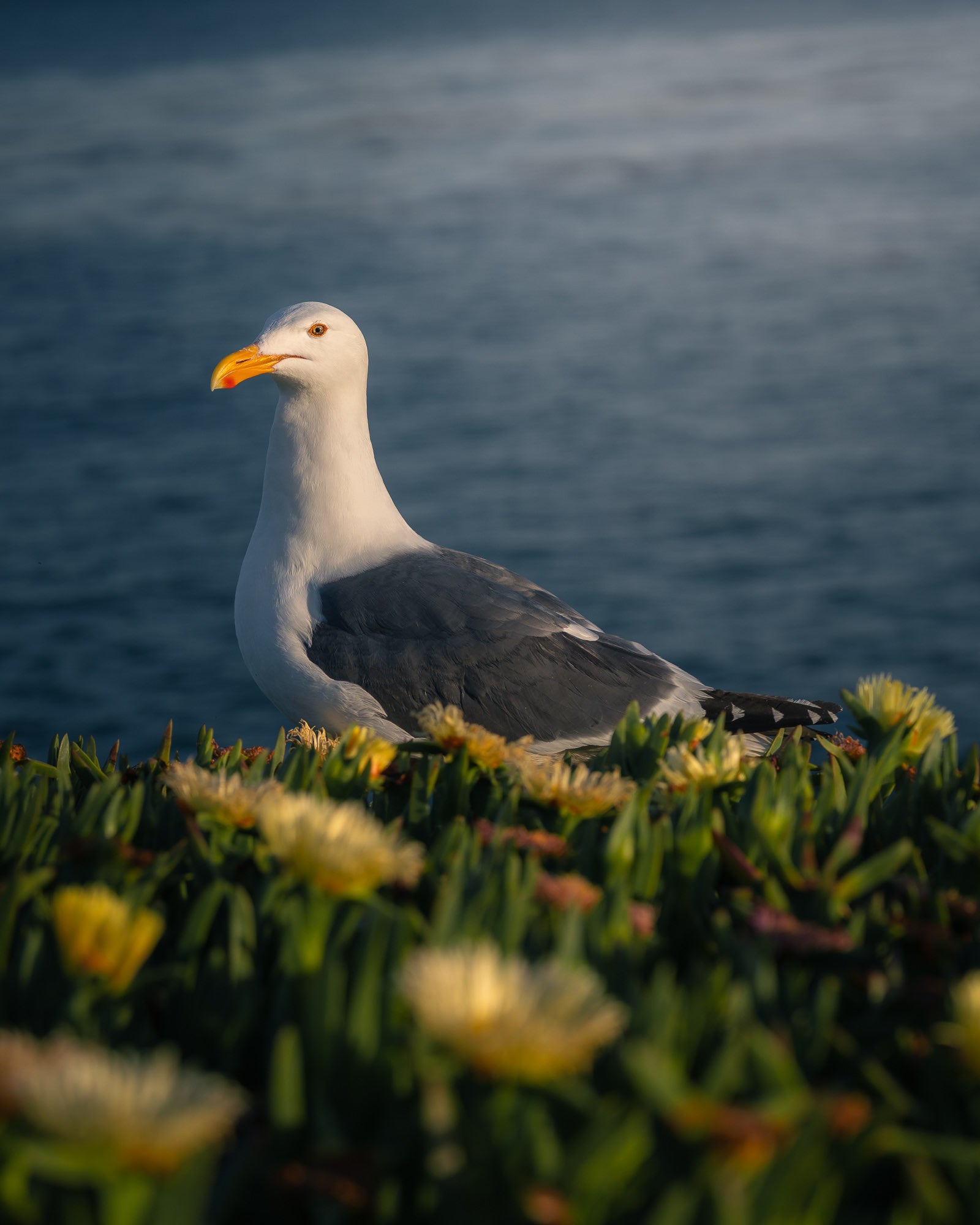
Photo by Jessica Sullivan. Alpha 7R V. 24-70mm f/2.8 G Master. 1/1600-sec., f/4, ISO 125
50mm f/1.4 G Master: Before I invested in the 24-70mm, I wanted to try a prime lens. I had heard that they were sharp and appreciated the size of this lens for travel. The 1.4 aperture was also appealing since a lot of times low light can be a struggle. When I was in India last year, I got to try it out a bit for the more street/storytelling side of my photography. I definitely figured out that I am a zoom lens girl, but I was impressed with how sharp the portraits and scenery I took were.
In Delhi there is a river you can go to at sunrise that has dozens of seagulls flying around. It was definitely chaotic to witness but beautiful with the morning light and color.
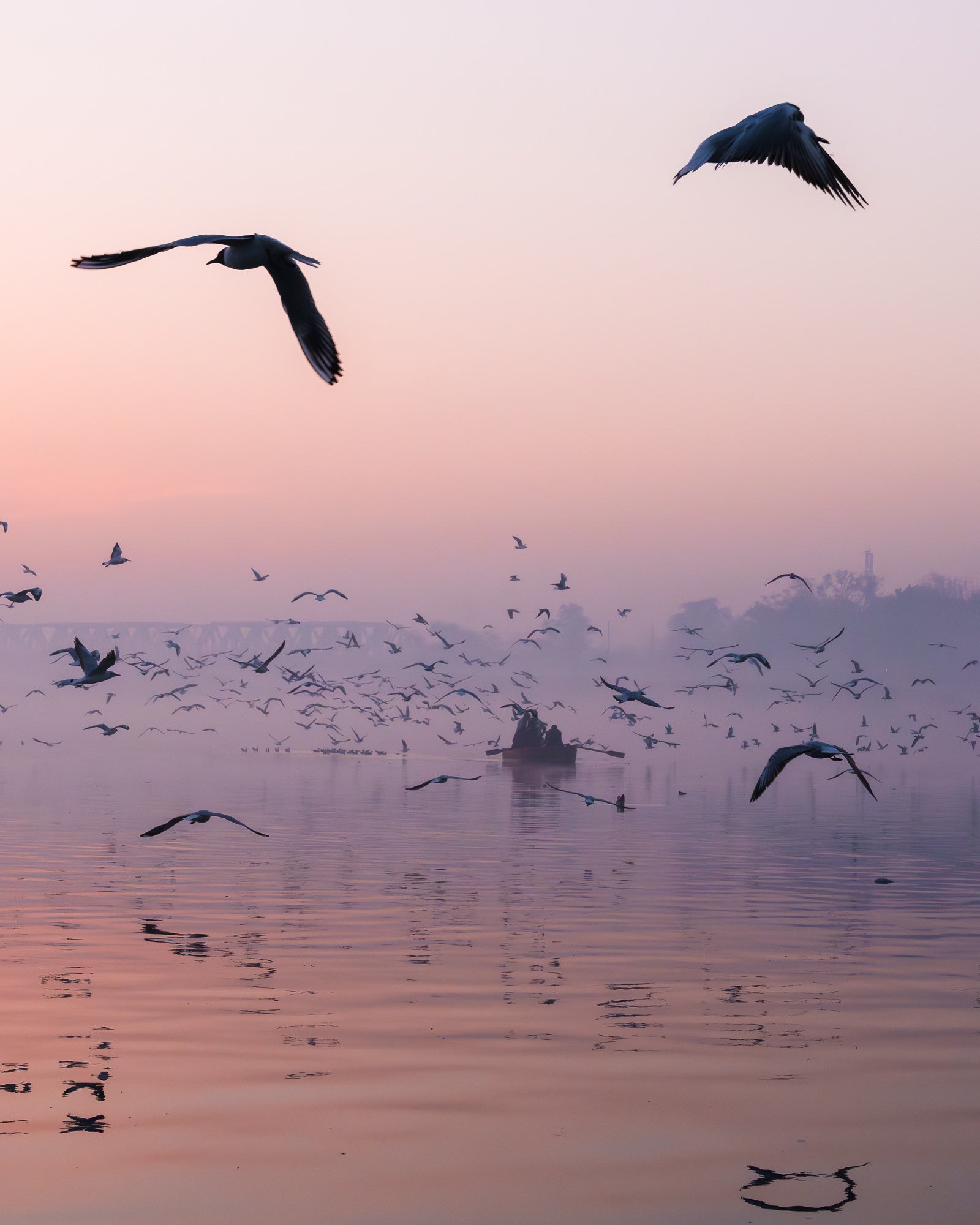
Photo by Jessica Sullivan. Alpha 7R V. 50mm f/1.4 G Master. 1/1000-sec., f/9, ISO 2500
100mm f/2.8 Macro G Master: I have a trip to Costa Rica soon and I knew that I wanted to try my hand at macro photography. When I saw this lens come out last year, I decided it would be worth the purchase. Macro is definitely a learning curve, but being able to see all of the details of things is absolutely fascinating (and sometimes terrifying). I am so excited to play around with this more soon!
I took the lens for a spin at the local butterfly garden at the science center. Being able to see the eyeballs up close and how furry some of the butterflies looked was so interesting!
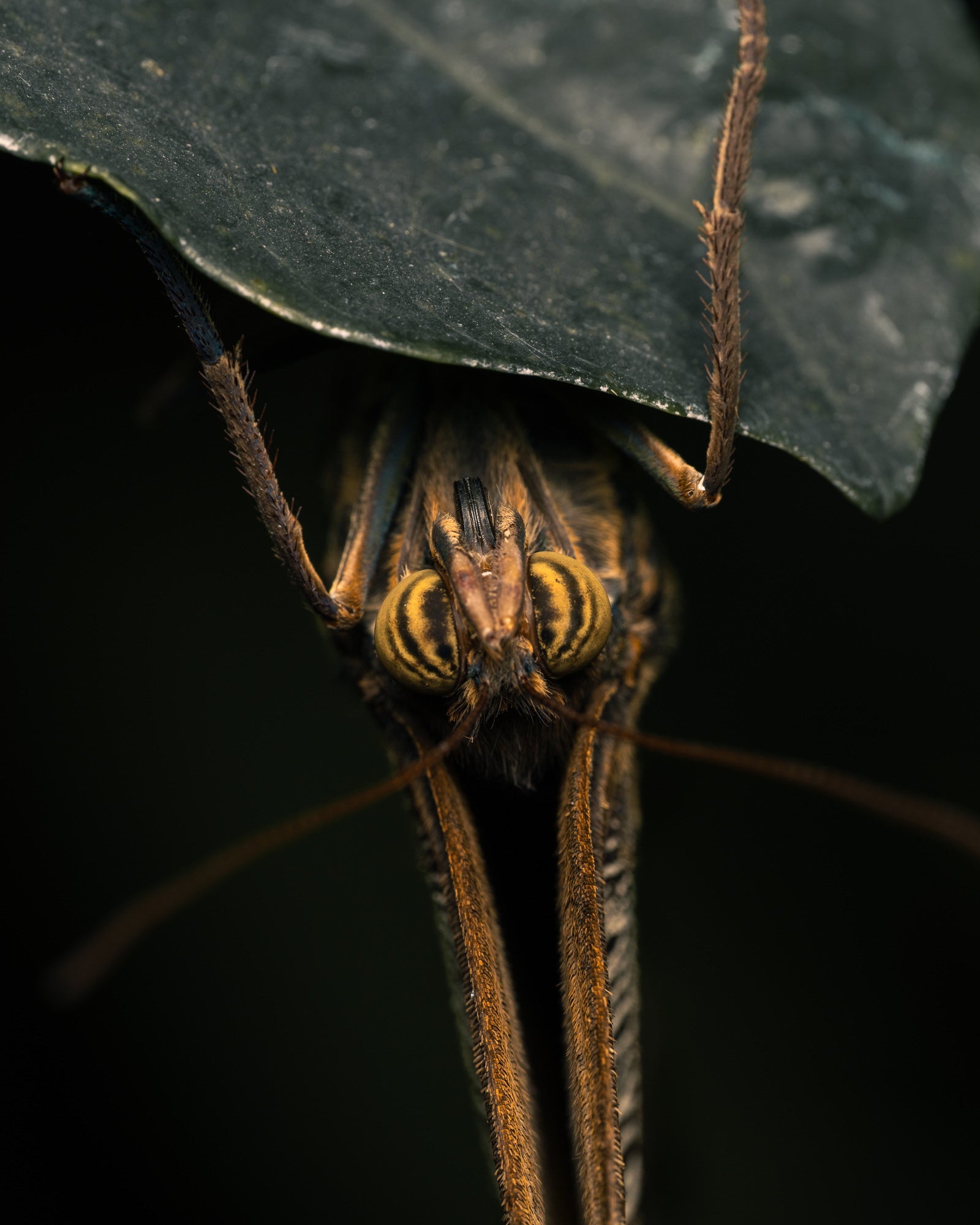
Photo by Jessica Sullivan. Alpha 7R V. 100mm f/2.8 Macro G Master + 1.4 TC. 1/100-sec., f/10, ISO 125
Accessories
1.4X Teleconverter & 2X Teleconverter: I bought the 2X teleconverter for extra reach with my 70-200mm while traveling and the 1.4X teleconverter for more reach with my 200-600mm if necessary. Both also come in handy for extra magnification with my macro lens.
Flash: I bought a flash with a diffuser to help isolate subjects and bring out the detail with my macro lens.
GPS Device: Wildlife photography often requires some degree of hiking which I often do solo. Having a GPS device with SOS mode helps me feel safe while doing so.
Tripod + Gimbal Head: This is a must for wildlife photography. Carrying around the 200-600 can get very heavy and stability can make or break a shot. I have messed up a shot more than once due to hand shake, so I use a tripod as much as possible.
Extras: I always carry extra batteries, SD cards, lens wipes, and lens caps because wildlife has a lot of rapid fire shooting which can drain a battery fairly quickly and fill up cards just as fast. Lenses also get dirty quickly in the elements and I am constantly losing my lens caps.
Headlamp: Because most photography is best at sunrise and sunset. I often times am hiking in the dark so a headlamp is a must in the mountains.
Thermacel Mosquito Repellant: This is normally in my backpack pocket on summer days. The mosquitos can get pretty bad in the PNW and I do feel like this helps!
Sunscreen: The sun can be brutal in a lot of places I travel so I always keep some of this in my bag to reapply as needed.
See more of Jessica Lynn’s work on Instagram @Jessica.lynn.travels.