Whether you're just starting out or looking to level up your current setup, there's nothing quite like hearing directly from photographers who live and breathe wildlife shooting. In this roundup, we asked 10 bird and wildlife photographers to open up their bags and share the cameras and lenses they rely on in the field. From ultra-simplified one-camera-one-lens rigs to multi-body pro setups built for speed, resolution, and everything in between, these kits reflect the diversity of wildlife photography itself. Take a look, find your inspiration and maybe discover your next favorite piece of gear. Make sure you scroll to the bottom to learn how you can enter our Wildlife Photo Contest – you just might WIN your next piece of gear!
Get more "kit-spiration" at alphauniverse.com/wimb.
The Upgraded Bird & Wildlife Photo Kit
Sony Artisan and wildlife photographer Colby Brown has used the Sony Alpha 9 III and Sony Alpha 1 II in the past (read more in What’s In My Bag: Colby Brown’s Alpha 1 II & Alpha 9 III Kit For Wildlife Photography.) But there’s a new camera in town and after testing it, he’s decided the Sony Alpha 7R VI earns a place in his wildlife kit too. "Having a 67MP full-frame stacked sensor is a pretty big deal for wildlife photographers," Colby explains. "That gives me a lot of room to crop in on my subject when photographing small birds, for example, while still retaining an insane amount of image data." Read more about Colby’s use of the new Sony Alpha 7R VI for wildlife in Speed Meets Resolution: Why Colby Brown Is Adding The Alpha 7R VI To His Pro Kit.
The lenses you’ll find him using? The Sony 70-200mm f/2.8 G Master II, Sony 300mm f/2.8 G Master, Sony 600mm f/4 G Master are a few of his favorites, and he always brings along the Sony 1.4x Teleconverter and Sony 2.0x Teleconverter.
Note: You can also take Colby's FREE Wildlife Photography 101 course on Alpha Camera Academy – click here.
The On-Assignment Bird & Wildlife Photo Kit
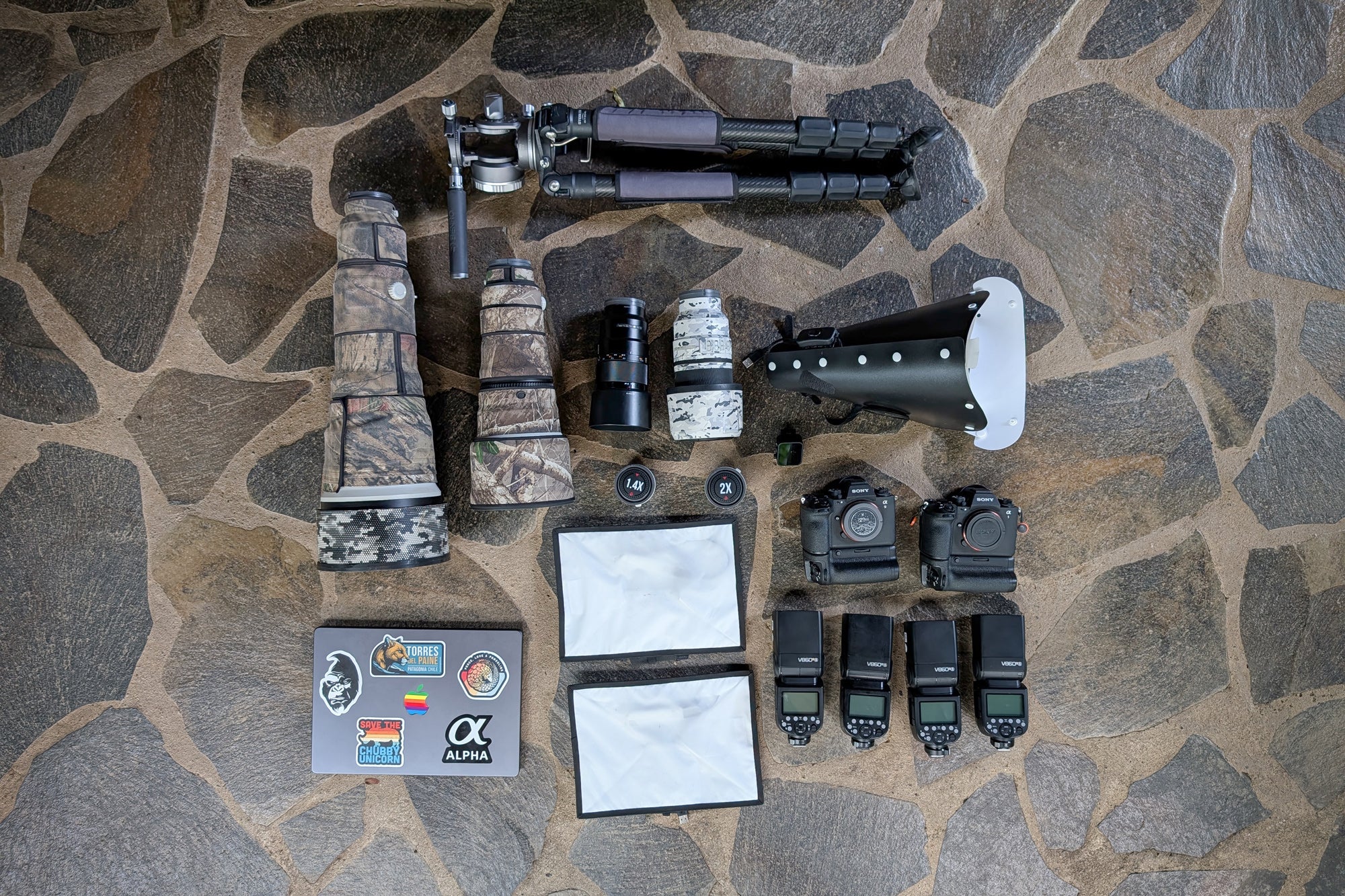
Conservation photographer and Sony Artisan Melissa Groo often goes on assignment, and for a recent bird assignment for Audubon Magazine, she had two of her go-to cameras with her: the Sony Alpha 1 II and Sony Alpha 7 V. Along with those, she carries a range of lenses to ensure she can cover it all – the Sony 600mm f/4 G Master, Sony 300mm f/2.8 G Master, Sony 70-200mm f/4 Macro G II, Sony 50mm f/1.2 G Master, Sony 24-70mm f/2.8 G Master II and Sony 16-35mm f/2.8 G Master. Get the full scoop in What’s In My Bag: A Pro Wildlife Photographer’s Kit For A Magazine Assignment On Birds.
She also has a new favorite she’s recently added to the list – the Sony 100mm f/4.5 G Master. “The constant f/4.5 aperture was the most standout feature. Getting all that light at the long end is indispensable for me, as someone who is often photographing birds and other animals in the forest and in low light. And I don’t have to change my exposure when moving to different focal lengths! Its incredibly fast AF speed! And excellent sharpness. Even with both the 1.4x and the 2x teleconverters!”
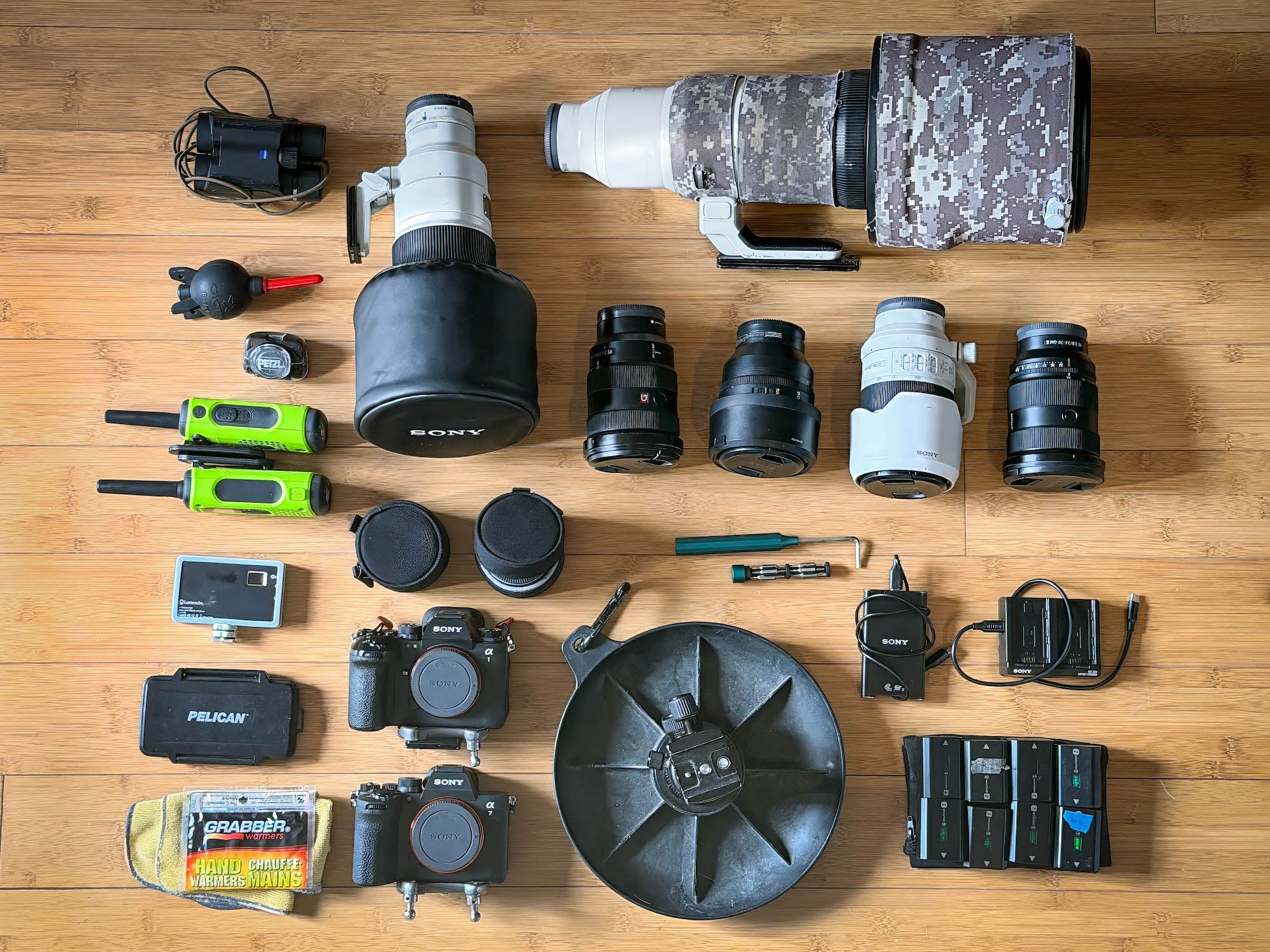
The Trusty Sony Alpha Bird & Wildlife Photo Kit
Wildlife photographer Jessica Sullivan currently uses the Sony Alpha 7R V as her go-to. She has a solid arsenal of lenses – Sony 200-600mm f/5.6-6.3 G, Sony 70-200mm f/2.8 G Master II, Sony 24-70mm f/2.8 G Master II, Sony 50mm f/1.4 G Master, Sony 100mm f/2.8 Macro G Master – to cover everything from birds in flight, to bears in forests, to butterflies on flowers. Learn more about her kit in What’s In My Bag: “The Sony Alpha Wildlife Kit I Trust Everywhere”.
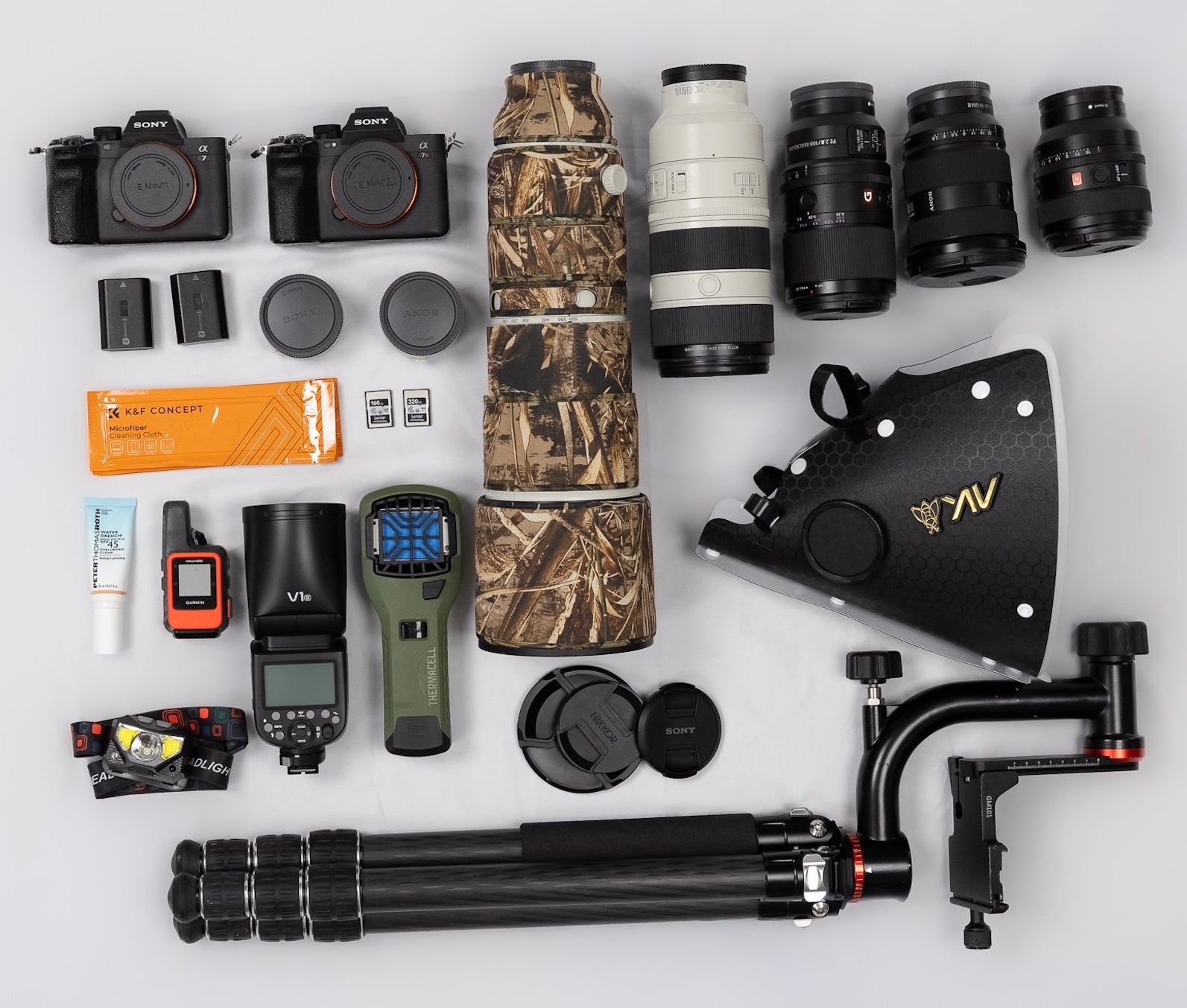
The Simplified Bird & Wildlife Photo Kit
Sometimes all you need is one camera and one lens, and for bird and wildlife photographer Miguel Bellido – that’s exactly how he likes to roll. “When I had to choose my very first camera body to begin my photography journey, my budget was quite limited. The Sony Alpha 7 IV turned out to be the perfect match, so much so that, after several years of intensive use, it’s still my main camera today.” And the lens he attaches to his Alpha 7 IV? The beloved Sony 200-600mm f/5.6-6-3 G. Read more on Miguel’s simplified kit in What’s In My Bag: A Single Camera & Lens Setup For Wildlife Photography.
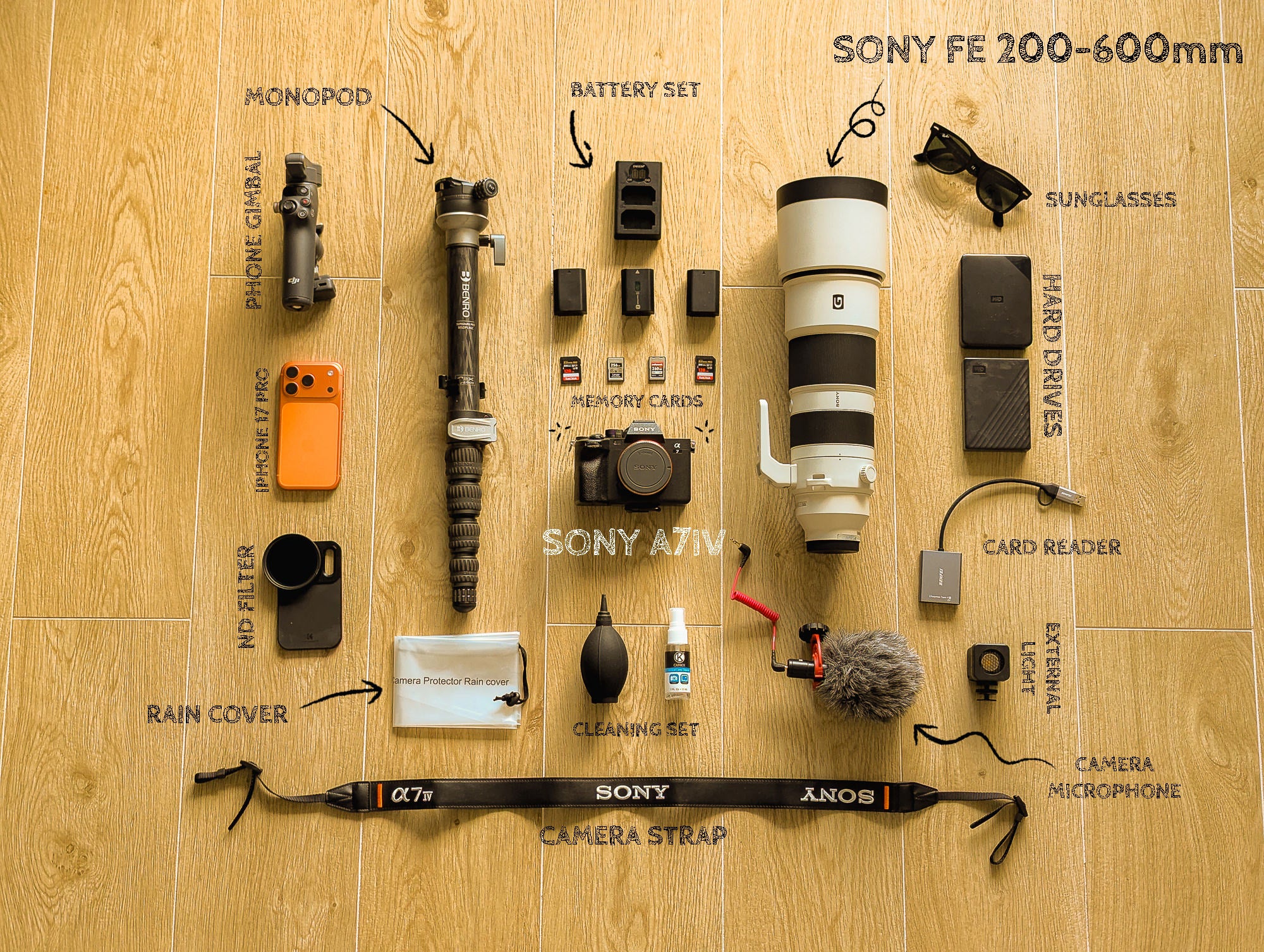
The Ultra Sharp Bird & Wildlife Photo Kit
Wildlife photographer Hannah Rheaume has been a longtime Alpha 7R V user (read more in What's In My Bag: See Inside Hannah Rheaume's Nature & Wildlife Photography Kit.) So when she tried out the new Sony Alpha 7R VI, she wasn't exactly expecting to be surprised. She was. "My main camera is the Alpha 7R V so I am used to having many megapixels to work with," Hannah says, "but the jump to 66.8MP blew me away. The images are incredibly sharp – allowing me to crop in and reframe if needed." Check out more of what she has to say on her new favorite camera in Shoot First, Crop Later: Why The Alpha 7R VI Is A Wildlife Photographer's Secret Weapon.
You’ll find Hannah with three zoom lenses as her kit favorites – the Sony 24-70mm f/2.8 G Master II, Sony 100-400mm f/4.5-5.6 G Master, Sony 200-600mm f/5.6-6.3 G. These lenses provide her with the versatility needed to safely photograph wildlife, as well as other parts of landscapes and nature.
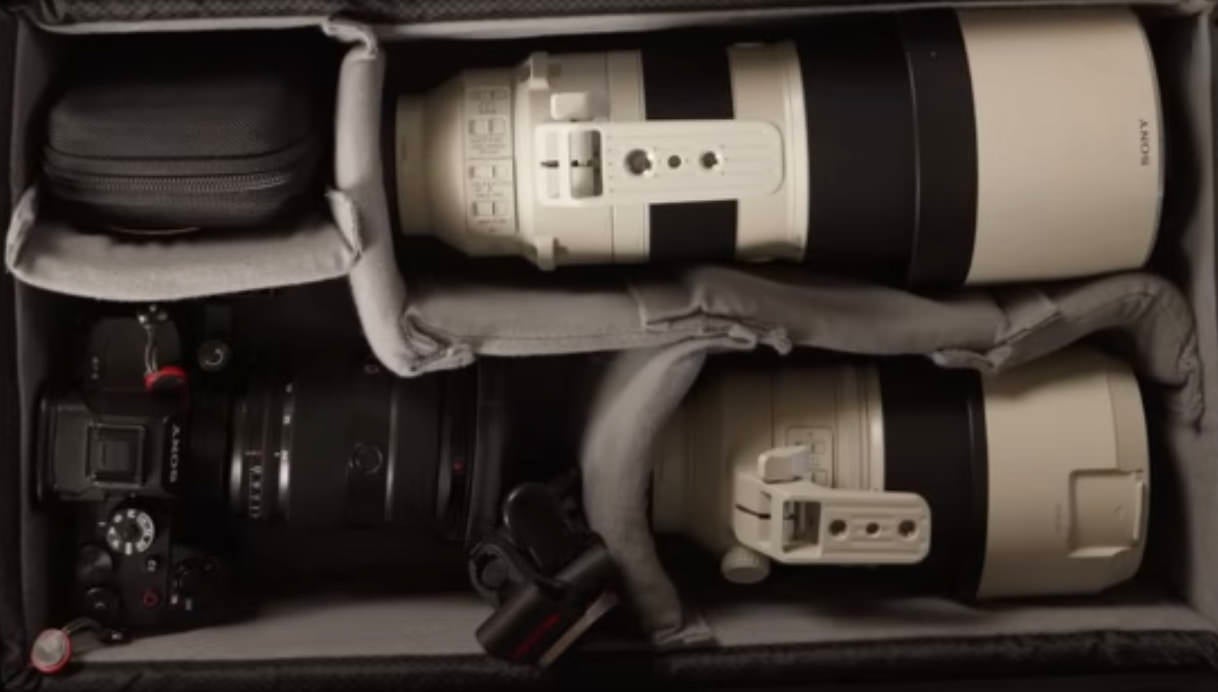
The Falconer’s Bird & Wildlife Photo Kit
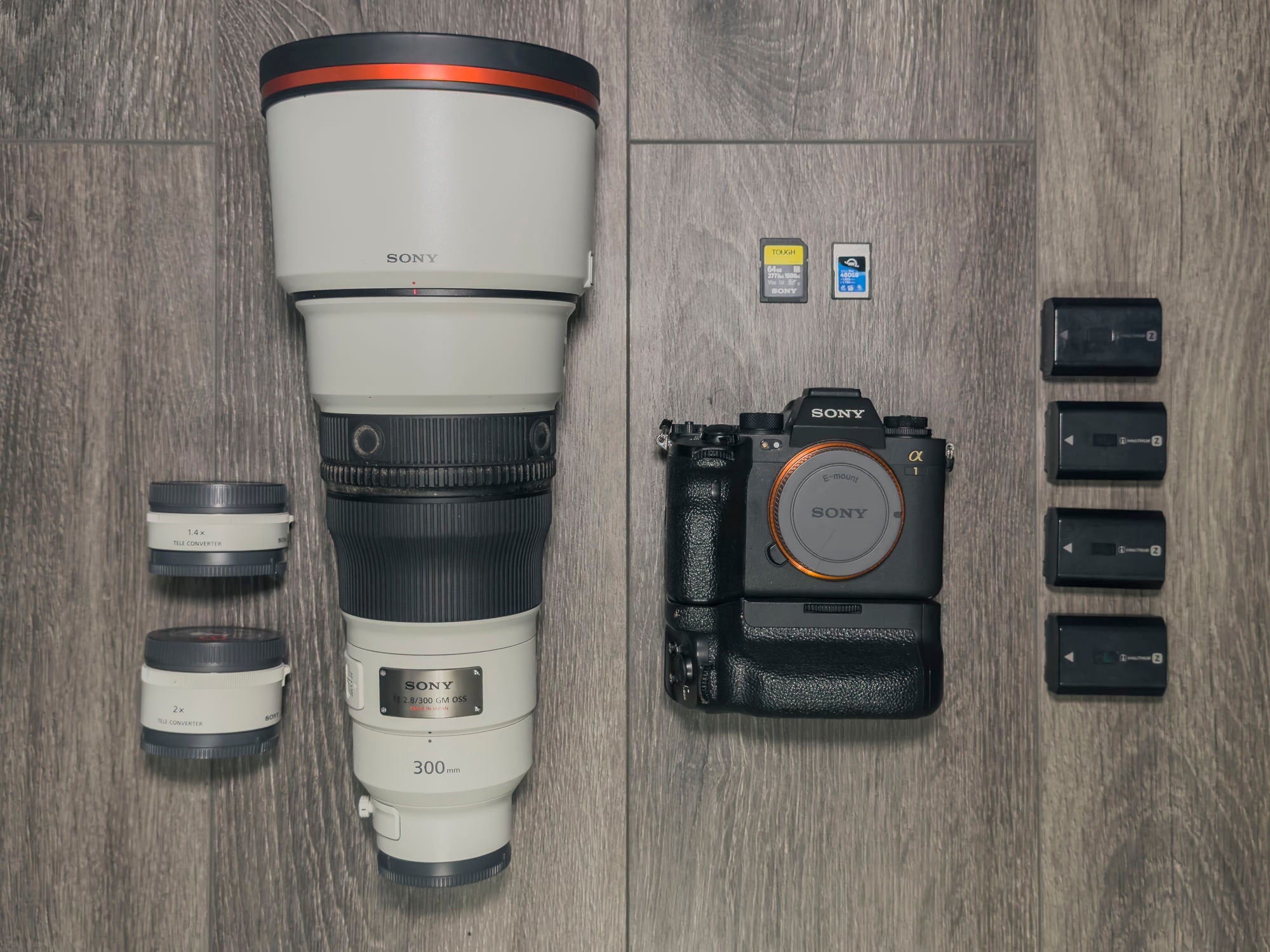
Ohio-based wildlife photographer AND falconer Chad Sawyer reaches for the Sony Alpha 1 when photographing birds in the field. His all-time favorite lens for bird photography is the Sony 300mm f/2.8 G Master. “The first thing I noticed was how lightweight it is. I can comfortably handhold it for hours without fatigue, which makes a huge difference when tracking birds in flight or hiking into remote locations,” he says. “The second thing I noticed was the sharpness. This lens is incredibly crisp, even wide open at f/2.8. That bright aperture also creates beautiful background separation and allows me to shoot in lower light during the golden hours when birds are most active. At 300mm, it’s perfect for birds that approach closely, and it’s ideal for creating environmental portraits that showcase the bird within its habitat.” Read more in What’s In My Bag: "My Favorite Sony Setup For Bird Photography".
The Ultimate Hybrid Bird & Wildlife Photo Kit
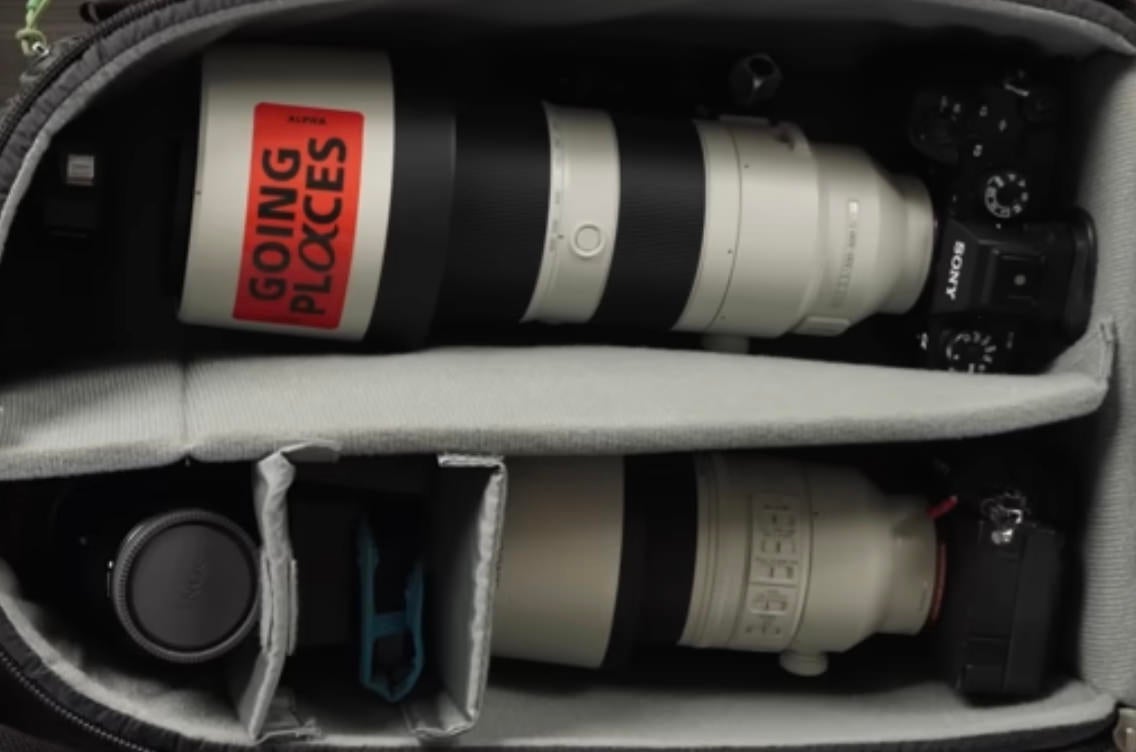
When it comes to hybrid bird photography, Mark Smith packs his Sony Alpha 1 II and Sony Alpha 1 to get the job done. The lenses he likes to use to capture both photos and videos include the Sony 200-600mm f/5.6-6.3 G, Sony 600mm f/4 G Master, Sony 70-200mm f/2.8 G Master II, Sony 16-35mm f/4 G PZ. Word is he’s even tried the new Sony Alpha 7R VI and Sony 100mm f/4.5 G Master - and he’s a big fan. Check out his current kit along with some of his top bird photo and video tips in What’s In My Bag: Mark Smith’s Gear & Tips For Bird Photos & Videos.
The Underwater, Bird & Wildlife Photo Kit
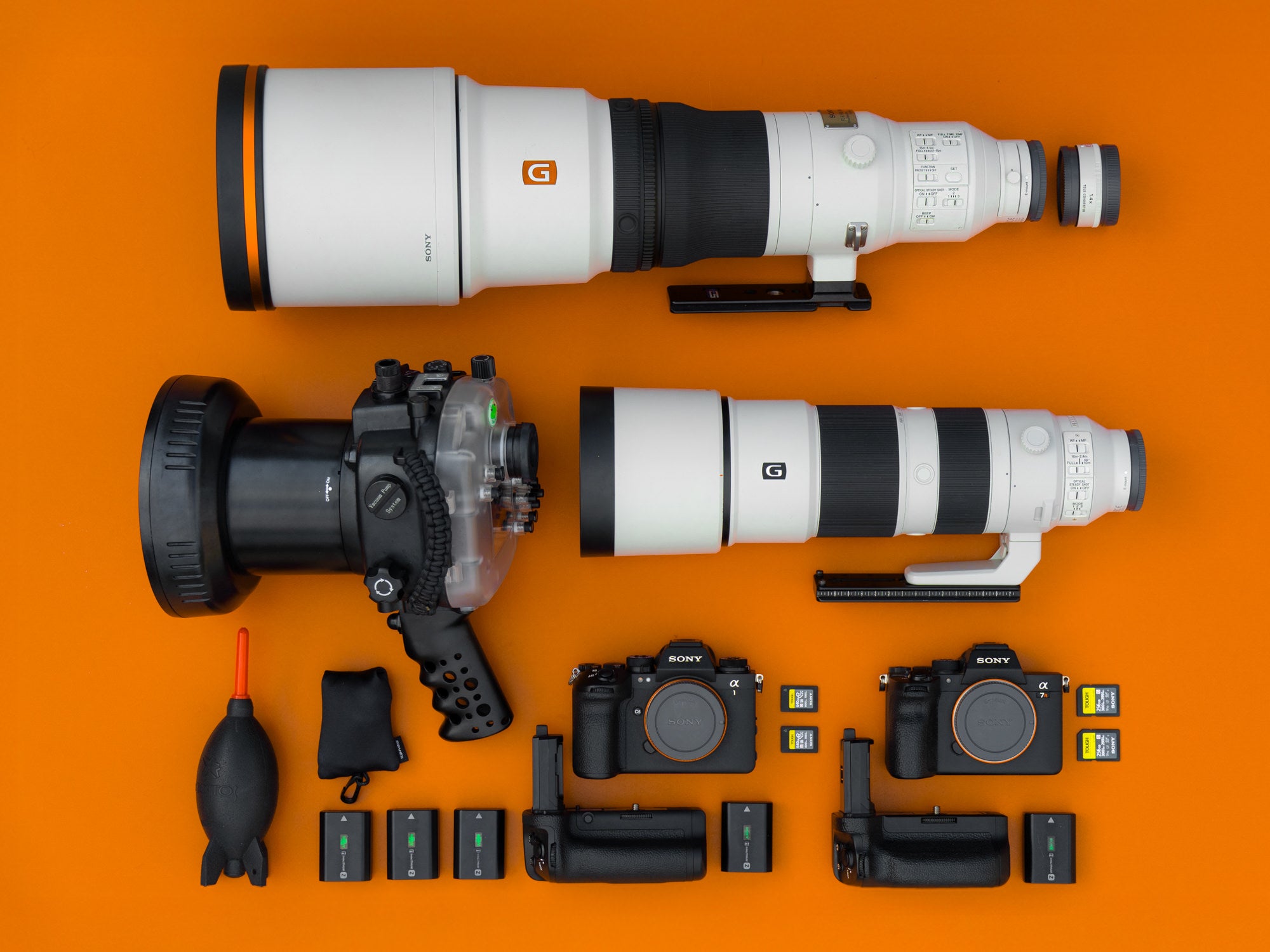
Wildlife photographer Hayden Dumaw’s go-to camera is the Sony Alpha 1 II. “This is my favorite camera to shoot with. Its speed, pre-capture technology, and unmatched autofocus make it a game-changer for wildlife. Features like animal and bird eye AF dramatically increase my success rate, allowing me to capture moments that would otherwise be impossible – such as perfect eye contact during fleeting encounters. With its impressive megapixel count combined with blazing performance, it’s the camera I rely on most when photographing fast-moving subjects in unpredictable conditions.” He also uses the Sony Alpha 7R IV as a second camera for its high-resolution. Both cameras are paired with the Sony 300mm f/2.8 G Master and Sony 200-600mm f/5.6-6-3 G lenses – which he calls vitals pieces to his kit. Take a deeper dive into his bag in What’s In My Bag: The Perfect Kit For Bird, Wildlife & Underwater Photography.
The Oldie-But-Goodie Bird & Wildlife Photo Kit
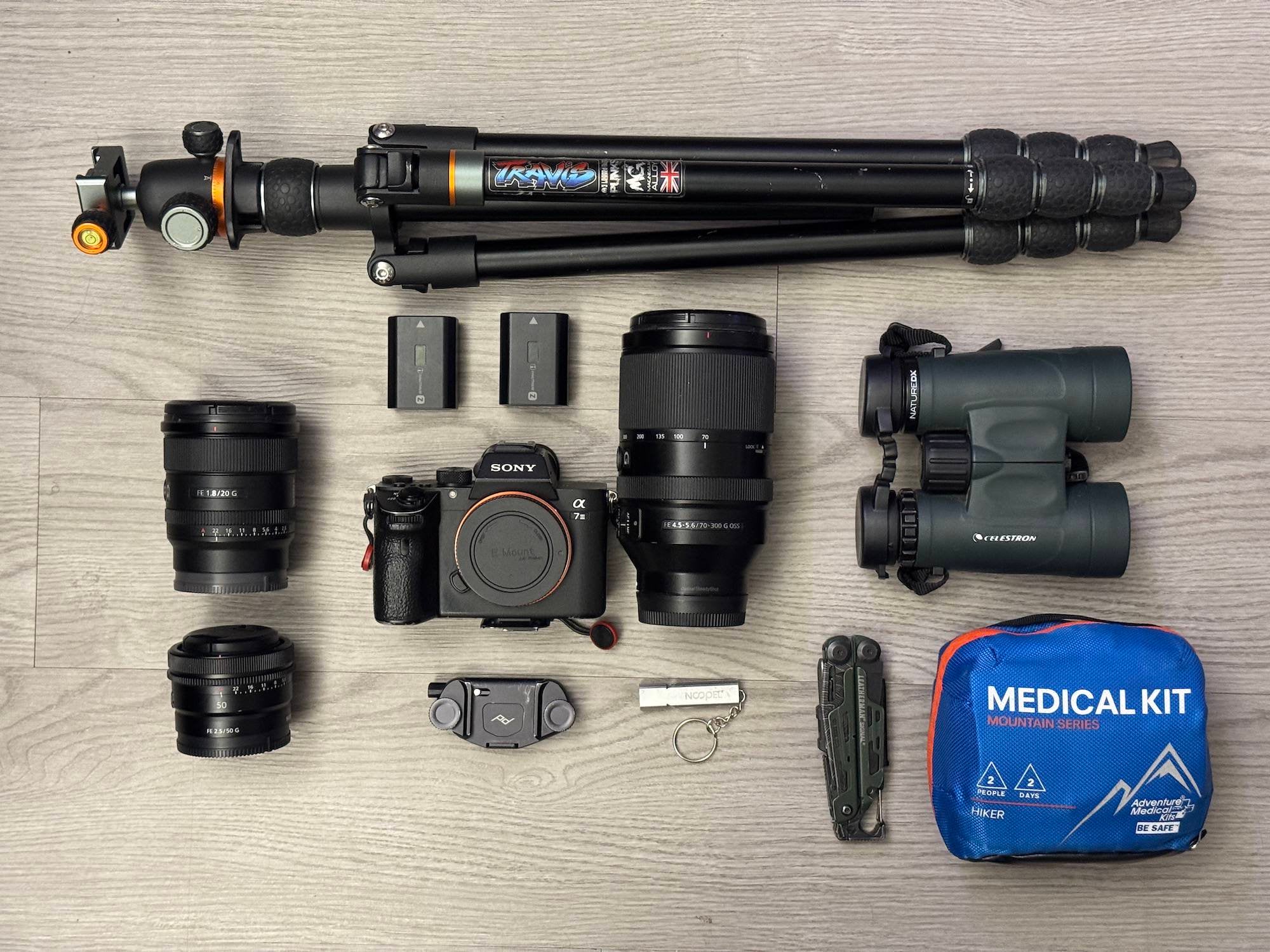
Wildlife photographer Jordan Griffith has spent hours upon hours at the Lower Salt River and Gilbert Riparian Preserve in Arizona with his Sony Alpha 7 III. It’s not the newest Sony Alpha, but for Jordan who is always on the go, it gets the job done just fine. He pairs his camera with the Sony 70-300mm f/4.5-5.6 G, Sony 50mm f/2.5 G and Sony 20mm f/1.8 G lenses, with the 70-300mm being his main lens for wildlife. “The stabilization within the A7 III and the lens itself makes it perfect for shots of moving wildlife or keeping on the body when you’re trekking up a hill to get just a bit closer to some wildlife you spotted,” he says. Read more about his kit in What’s In My Bag: The Sony Alpha 7 III For Landscape, Bird & Wildlife Photography.
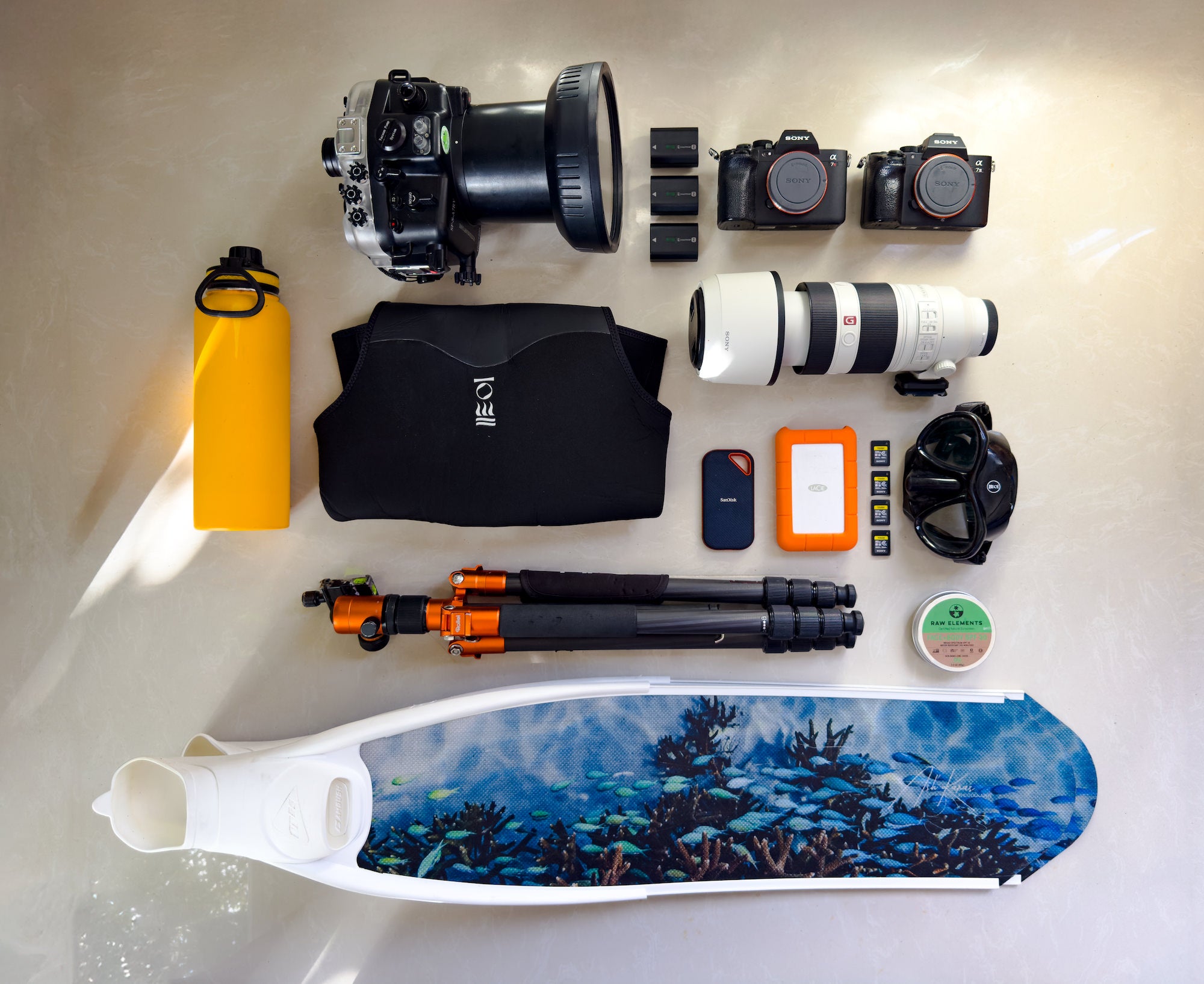
The All-Terrain Adventure, Bird & Wildlife Photo Kit
Whether freediving with hammerheads, filming sea lions in volcanic lagoons, or chasing light on a snowy zodiac in Svalbard, Katjana Cabenda’s Sony gear is her lifeline. She depends on the Sony Alpha 7R V as her main camera for capturing detail. Her backup camera, the Sony Alpha 7 III, really shines in those remote, low-light locations. She utilizes the Sony 100-400mm f/4.5-5.6 G Master, which she calls pure versatility in her world. “It's razor sharp across its entire zoom range and handles fast movement like a champ.” See her complete kit in What’s In My Bag: An Alpha 7R V Kit That Goes Where The Wild Things Are.