Updated 6/25/2026
Sony's ZV cameras are built specifically for video creators – vloggers, streamers and emerging filmmakers who want Sony's professional imaging technology in a body designed around how creators actually work. Every ZV model ships with a flip-out vari-angle LCD, directional microphone with wind noise reduction, one-touch Background Defocus control, and Product Showcase mode for tabletop and review content. What sets them apart from each other is sensor size, lens flexibility and the depth of video features. This guide will help you distinguish between each ZV camera so you can choose the right one for your content. Many ZV cameras are currently on sale – see our complete list of promotions at alphauniverse.com/promos. Dive deeper into the ZV series in our free Alpha Camera Academy course: Get To Know The ZV Series.
A Complete Buyer's Guide To Sony ZV Cameras
What "ZV" Generally Means
- Designed from the ground up for video and vlogging, with dedicated creator features across the entire lineup.
- Flip-out vari-angle touchscreen LCD on every model for easy self-framing and solo shooting.
- Built-in multi-directional microphone with wind noise reduction, plus 3.5mm mic input and Multi Interface Shoe for external audio accessories.
- Real-Time Eye AF and subject tracking to keep you in focus while speaking, moving, or shooting yourself.
- USB-C charging with power delivery, so you can shoot while plugged in — ideal for live streaming and desk setups.
- Compact, lightweight bodies that prioritize portability without sacrificing image quality.
How To Use This Guide
- Cameras are grouped into two categories: Compact Fixed-Lens and Interchangeable Lens.
- For each camera: standout traits, best uses, and who it's built for.
- At the end: pick-by-content-type suggestions, helpful buying notes, and simple starting points.
Compact Fixed-Lens ZV Cameras
Sony ZV-1
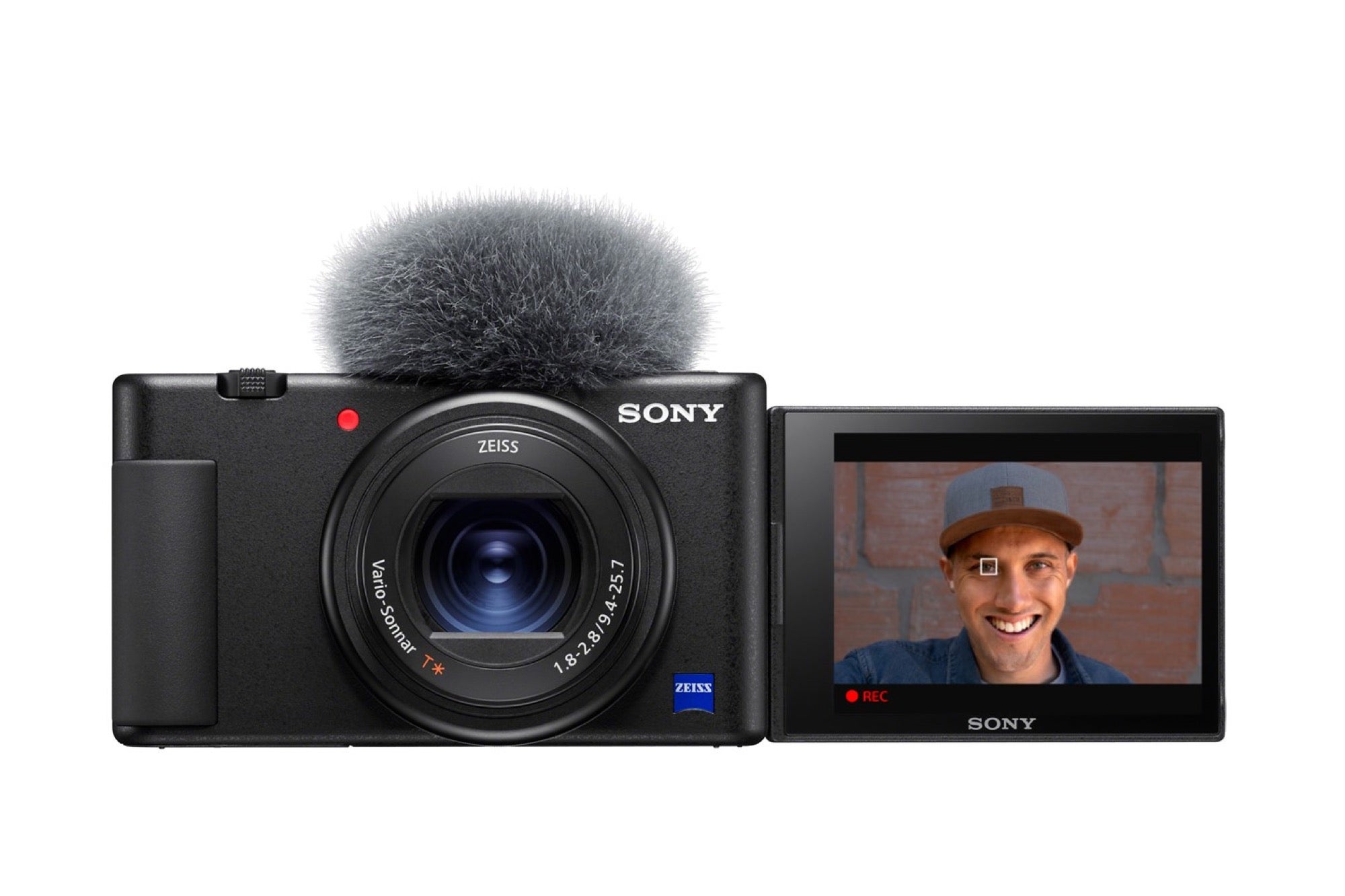
- Why it's special: A versatile 24-70mm-equivalent ZEISS Vario-Sonnar T* f/1.8-2.8 zoom covers everything from wide establishing shots to compressed close-ups, all in a pocket-sized body. A built-in variable ND filter manages exposure in bright conditions without adding gear. Supports S-Log3 and HLG log profiles for professional color grading, and shoots 4K/30p with 1080/120p slow motion. The stacked 1-inch Exmor RS CMOS sensor with DRAM delivers fast readout and strong low-light performance.
- Excels at: Daily vlogging and travel content, low-light shooting with the wide-aperture zoom, run-and-gun video that benefits from optical zoom range, live streaming via USB-C pass-through, and creators who want log profiles for a color-graded look.
- Who it's for: Creators who want a single compact body with a versatile zoom range and professional video tools. If you're looking for an all-rounder that handles everything from street-level vlogging to studio-style shooting without ever managing a lens swap, the ZV-1 remains a compelling choice.
Sony ZV-1F
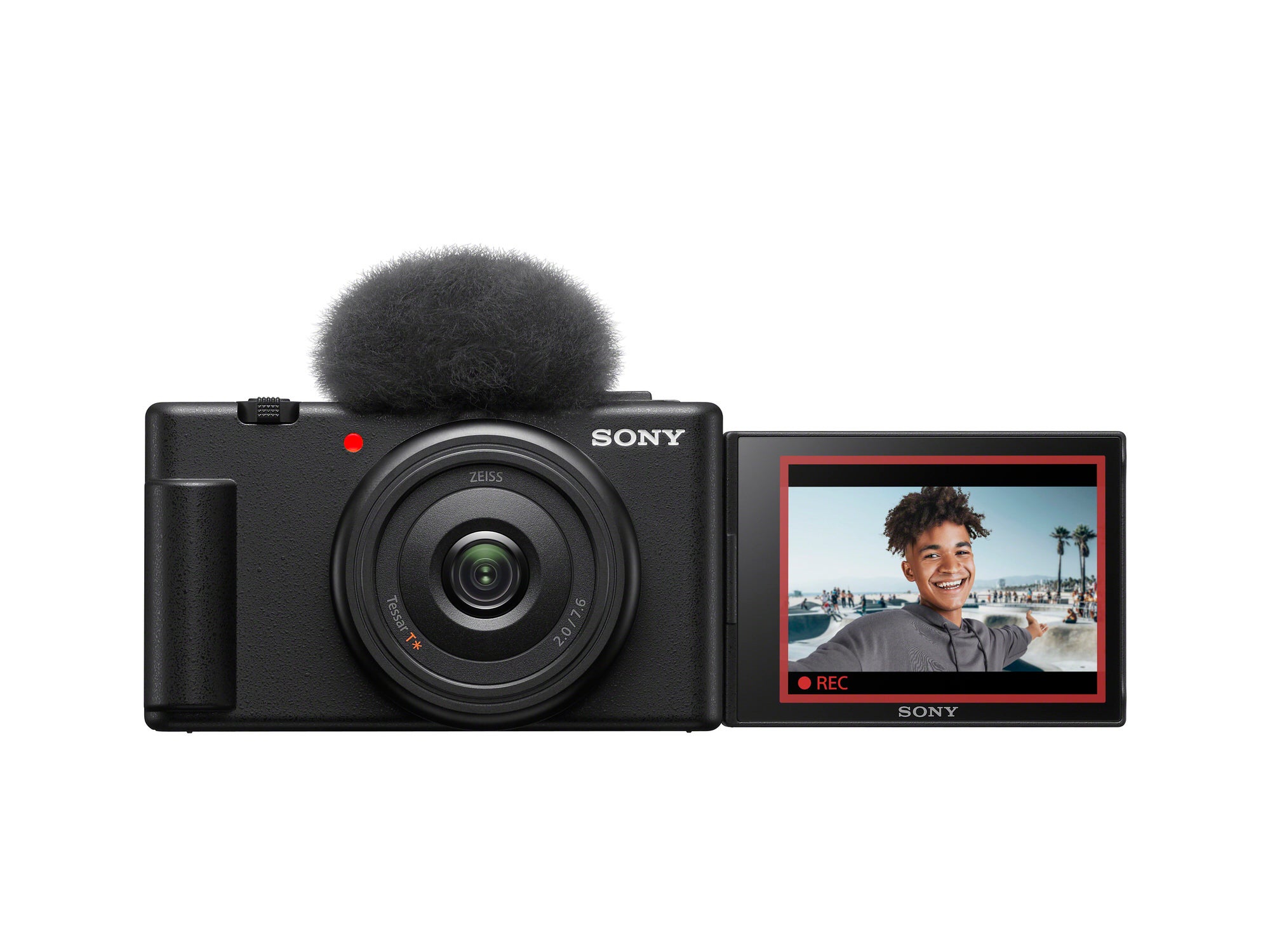
- Why it's special: The most affordable ZV camera, built around an ultra-wide 20mm f/2 ZEISS Tessar T* fixed lens that captures your full face and environment in a single frame – no awkward arm extensions required. Same 1-inch stacked Exmor RS CMOS sensor as the ZV-1 means excellent image quality at its price point. Minimal controls and a simplified interface make it the easiest ZV to pick up and start shooting.
- Excels at: Face-to-camera selfie vlogging, vertical social media content (YouTube Shorts, Instagram Reels, TikTok), travel documentation where you want everything in the wide frame, and as a lightweight B-camera or backup body.
- Who it's for: Creators just starting out who want Sony image quality and creator-focused features at the lowest possible entry point. The ZV-1F doesn't try to do everything – it does one thing very well: get you on camera, confidently framed, with great results.
Sony ZV-1 II
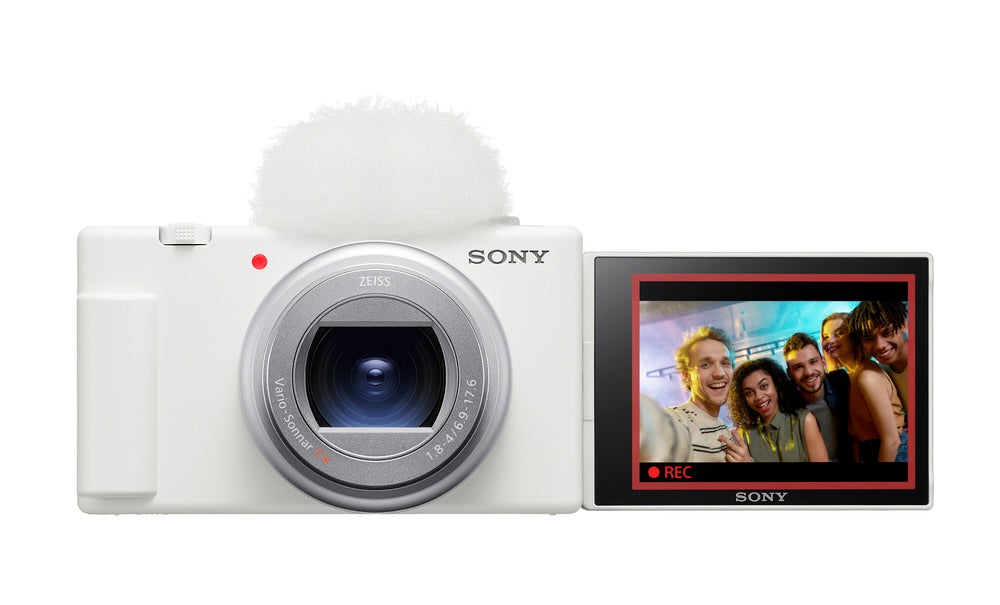
- Why it's special: The ZV-1 II takes the 1-inch sensor formula of the original ZV-1 and rebuilds it around an 18-50mm-equivalent ZEISS Vario-Tessar T* f/1.8-4 zoom – three millimeters wider on the short end makes a significant difference for self-shooting. The f/1.8 maximum aperture at 18mm allows for strong background separation even at wide-angle focal lengths. Improved Real-Time Eye AF over the original ZV-1 keeps you locked in frame during active shooting. Available in black and white.
- Excels at: Self-directed travel vlogs that need the flexibility to zoom, lifestyle and talking-head content, indoor and ambient-light shooting where f/1.8 at the wide end is a genuine advantage, and creators upgrading from a smartphone or ZV-1F who aren't ready for an interchangeable lens system.
- Who it's for: The ZV-1 II is the best compact ZV for creators who want zoom flexibility with an extra-wide starting point. It sits comfortably between the simplicity of the ZV-1F and the full system capabilities of the ZV-E10 series. If you want an excellent fixed-lens vlog camera that handles nearly any shooting situation, start here.
Interchangeable Lens ZV Cameras
Sony ZV-E10
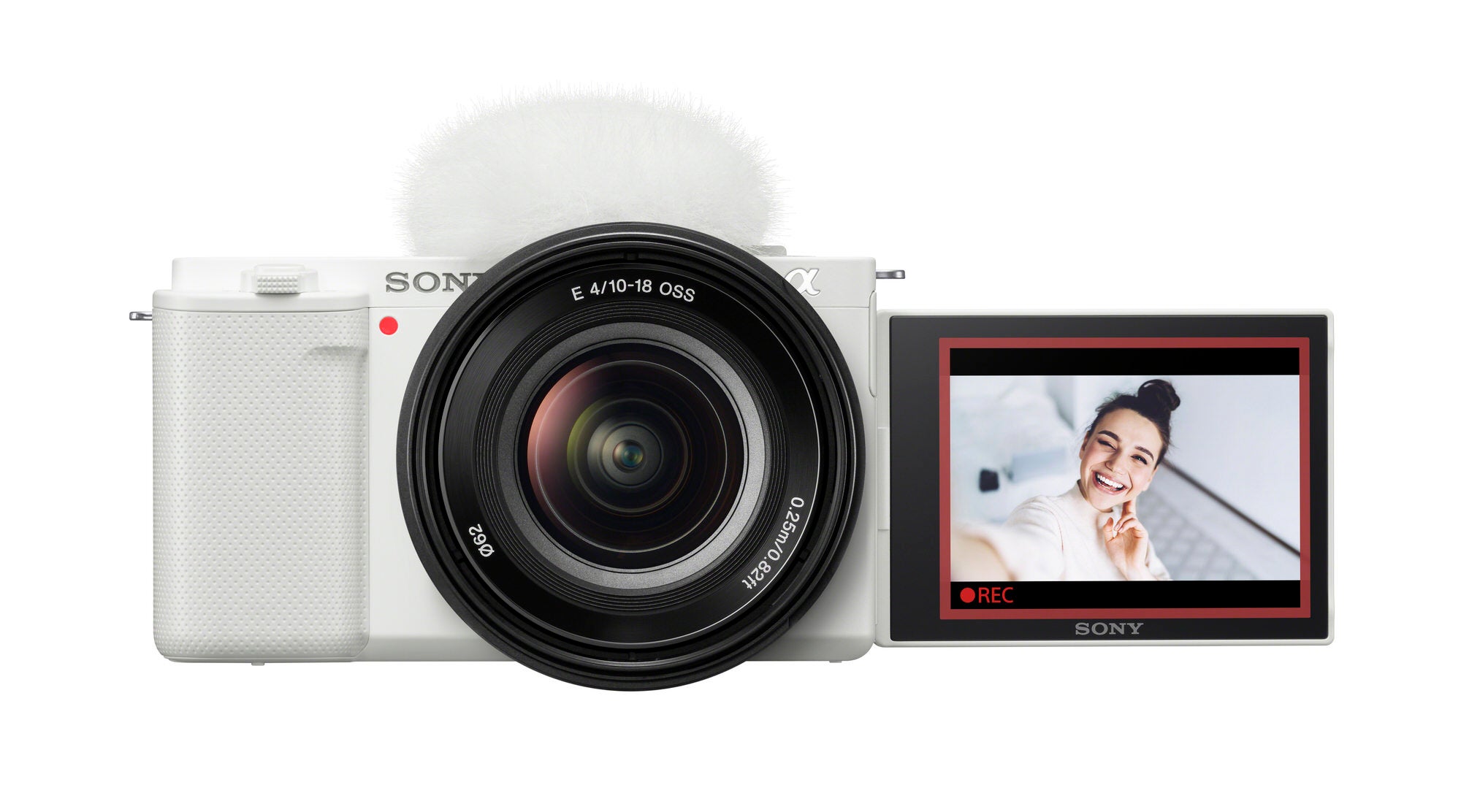
- Why it's special: The ZV-E10 brings Sony's E-mount lens system – access to 100+ lenses across every focal length, speed, and application – to the most accessible price point in the interchangeable ZV lineup. The 24.2MP APS-C Exmor CMOS sensor shoots 4K video oversampled from 6K for clean, detailed footage. Clean HDMI output supports external recorders and live streaming setups. BIONZ X processor with Real-Time Eye AF keeps subjects sharp during self-shooting and video.
- Excels at: YouTube channels that need lens flexibility on a budget, beginner to intermediate video creators building their first kit, short films and music videos that benefit from different focal lengths, and anyone looking to grow into the Sony E-mount ecosystem over time.
- Who it's for: Creators ready to invest in glass. The ZV-E10 is the right starting point if you're building a long-term kit and want the flexibility to adapt lenses as your content evolves. Note that it uses contrast-detect AF (no phase-detect) and electronic stabilization only – the ZV-E10 II addresses both of those for creators who need more.
Sony ZV-E10 II
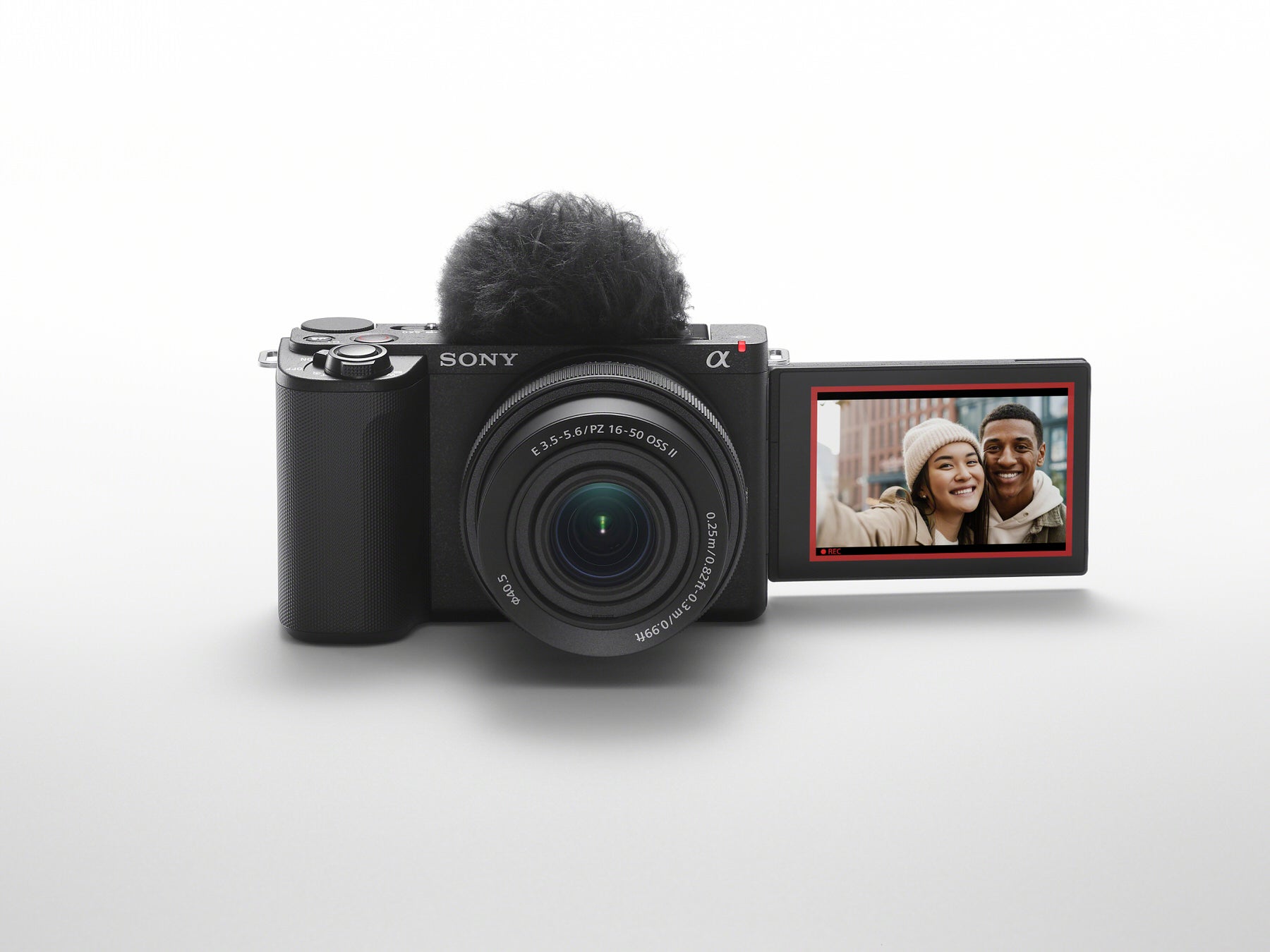
- Why it's special: A significant upgrade over the original ZV-E10 in nearly every category. The new 26MP back-illuminated Exmor R CMOS sensor – the same chip found in the Alpha 6700 and Cinema Line FX30 – brings substantially faster readout, better low-light performance, and 4K/60p recording. Internal 10-bit 4:2:2 capture with S-Log3 and S-Cinetone opens up a professional color-grading workflow that wasn't possible with the original ZV-E10. Phase-detection AF delivers faster, more reliable subject tracking. The larger NP-FZ100 battery (shared with the ZV-E1 and Alpha 7 bodies) handles longer shooting sessions.
- Excels at: High-production YouTube content and branded video, slow motion at 4K/60p, professional color-graded workflows in DaVinci Resolve or Premiere, creators who need both strong stills and video in a single APS-C body.
- Who it's for: The ZV-E10 II is for creators who want near-professional video quality without stepping into full-frame territory. With 10-bit 4:2:2 and 4K/60p, it punches considerably above its price point. If you're a working creator leveling up your production value – or upgrading from an original ZV-E10 – this is where the ZV system delivers its best value.
Sony ZV-E1
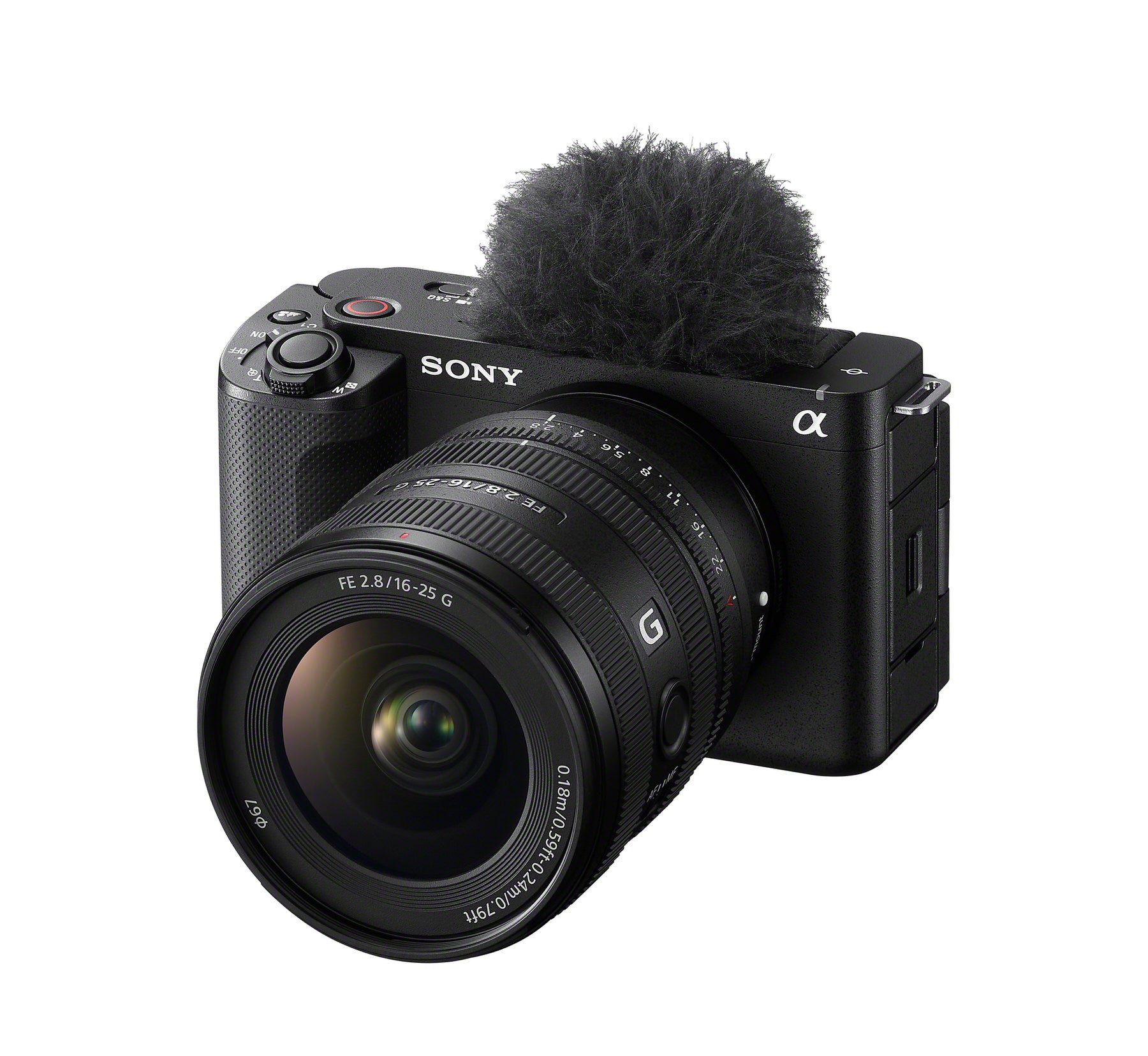
- Why it's special: The ZV-E1 is the world's most compact and lightweight full-frame interchangeable lens vlog camera. Its 12.1MP full-frame back-illuminated Exmor R CMOS sensor uses direct pixel readout (no pixel binning) in 4K, which means no compromises in resolution or rolling shutter performance. 4K/120p at 10-bit delivers Cinema Line-quality slow motion in a body smaller than many APS-C cameras. S-Cinetone color science – drawn directly from Sony's Cinema Line – produces a filmic look straight out of camera. AI-based Auto Framing automatically keeps the subject centered without a camera operator. Five-axis in-body image stabilization with Active Mode handles handheld shooting across all lens choices.
- Excels at: Documentary-style content in challenging or low-light environments, solo creators who need Auto Framing without anyone behind the lens, cinematic short films and brand video work, podcast and interview-format content, and productions where full-frame sensor latitude and dynamic range matter.
- Who it's for: Working creators and small production teams that want Cinema Line image quality in a portable, creator-friendly body. The ZV-E1 is the ZV for professional output – brand campaigns, agency work, premium channels, and any situation where the full-frame sensor's low-light performance and dynamic range are essential. Nothing else in the ZV lineup touches its cinema capabilities.
Dive deeper into the ZV series in our free Alpha Camera Academy course: Get To Know The ZV Series.
Pick A Camera By Content Type
Daily vlogging / talking-head content: ZV-1 II. The 18mm wide end frames your face and environment naturally for self-shooting, and the f/1.8 aperture gives you background separation without the complexity of a lens system.
First camera / complete beginner: ZV-1F. Widest lens in the compact lineup for easy selfie framing, lowest price in the ZV range, and zero lens-management decisions. Start here, grow from here.
Travel content: ZV-1 or ZV-1 II. The built-in ND filter on the ZV-1 handles bright outdoor conditions; the ZV-1 II's wider starting focal length is better for environment-heavy shots. Both are genuinely pocketable.
YouTube/long-form video production: ZV-E10 II. 4K/60p with 10-bit 4:2:2, phase-detect AF, and a full lens ecosystem – the best combination of video quality and creator flexibility at its price.
Live streaming/webcam: ZV-E10 or ZV-E10 II. Clean HDMI output, USB-C power delivery, and access to wide E-mount lenses for any streaming setup from desk to stage.
Low-light and indoor content: ZV-E1. Full-frame sensor with direct pixel readout means extraordinary ISO performance – clean, usable footage in conditions that would compromise any other ZV.
Brand video and agency work: ZV-E1. S-Cinetone color science, 4K/120p slow motion, and Cinema Line DNA make it production-ready. The image it produces is indistinguishable from bodies costing significantly more.
Solo shooting without a camera operator: ZV-E1. AI Auto Framing keeps your subject centered automatically. Set it on a tripod and it handles the framing work for you.
Social media (Reels / TikTok / Shorts): ZV-1F. Ultra-wide 20mm lens for vertical and horizontal framing, lightest body in the lineup, and the simplest workflow for fast content turnaround.
Upgrading from a ZV-E10: ZV-E10 II. The same E-mount system means your existing lenses carry over. The new 26MP BSI sensor, 10-bit internal video, 4K/60p, and phase-detect AF are substantial upgrades that justify the step up.
Helpful Buying Notes
Free Alpha Camera Academy Course: Learn more about your options in Get To Know The ZV Series.
10-bit vs. 8-bit video: The ZV-E10 II and ZV-E1 shoot 10-bit 4:2:2 internally, which matters if your workflow involves professional color correction. The ZV-1, ZV-1F, ZV-1 II, and ZV-E10 are 8-bit cameras – still excellent, but with less latitude in post.
E-mount is a long-term investment: Lenses purchased for a ZV-E10 work on the ZV-E10 II, ZV-E1, and every Alpha body. If you're considering the interchangeable lens ZV cameras, think of the system lens investment as cumulative — the body upgrades, the glass stays.
Battery compatibility: The compact ZV cameras (ZV-1, ZV-1F, ZV-1 II) use the NP-BX1 battery. The ZV-E10 uses the NP-FW50. The ZV-E10 II and ZV-E1 both use the NP-FZ100 – a larger, longer-lasting battery shared with the Alpha 7 series. The ZV-E1 and ZV-E10 II have noticeably better shooting endurance than the compact models.
Stabilization differences: The compact ZV cameras rely on optical image stabilization (ZV-1, ZV-1 II) or digital Active Mode (ZV-1F). The ZV-E10 and ZV-E10 II use electronic stabilization, which works best with wider lenses. The ZV-E1 includes Sony's five-axis in-body stabilization (IBIS) plus Active Mode – the most capable stabilization in the lineup, and compatible with optically stabilized E-mount lenses for even better results.
Phase-detect AF matters for video: The ZV-E10 relies on contrast-detect AF, which is slower and less reliable during continuous video tracking. The ZV-E10 II and ZV-E1 both include phase-detection – if smooth, confident subject tracking in video is a priority, consider the ZV-E10 II as your minimum.
Audio accessories: Every ZV camera includes a Multi Interface Shoe, which accepts Sony's digital microphones (ECM-B10, ECM-B1M) without cables. The 3.5mm microphone input on all models also accepts third-party options like the Rode Wireless GO II. Good audio transforms creator content – it's worth budgeting for alongside the camera body.
Check current promotions: Sony frequently offers bundle savings on ZV cameras that include kit lenses, extra batteries, or memory cards. Visit alphauniverse.com/promos for the latest deals.
Simple Starting Points
The one-camera solution for new creators: ZV-1F. Widest lens, lowest price, simplest operation.
The best all-around compact ZV: ZV-1 II. Ultra-wide zoom, 1-inch sensor, f/1.8 at 18mm.
The best compact with zoom range: ZV-1. 24-70mm equivalent, built-in ND filter, S-Log3 support.
The best value interchangeable lens ZV: ZV-E10 II. 10-bit 4:2:2, 4K/60p, phase-detect AF, full E-mount system.
The entry-level interchangeable lens ZV: ZV-E10. 4K oversampled from 6K, clean HDMI, E-mount flexibility on a budget.
The professional ZV: ZV-E1. Full-frame, Cinema Line color science, 4K/120p, IBIS, AI Auto Framing.
Explore all of Sony's camera offerings at alphauniverse.com/cameras.